


With body and soul
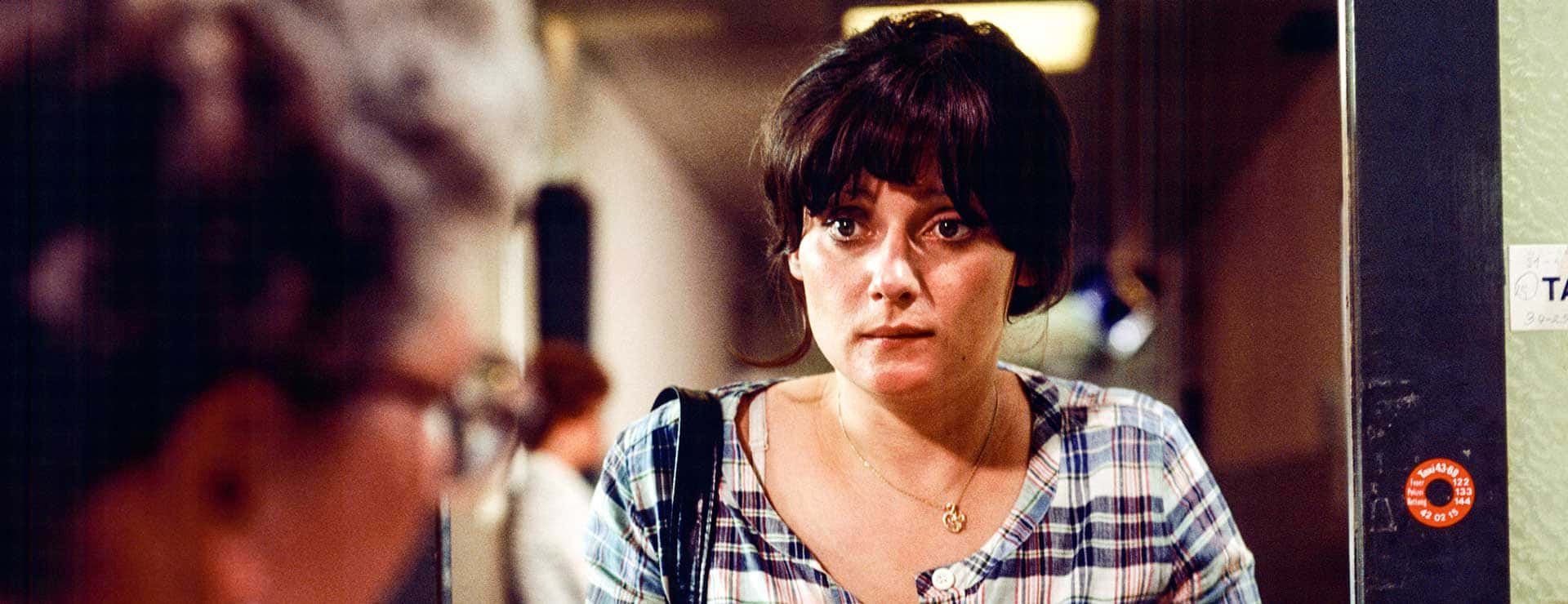
As a taxi driver, Elfi (Brigitte Swoboda) has to make her way in a male dominated world. That she is not a woman to be reckoned with is especially apparent to the unpleasant, stingy passengers, whose suitcases she sometimes throws out onto the street. But Elfi faces another challenge: she is expecting a child from the waiter Poidl (Lukas Resetarits), who, after initial shock, already sees himself as the proud "head of the family." At first she considers an abortion, but finally she decides to have the child - and that's where the problems begin ... MIT LEIB UND SEELE is a reaction to the enactment of the legalization of abortion in the mid-1970s and focuses on the self-determination of women in the form of an extremely sympathetic protagonist - in all areas of life. (FILMARCHIV AUSTRIA)
"As an authoritative pioneer, Käthe Kratz laid a significant foundation for contemporary female film making in Austria." FLORIAN WIDEGGER
Brigitte Swoboda, Lukas Resetarits, Johanna Thomek, Hannes Cekits, Patrizia Hirschbichler, Stefanie Kopal and many more
DVD Edition # 335

ABOUT THE FILM




Laborious Emancipation
„Mit Leib und Seele“ by Käthe Kratz
Esther Buss*
Something isn’t right. By the time the women have come to this realisation and, gathered together, voice it clearly and explicitly for the first time, Käthe Kratz’s film has reached its final scene. It is almost a little late for that, but the collective “I don’t want this” comes just in time to ignite the spark of activism: “It seems to me we’ll have to come up with something.”
Mit Leib und Seele begins like a milieu comedy with Viennese wit: a jaunty theme song (sung by Cilli Miculik), Elfi (Brigitte Swoboda), a taxi driver who is not afraid to speak her mind, short anecdotes involving eccentric passengers. Even when Elfi casually tells her boyfriend Poidl, a waiter, about her pregnancy amid the noisy bustle of the coffee house, there is still a fairly cheerful sense of nonchalance.
But shortly afterwards, we find ourselves in the midst of a genuine “women’s picture” that articulates the pressing issues of the Austrian women’s movement emerging in the 1970s. One of the contexts is the introduction of the time-limit regulation on abortion in 1975.
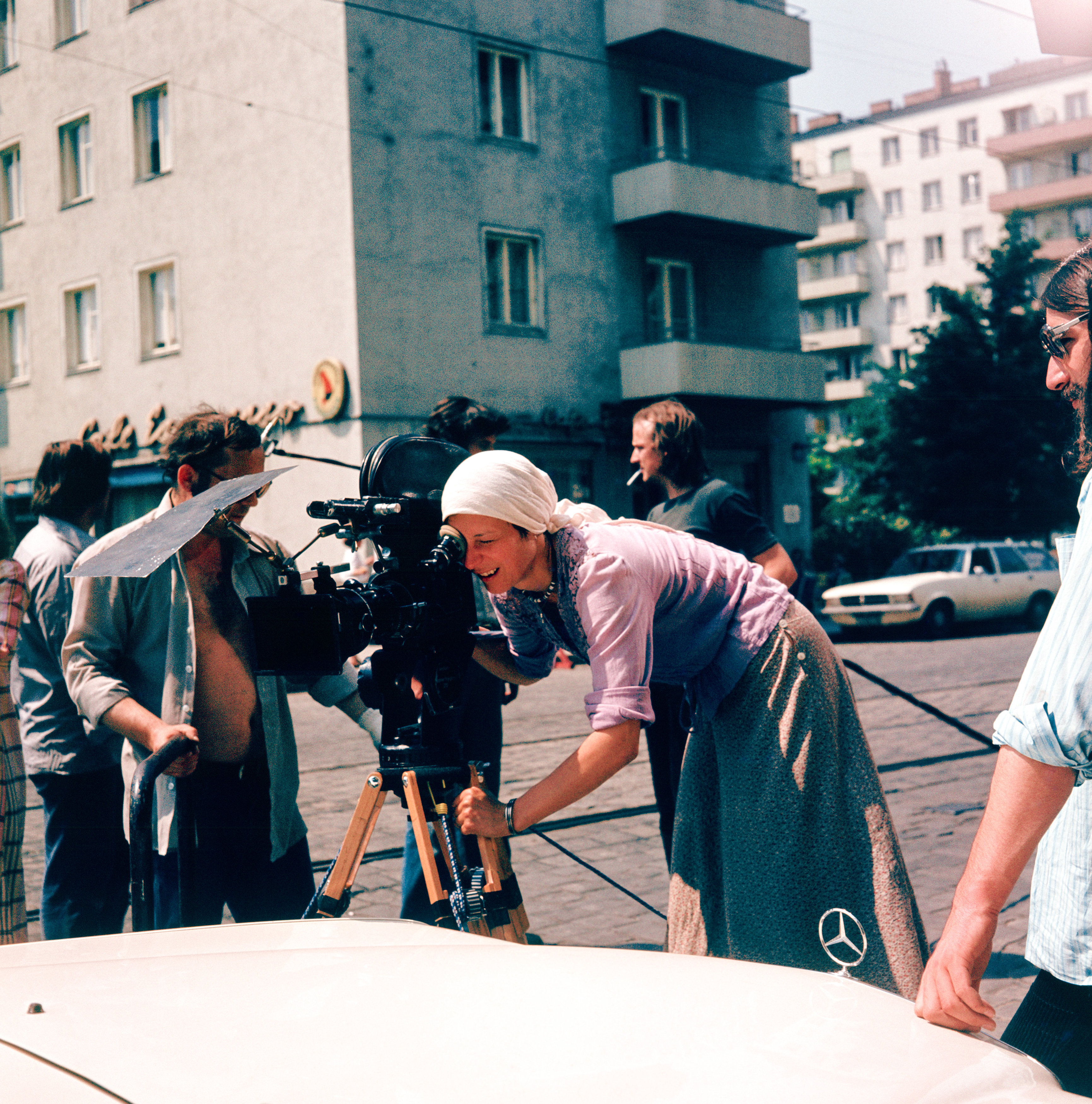
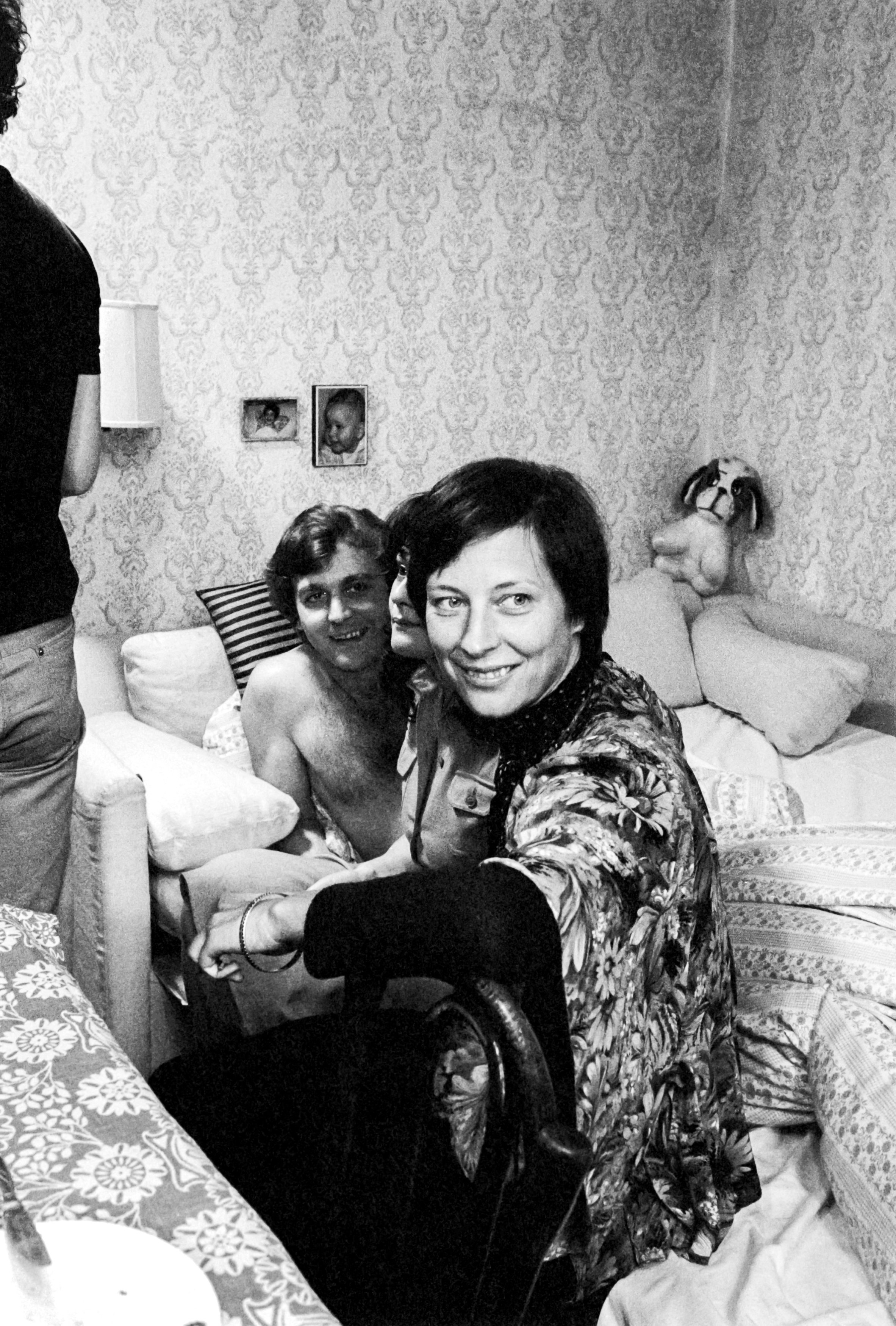
Kratz is considered a pioneer of female filmmaking and television production in Austria. She was the first woman to make her own feature film at ORF, and alongside Margarete Heinrich, Heide Pils and Monika Maruschko, she was a member of the informal group “Aktion Filmfrauen”.
“A genuine ‘women’s picture’ that articulates the pressing issues of the women’s movement emerging in the 1970s.”
In Mit Leib und Seele, she focuses on the arduous process of emancipation of a woman who has to contend with forms of male ignorance and contempt, both personal and institutional. This includes family law that makes it impossible for women to work and have children at the same time.
Elfi’s son from a failed marriage to a violent husband lives with his grandmother, while she eventually has to fight in court for continued payment of her wages during pregnancy. Something is not right with Poidl either. After the initial shock, he patronisingly slips her money for an abortion; when, after much agonising, she decides otherwise, he already sees himself as the proud “head of the family” and imagines a cosy home where food is waiting on the table, the son grows up to be a great rascal and the wife is always there for him. But Elfi likes being a taxi driver: “That way, I’m my own boss.”
Mit Leib und Seele shows how a woman collapses under the weight of her circumstances, only to eventually put herself back together. In a social climate that calls the expression of genuine overwhelm hysteria and regards a slap as a means of restoring the balance of power, this is no easy process. The fact that Kratz tells the story of Elfi’s self-discovery in a working-class environment entirely untouched by politicised feminist debates makes her film all the more radical.
*Lives as a film critic in Berlin.
As a major pioneer, Käthe Kratz laid an essential foundation for contemporary female filmmaking in Austria.
FLORIAN WIDEGGER
Learning to Say No
A Feature Film as a Document of Women’s Resistance
Florian Widegger
Solidarity is not only writ large in Käthe Kratz’s films, it is also put into practice – and reflects the filmmaker’s own environment, as she was likewise involved in the women’s movement emerging at the time. In her fourth feature film Mit Leib und Seele, she tells the story of taxi driver Elfi, who has learned through her profession to stand her ground and is not afraid to speak her mind: unpleasant, stingy passengers quickly find this out when she throws their suitcases out onto the street. She steers her vehicle safely and skilfully through the streets in the summer of ’77.
A sensation, considering that actress Brigitte Swoboda did not have a driving licence. To remedy this, she was supposed to take her driving test shortly before shooting began, but she failed and therefore spent the entire film “illegally” behind the wheel. Mit Leib und Seele is a film in which Vienna can not only be seen – from construction sites and small neighbourhood pubs to municipal housing complexes – but above all heard: street noise mingles with news from the car radio and the sounds of crowds.
For the first time, the commotion subsides after half an hour: Elfi goes for an evening walk along the Danube with her Poidl (pre-Kottan: Lukas Resetarits), and the hectic pace of everyday life comes to a halt for a few moments. But this brings the problems to the surface: she is expecting a child with the good-hearted, if sometimes somewhat hot-tempered waiter, who is trapped in his own view of the world and of masculinity. Her son from a previous relationship is being raised by his father’s parents. The film leaves the background unexplained, but the rejection Elfi faces when she picks up her child from the stuffy apartment speaks volumes, as does the division of roles it conveys.
In 1973, Austria passes the time-limit regulation on abortion, and working conditions for pregnant women are regulated. As a taxi driver, the pregnant Elfi is legally prohibited from working, but her boss refuses to continue paying her wages. Although she knows the law is on her side, no one is willing to support her in enforcing her rights: men sticking together. She is desperate until she encounters a committed woman who wants to help her. At the end, they sit together in the kitchen with other women and their children, celebrating their shared success – sobered, yet ready to fight.
The realisation “Either the work suffers or the children do – or you run yourself ragged – either way, you’re the one who gets left behind” is followed by a simple declaration that still resonates today: “I don’t want this.” This act of saying no makes Mit Leib und Seele a remarkable and vivid document of early resistance to the patriarchal conception of society in the country.


