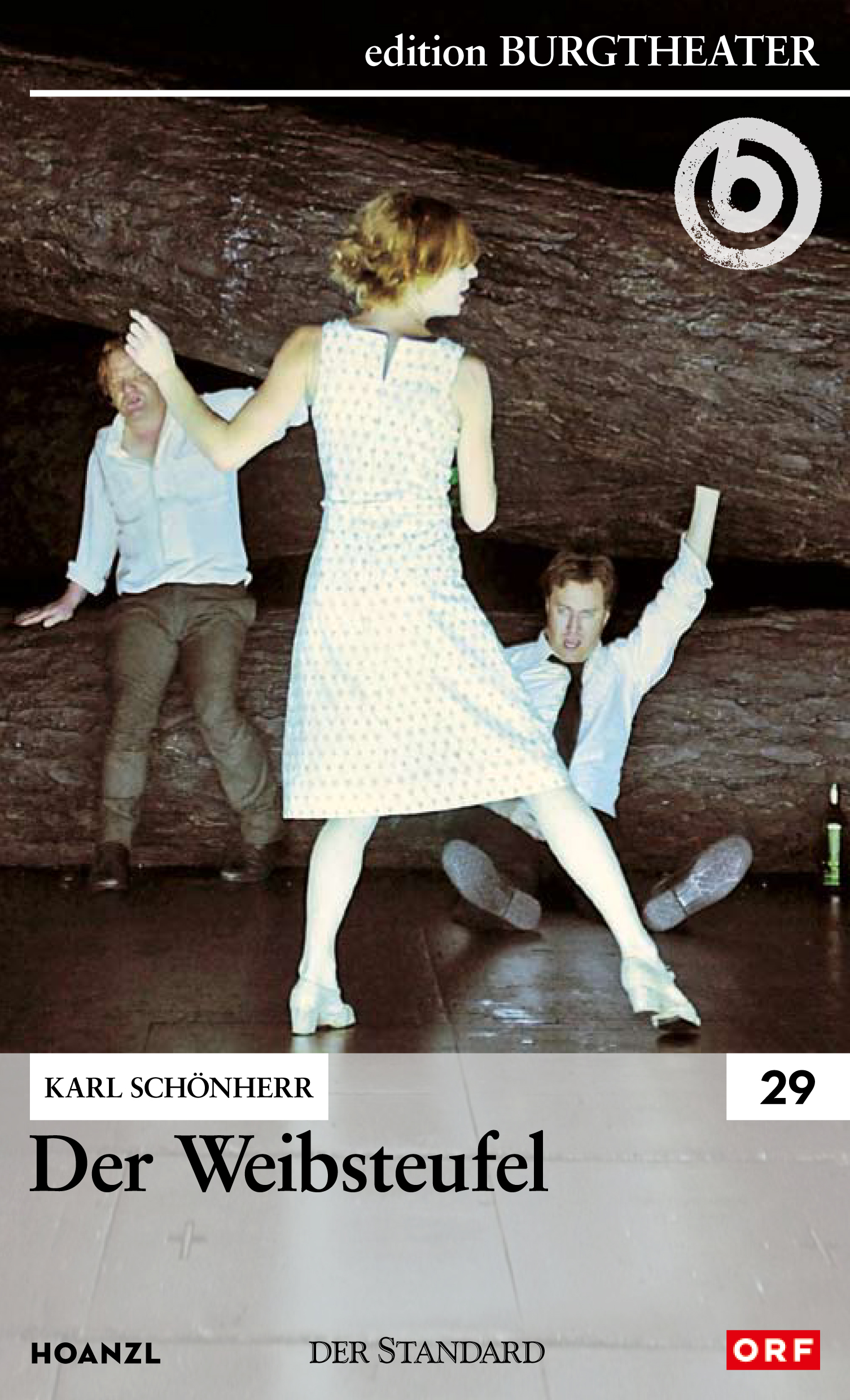
Der Weibsteufel
Recording from the Burgtheater, 2009
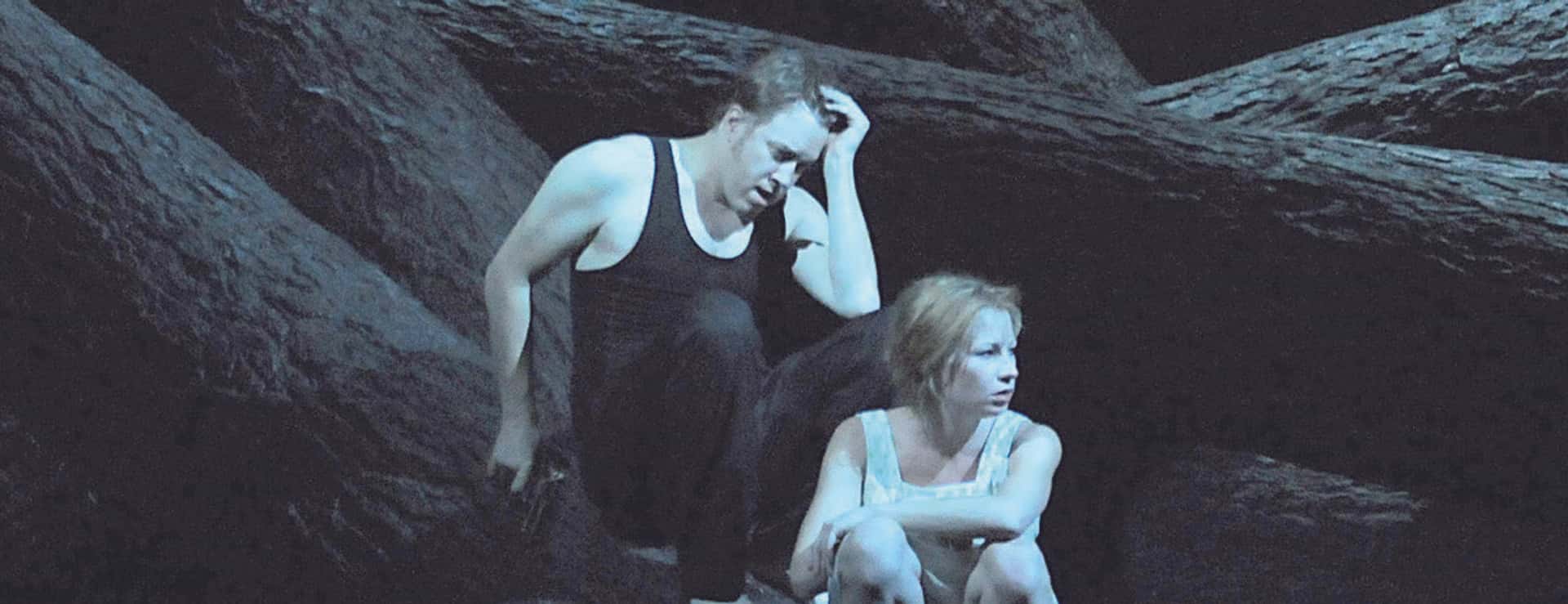
Karl Schönherr’s drama "Der Weibsteufel" (The She-Devil), which premiered at the Burgtheater in 1915, is a raw piece of folk theater—a Strindbergian tale involving a woman and two men, and an erotic comedy of crime set in the Tyrolean mountains. A man who makes his living by dealing in contraband learns that, after many futile attempts, the local police commander finally intends to put a stop to his activities by “setting” a young border guard on his attractive wife. The border guard hopes for a quick promotion if he seduces the woman (into revealing information). The husband, on the other hand, pressures his wife to feign interest in the guard’s advances in order to buy time for his criminal dealings. Thus, the woman’s erotic appeal is meant to serve the material interests of both competing men. The woman disrupts the economy built around her body by introducing genuine feelings into the mix. The tactical approach to the ranger by both sides turns into genuine sexual attraction, and the husband’s apparent erotic generosity, in turn, sparks burning jealousy. In the end, the hunter has become the husband’s murderer and must flee the country, while the widow inherits “the big house on the market square,” where she will now receive men she has chosen herself. The fact that the men’s calculations in this immoral game do not add up is due, on the one hand, to the fact that the dynamics of desire cannot be kept under control; on the other hand, however, the woman suddenly becomes aware of her true worth through the experience of personal devaluation. Degraded to a commodity by the competing men, she recognizes her market value as a weapon. She learns to increase the value assigned to her, to use it, to barter with it, and ultimately to defeat the masters of the economy with their own methods.
Werner Wölbern, Birgit Minichmayr, NIcholas Ofczarek and many more
Set Design: Martin Zehetgruber
Costume Design: Heide Kastler
Music: Bert Wrede
Lighting Design: Felix Dreyer
Dramaturgy: Sebastian Huber