


Speak Easy
"Highlights of domestic short filmmaking from 1992 - 2001 are gathered in this compilation: SONNENFLECKEN (1998) by Barbara Albert, ÄGYPTEN (1997) by Kathrin Resetarits, AUTOMATIC (2002) by Josef Dabernig/G.R.A.M., DIE SCHWARZE SONNE (1992) by Johannes Hammel, FLORA (1996) by Jessica Hausner, SPEAK EASY (1997) by Mirjam Unger, and - nominated for a short film Oscar - Virgil Widrich's COPY SHOP (2001). "The young female directors explore youthful lifeworlds, their male colleagues contribute varieties of science fiction and road movie." (Isabella Reicher) At this point, by the way, many thanks to Brigitta Burger-Utzer and sixpackfilm for their support and advice in explorations and selection in short and avant-garde film." CLAUS PHILLIP
"Seven films from ten years. A small slice of Austrian film history that depicts the captivating diversity of the 'small form'." ISABELLA REICHER
Victor Tremmel, Nina Proll, Kathrin Resetarits, Una Wipplinger, Eva Maria Klauser, Hakan Baykal, Elisabeth Ebner-Haid, Johannes Silberschneider and many more
- Barbara Albert: SONNENFLECKEN - 1998 (25 min.)
- Kathrin Resetarits: ÄGYPTEN - 1997 (10 min.)
- Josef Dabernig/G.R.A.M.: AUTOMATIC - 2002 (7 min.)
- Johannes Hammel: DIE SCHWARZE SONNE - 1992 (26 min.)
- Jessica Hausner: FLORA - 1996 (25 min.)
- Mirjam Unger: SPEAK EASY - 1997 (20 min.)
- Virgil Widrich: COPY SHOP - 2001 (12 min.)
DVD Edition # 49

ABOUT THE FILM


Picture Stories
Seven Short Films from Austria
Isabella Reicher*
Seven films from the span of ten years. A small cross-section of Austrian film history that, in some cases, marks the beginnings of later developments towards feature filmmaking and, in every instance, reflects the striking diversity of the “short form.”
Four of the seven works were made at the Vienna Film Academy. When Barbara Albert, Jessica Hausner, Kathrin Resetarits and Mirjam Unger presented their films from 1996 onwards, they were widely received—despite all their individual differences—as signs of a new departure. The later notion of a filmmaker-driven Nouvelle Vague viennoise has some of its origins here. These films experiment with the possibilities of cinematic storytelling: it is not the spoken word that creates narrative coherence; instead, visual expression initially takes centre stage.
The short fiction films by Albert, Hausner and Unger all revolve around (female) adolescents and young women. In Sonnenflecken (1998)—Albert’s last short film before she expanded related themes into the feature Nordrand—dreams, longings and the everyday lives of two young women and a little girl overlap in fragmentary scenes.
Flora, somewhat reminiscent of Aki Kaurismäki, tells the story of its young, quietly determined heroine breaking away from her parents’ home and from conventional middle-class notions of happiness.
“It is not the spoken word that creates narrative coherence; instead, visual expression takes centre stage.”
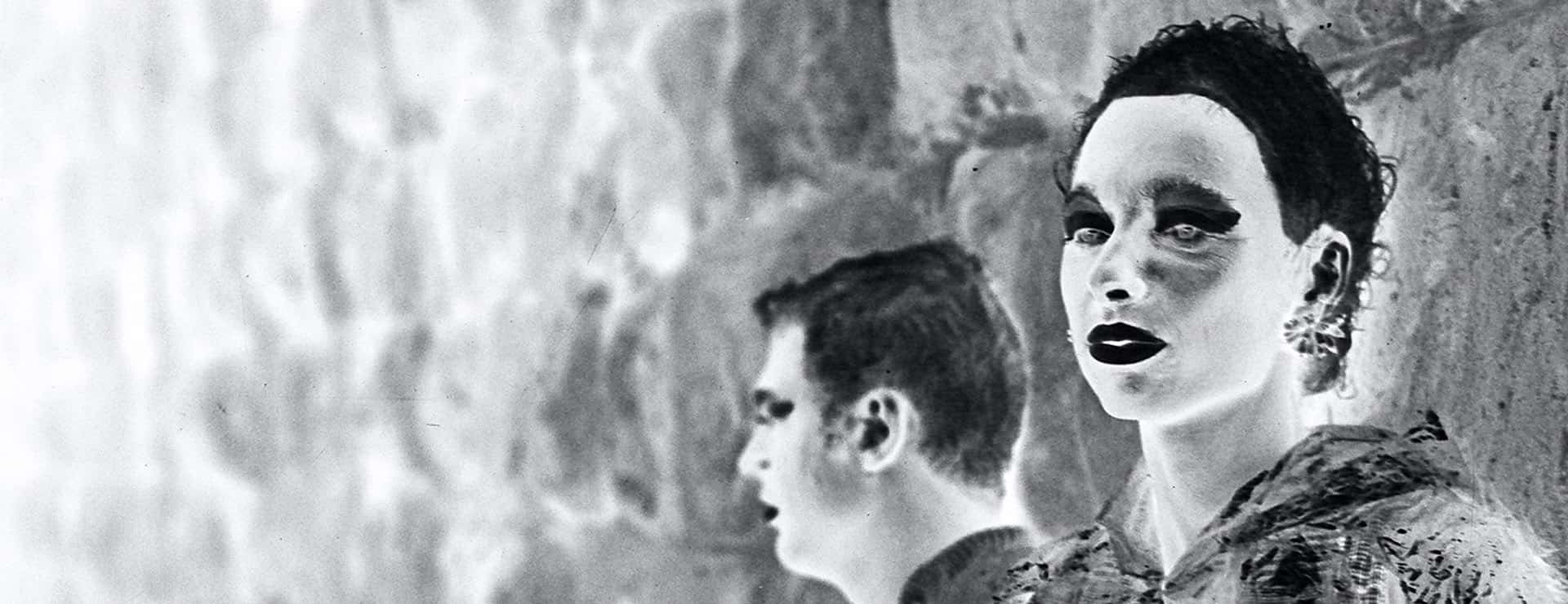
Speak Easy stages teenagers and young adults talking on the telephone, developing from this a polyphonic narrative about friendship and loneliness, love and betrayal, group dynamics and passing the time. (In the age of mobile phones that has since emerged, it has also become a small document of the era of landline telephones, their devices, and the behaviours and gestures associated with them.)
By contrast, in Ägypten, Resetarits successfully translates her documentary observations of expressive deaf people into the register of silent cinema: it is not only the eloquent sign language that recalls the early days of film.
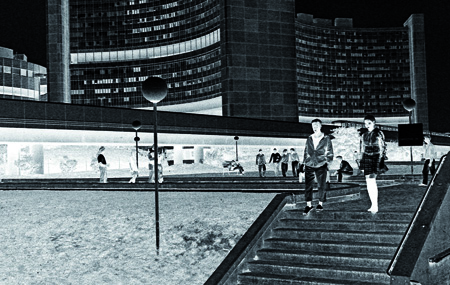
These four works are joined by three others. Josef Dabernig’s films occupy the intersection of cinema and the visual arts. In automatic, created together with G.R.A.M., men and their immobilised vehicles are set into cinematic motion to the driving soundtrack by Binder & Krieglstein.
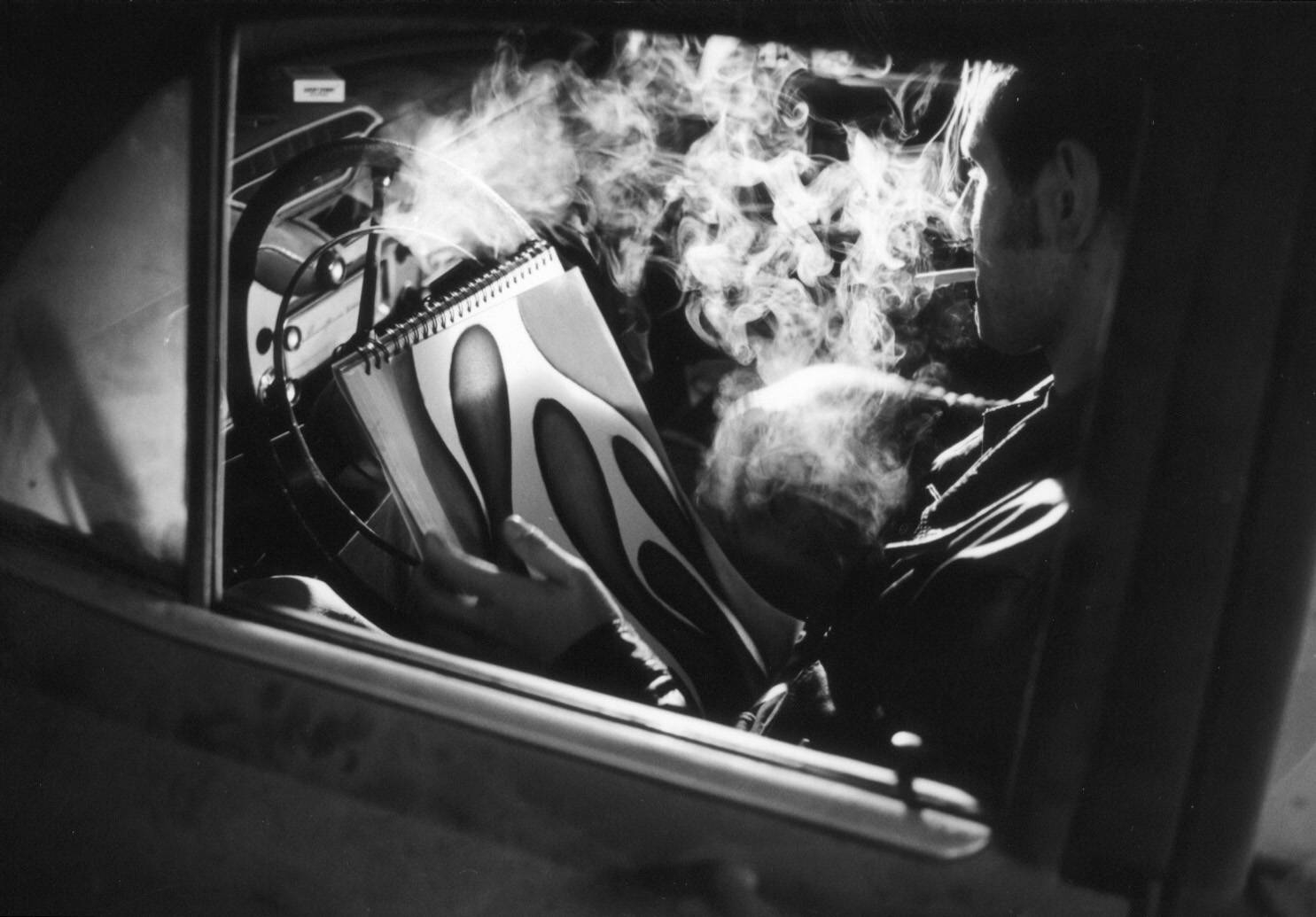
Die schwarze Sonne, by director and cinematographer Johannes Hammel, is a fine example of how a simple visual transformation—we see solarised images—can produce captivating science fiction.
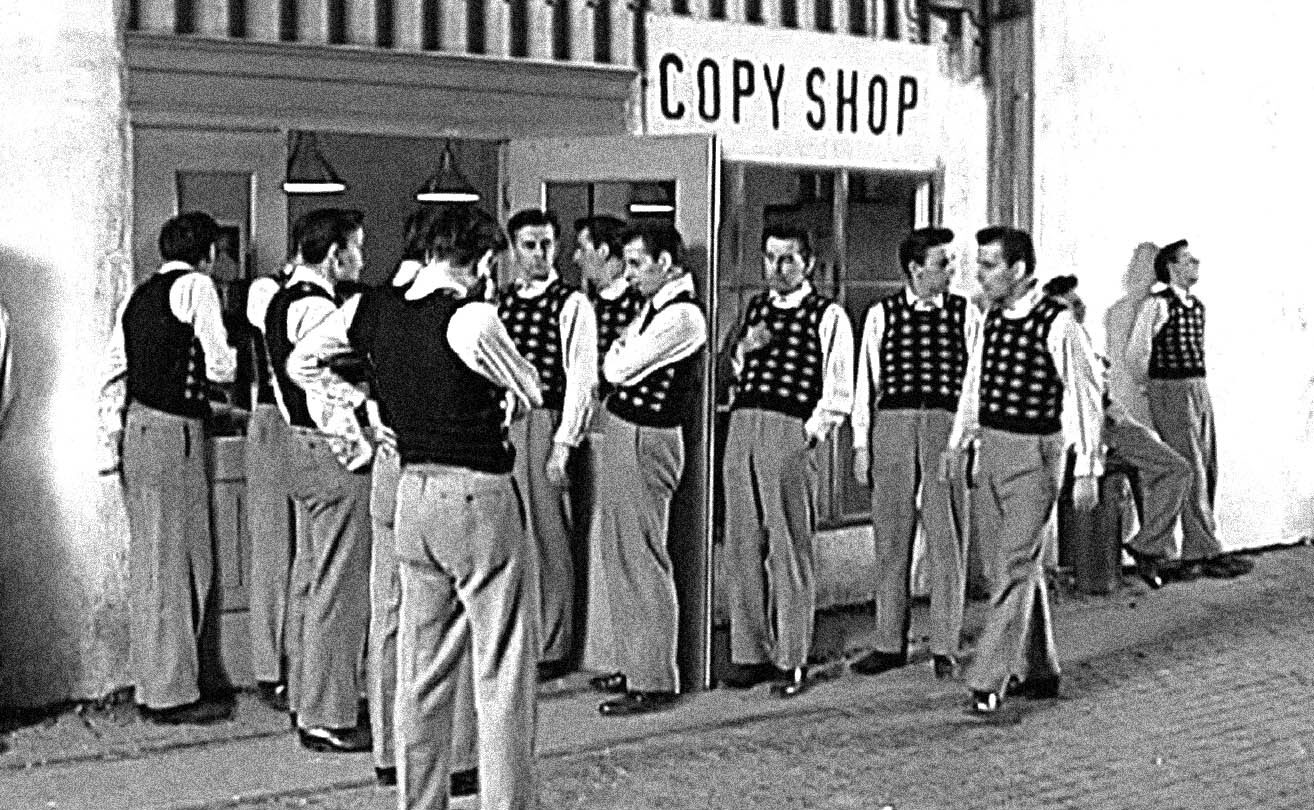
Finally, Virgil Widrich’s Copy Shop ingeniously combines two techniques of artificial reproduction, with the “original” disappearing amid a multitude of doubles. The film also forms part of Austrian cinema’s success story: in 2001, this twelve-minute miniature was nominated for an Academy Award.
*Film critic for Der Standard; editor of kolik.film.
Seven films spanning ten years. A small cross-section of Austrian film history that reflects the striking diversity of the ‘short form.’
ISABELLA REICHER
Gravity. Weightlessness.
Essential Short Films by a Younger Generation – Released on DVD for the First Time.
Barbara Albert Sonnenflecken (1998, 25 min)
A young woman and a little girl are playing football. As the ball rises into the air, the black-and-white sequence dissolves into the red of the evening sky, where a bird is flying high above. The bird belongs to a dream. This opening is programmatic: the different layers of experience flow seamlessly into one another, telling of the uncertainties of growing up.
(Birgit Flos)
Kathrin Resetarits Ägypten (1997, 10 min, silent)
Kathrin Resetarits has created a very special silent film composed of rich gestural narratives in sign language. Their translation is alternately provided by written text, fictional images, voice-over and music. Without further explanation, without any “pretext of relevance,” this successful homage to the expressiveness of early cinema simply captures something that is at once everyday and yet unfamiliar to most viewers.
(Isabella Reicher)
Josef Dabernig, G.R.A.M. automatic (2002, 7 min)
Three men, three cars, three obsessions. A study of obsession set in a rural garage; a black-and-white road movie without asphalt or roaring engines. Dispensing with conventional narrative logic, it quotes genres such as film noir and the Nouvelle Vague.
(J. D. + G.R.A.M.)
Johannes Hammel Die schwarze Sonne (1992, 26 min)
Die schwarze Sonne is based on a short story by the American science fiction writer Samuel R. Delany and tells of the encounter between a “Spacer” and a “Frelk.” “Spacers” are androgynous beings created to perform technical work on the surrounding planets and their moons. Thanks to their ability to adapt to different gravitational conditions, they become objects of obsession and commodities of desire for the “Frelks,” who remain bound to Earth’s gravity.
(J.H.)
Jessica Hausner Flora (1996, 25 min)
The title character grows up. Rejections, dancing school, a cinema of glances, tender moments and trivial pop songs combine in a film that takes its time, looks closely, and (re)creates evocative sequences of images for loneliness and attempts at escape.
(Christian Cargnelli)
Mirjam Unger Speak Easy (1997, 20 min)
A perfectly ordinary day in the city. Eleven young people engaged in an equally ordinary activity. They are talking on the telephone. They talk about nothing in particular: boredom, being together or not being together, aims and aimlessness, sex, insecurity and their vague desire for something more. In this apparent triviality, they offer a glimpse into feelings they would otherwise reveal only among themselves.
(M.U.)
Virgil Widrich Copy Shop (2001, 12 min)
Strange disturbances—dog-eared image corners or streaks across the frame—arouse the suspicion that, in Virgil Widrich’s Copy Shop, the content is unable to keep the form fully under control. At first, however, deceptive convention prevails: a man (Alfred Kager) wakes up, arranges his hair in front of the mirror, and steps into the street to make his familiar journey to work. Only once he reaches the photocopier does the world begin to come apart.
(D. Kamalzadeh)


