



April 1, 2000
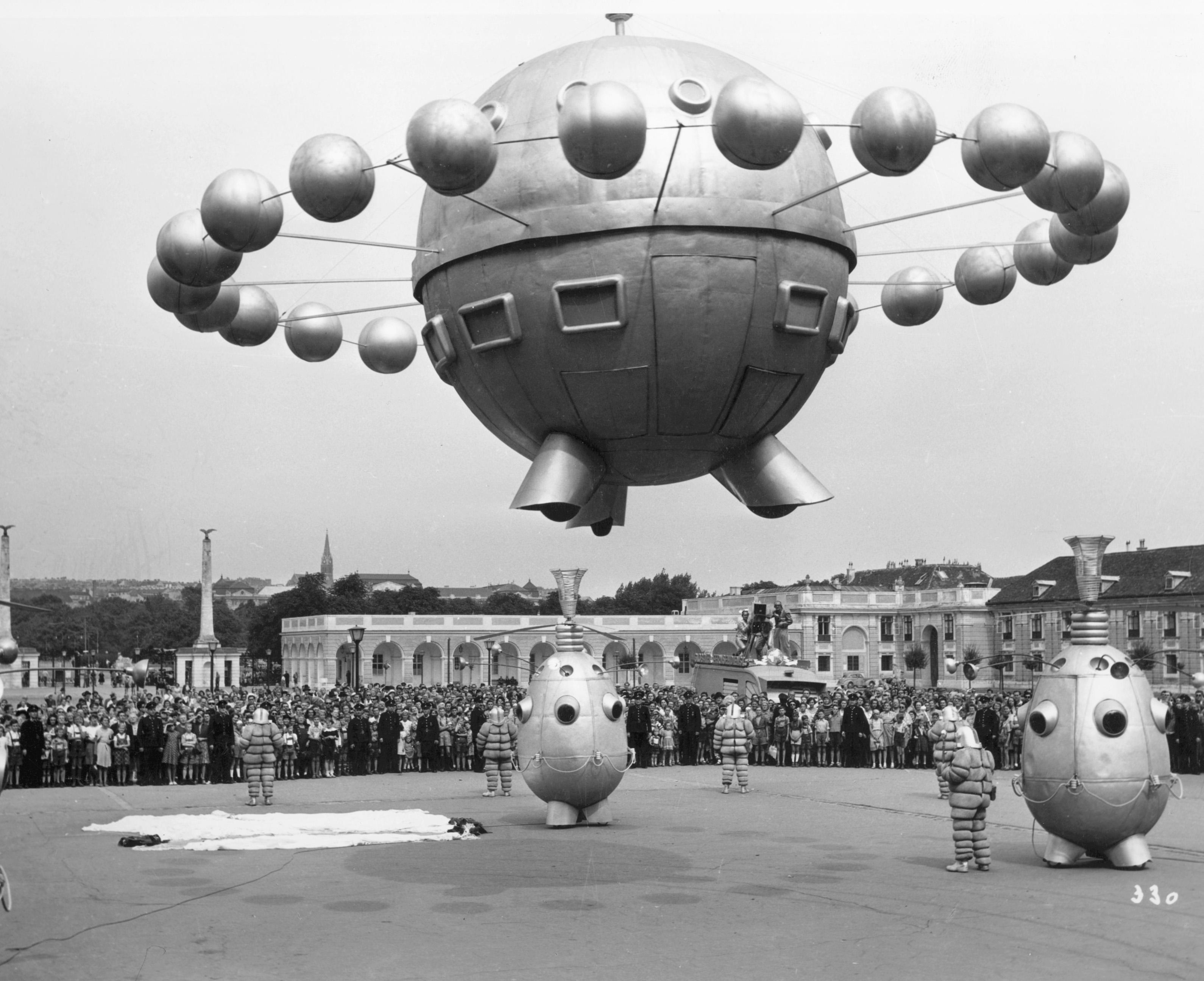
Science fiction hergestellt in 1952 on behalf of the Austrian government, with a top ensemble from Hans Moser to Josef Meinrad: In the year 2000, occupying troops are still stationed in the country and no state treaty is yet in sight. On April 1, the prime minister declares Austria independent, which quite outrages the world public. Unique in Austria's film history! UFOs over Schönbrunn: madness!
"An April Fool's joke, a joke projected into the future..." MICHAEL FRIEND
Hilde Krahl, Josef Meinrad, Waltraut Haas, Judith Holzmeister, Elisabeth Stemberger, Ulrich Bettac, Karl Ehmann, Peter Gerhard, Curd Jürgens, Robert Michal, Heinz Moog, Guido Wieland, Paul Hörbiger, Hans Moser and many more
DVD Edition # 23

ABOUT THE FILM


The Exoneration Revue
Satire on Historical Revisionism: 1 April 2000
Peter Hörmanseder*
The year is 2000. The parliamentary leaders of the FPÖ and ÖVP compile a “list of deficiencies” in ORF journalism. First point: Only after persistent insistence had ORF been prepared to report on “sanctions against Austria” rather than “sanctions against the federal government”. Well, what an uproar that caused among the Austrian people! National solidarity was born, and soon the Council of Wise Men sent to Austria came to the conclusion that the sanctions should kindly be withdrawn. It was solely the charm of the pointy-hat-wearing Foreign Minister Ferrero-Waldner that was credited with this breakthrough. Just as, back in the day, only the late Figl’s capacity for drink had managed first to drink the Russians under the table and then out of the country.
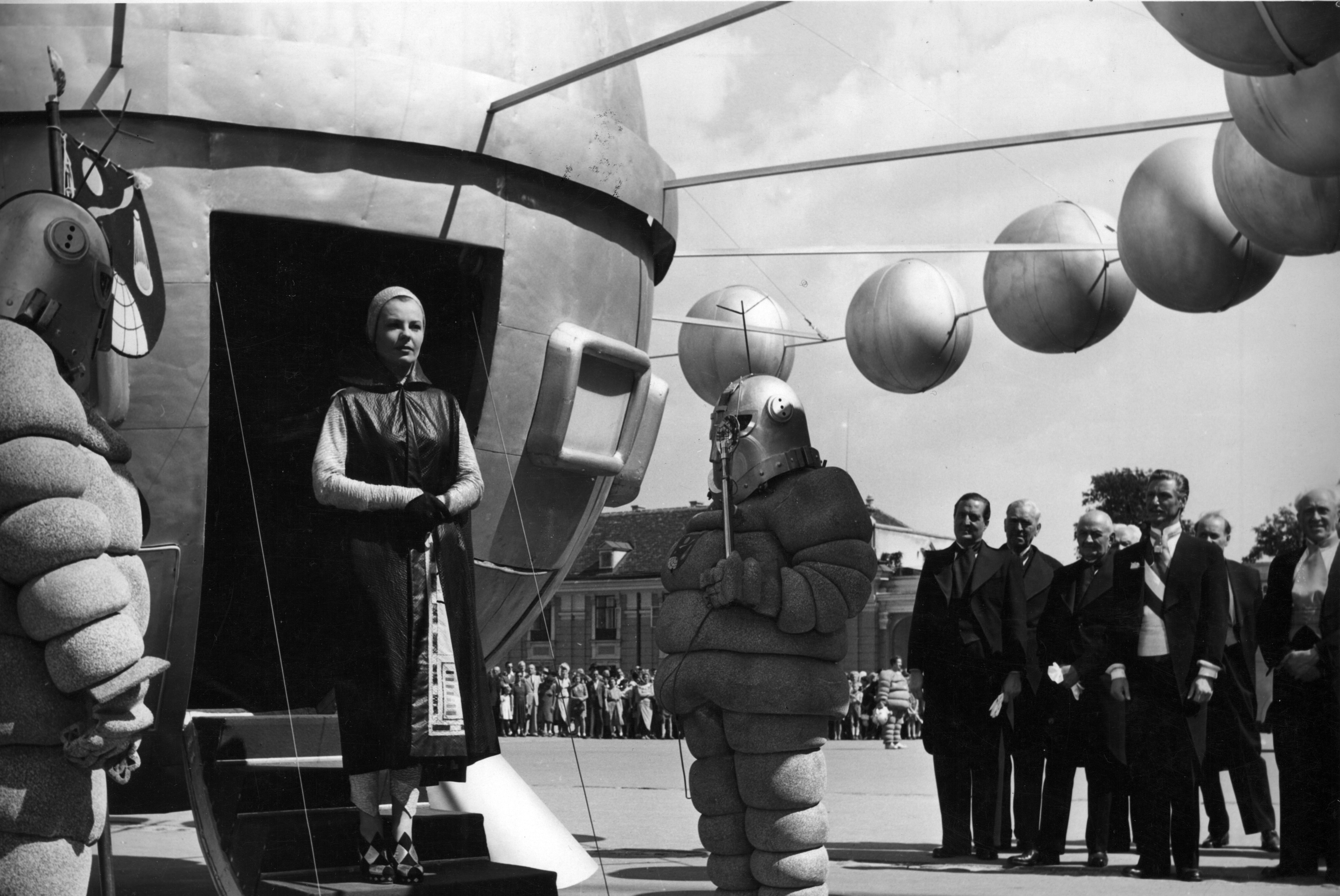
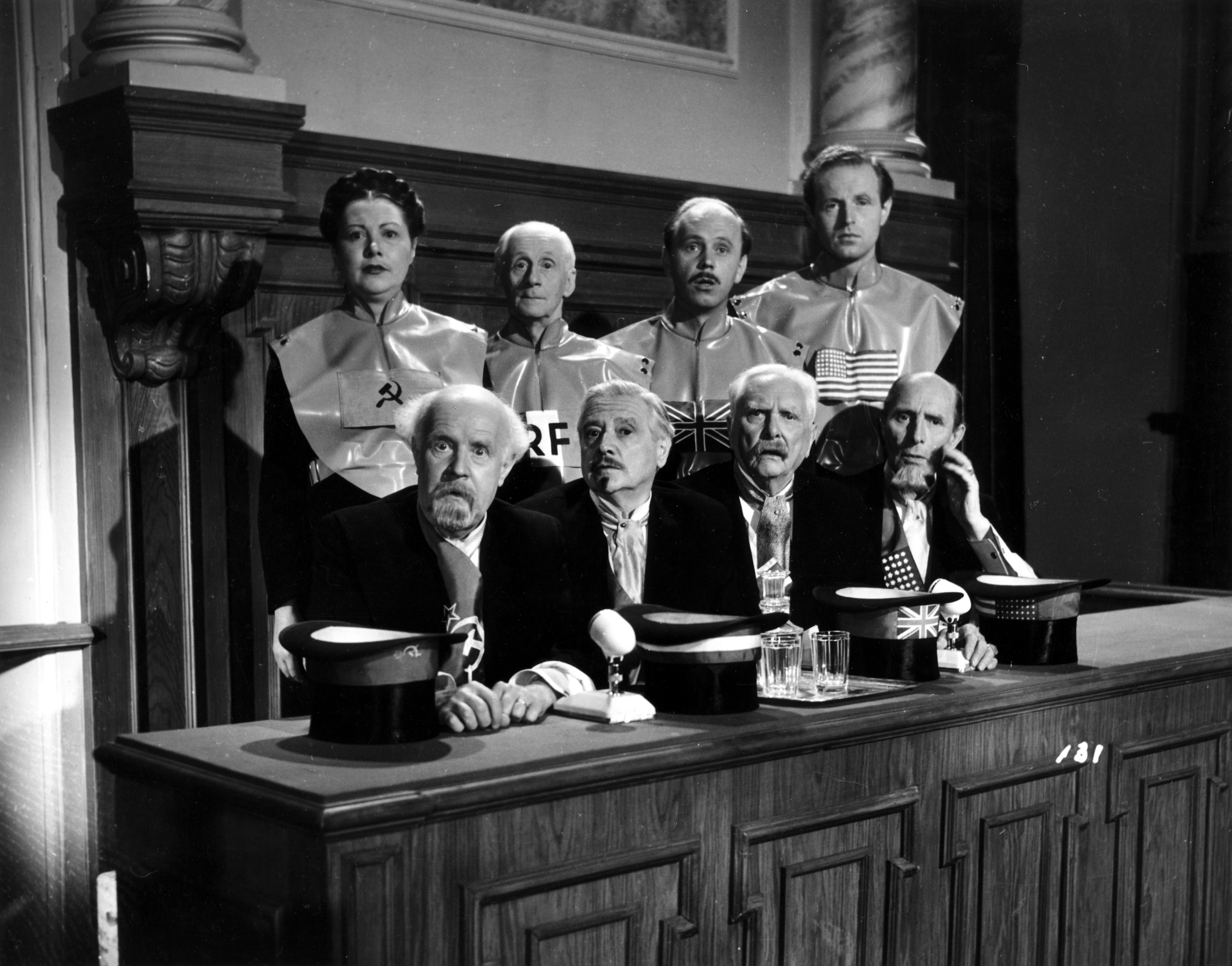
According to what secret screenplay does Austria’s political leadership act when it comes to mastering all-encompassing national crises? The answer is provided by a film from 1952. Commissioned by the federal government, Wolfgang Liebeneiner, with the assistance of the leading film and theatre figures of the time, directed the official Austrian film 1 April 2000. After 55 years of occupation, the new Chancellor declares the Four-Power status abolished. The World Protection Commission flies – via Australia (too stupid, these foreigners) – to Tu felix Austria in order to hold the head of government accountable.
“The film still derives its appeal today from the game of mimicry between the real and the fictional federal government.”
What follows is an exonerating revue of the history of peaceful Austria, perfectly staged by the greatest artists of fictional as well as real Austria. In the end everyone is drunk, hearts dance in three-quarter time, and Austria is finally free.
Right from the beginning, the film makes one fundamental problem clear. The opening credits have to be translated into the respective languages of the real occupying powers. They are full of curious translations, confronting Mr and Mrs Austrian with John/Jean Moser or Conrad Juergens. And on top of that, official stamps without number. Austria in the 1950s, a bureaucratic state directed from abroad. The splendid final credit of the opening titles: “This film was produced with the most generous support of the state and ecclesiastical authorities as well as with the broadest participation of the people of Austria”. TRUE (the latter an impudent stamp, presumably without official interference).
The film still derives its appeal today from the game of mimicry between the real and the fictional federal government. Since, in the film’s year 2000, the Nazi period is no longer an issue – after 50 years this period ought to have been forgotten – the message of the real government bores unmistakably into one’s brain: draw a veil over all that unpleasant Nazi business, it won’t happen again, besides, compared with the 1,000 years before that it was nothing – can you finally just clear off...
*Media satirist and media professional www.maschek.org , lives in Vienna.
The film still derives its appeal today from the interplay of mimicry between the real and the fictional federal government.
MICHAEL FREUND
The Whole World Against Us
1 April 2000 tells of the hopes and blind spots of the occupation period.
Michael Freund
After many confusions and detours, the President of the World finally lies in the arms of the Chancellor. The strains of a waltz begin. The people rejoice and know:
Everything will be all right. Now. It really could all have turned out well back then, in 1952. The film, which ended as happily as it began bleakly, had much in its favour: stars, a large budget, nationwide support during production. And a magical date as its title: 1 April 2000 – a utopian day in the distant future, even farther away than that 1984 which a British writer had chosen as the title of his novel. At the same time, an April Fool’s joke. Taken together, a joke projected into the future, a recipe for successful cinematic entertainment.
Whether the largest film ever commissioned by the Republic of Austria was primarily intended to entertain or to shape public opinion, whether it sought to elevate reality or to gloss over it, opinions already differed during the preparations. Behind the celluloid, threatened with decay (but long since preserved on video), the outlines of an elaborate state project now become visible. It was symptomatic of the condition of the nation (Nation?! That was already one of the concerns) after the Second World War, of the longings of the occupied republic.
The whole world against us: In 1948, at the beginning of reconstruction, the Council of Ministers decided that the time had come to introduce a newsreel in Austria and to produce a “representative propaganda film”. A committee of civil servants was formed and a competition announced to solicit film ideas. According to the call for entries, the film was intended, particularly for screenings abroad, to present the country's cultural and scenic beauty as well as its achievements in reconstruction. There was not one winner but four, and none of their proposals was accepted. Instead, in accordance with Austria’s system of political proportionality, Ernst Marboe from the committee and the writer Rudolf Brunngraber were commissioned to write the screenplay. For a “documentary feature-film comedy”, Chancellor Figl proposed the German director Wolfgang Liebeneiner. He was chosen (instead of G. W. Pabst or Willi Forst, who had also been considered), although he had become known for his Nazi propaganda films.
But that was not an issue. As in Austria in the early 1950s, so too during the preparations for 1 April 2000, all eyes were directed solely towards the future. The war and the recent past as a whole were ignored in favour of the one concern that drove the production: how Austria might once again become a sovereign state. At times this is staged in a genuinely comic fashion. The film plays with formal levels and mixes revue with drama. Yet it stumbles. The film was in fact completed in a remarkably short time, premiered in November 1952 and, with the exception of the communist press, received favourable reviews. Hopes for international distribution proved exaggerated. 1. April was released in several countries and achieved respectable success. The American market, however, remained closed. Soon afterwards, Hollywood demonstrated how “Austrian” material could be turned into both dark and propagandistic successes: with The Third Man and The Sound of Music.
This (abridged) text appeared in Der Standard ALBUM on 18 March 2000, in the context of the political shift and the debate on sanctions against Austria.


