
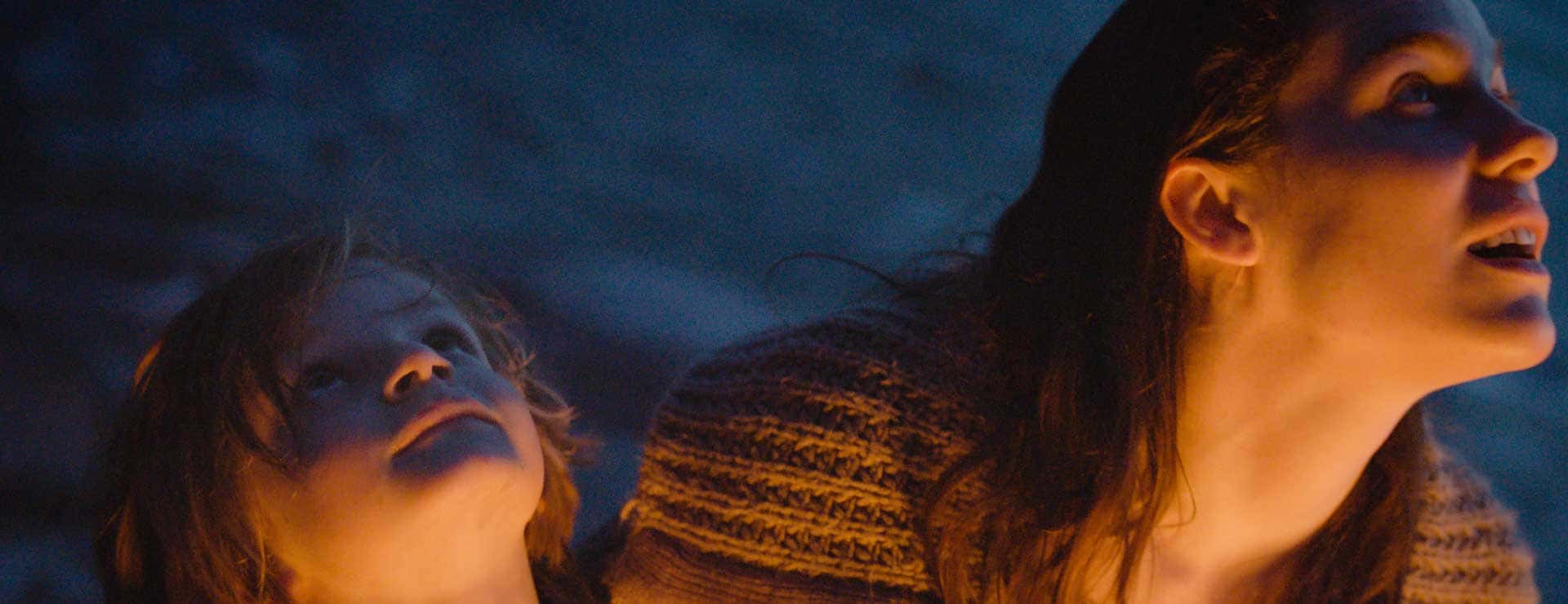


The Best of All Worlds
Die beste aller Welten (original title)
The true story of a young woman addicted to drugs, the adventurous world of her child and their love for each other. Director Adrian Goiginger tells his own story in his debut film, creating a tribute to his mother, despite all the adverse circumstances. THE BEST OF ALL WORLDS was awarded as best Austrian film, shooting star Verena Altenberger as best Austrian actress.
"An excellent example that drama and crowd-pleasing need not be mutually exclusive." WIENER ZEITUNG
Verena Altenberger, Jeremy Miliker, Lukas Miko, Michael Pink, Reinhold G. Moritz, Philipp Stix, Michael Fuith, Fritz Egger and more
DVD Edition # 311

ABOUT THE FILM


In the Heart of Chaos
Adrian Goiginger’s „Die beste aller Welten“
Bert Rebhandl*
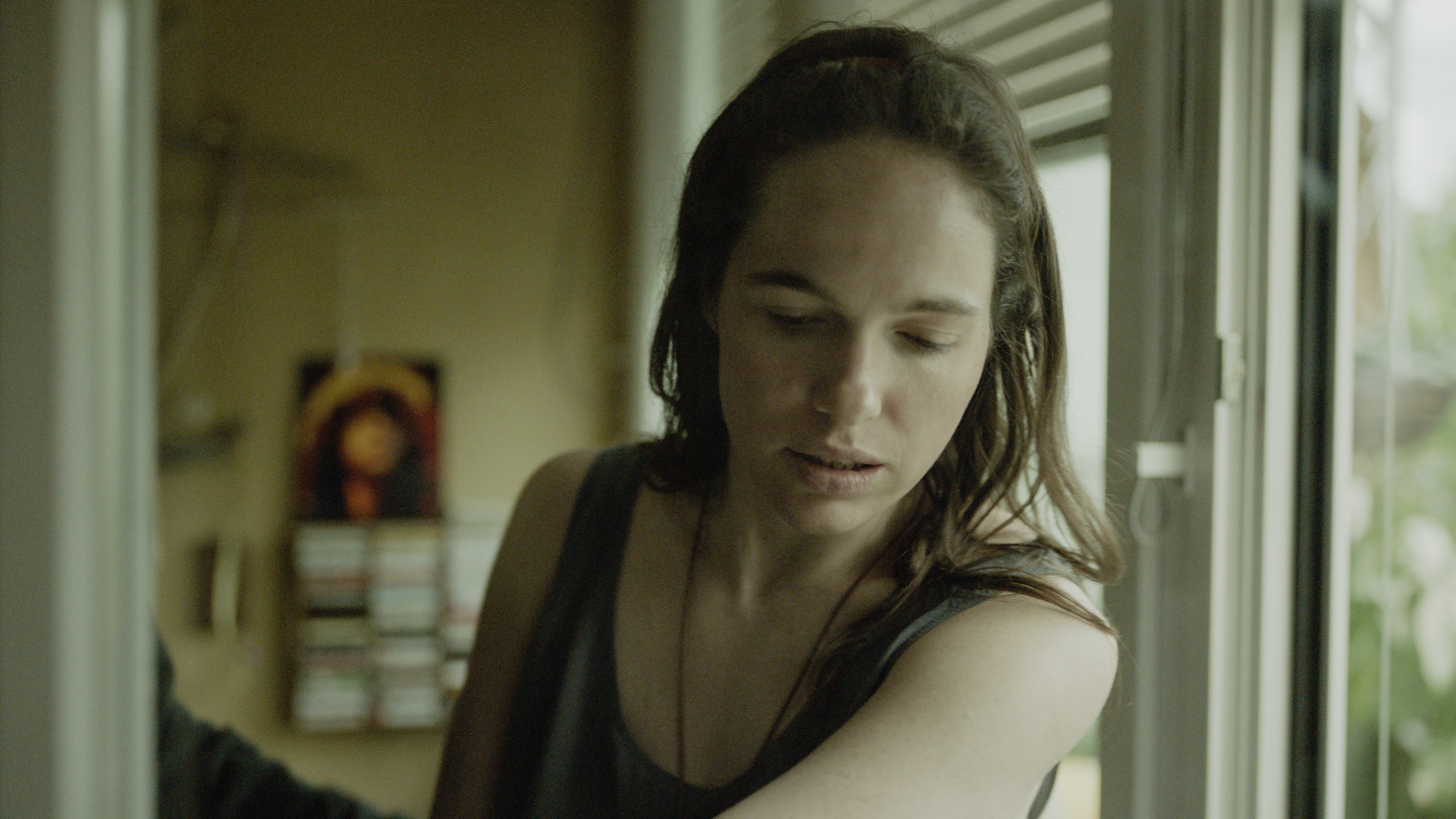
Go to your room and play with something, I’ll be there in a minute.” This instruction, which the mother gives to young Adrian, is something like the refrain of his life. Time and again, he is, as it were, waiting in the wings while the worst things unfold in the apartment where Adrian is growing up. His single mother Helga Wachter is severely addicted to drugs, and as if that were not enough, the apartment is also repeatedly filled with friends and acquaintances who make no attempt to hide their drug use from the boy. And when the father reappears as well, the dysfunctional family is complete.
As a social worker, you certainly would not give Adrian a good prognosis, but the perspective Adrian Goiginger adopts in his film is not an outside one; instead, it leads directly into the midst of this dangerous life. Even in his choice of names for the characters, Goiginger makes clear that he is telling of things he himself experienced. He is and was this Adrian, who had to watch wide-eyed as the adults destroyed their lives – or somehow managed to get them back on track at the very last moment.
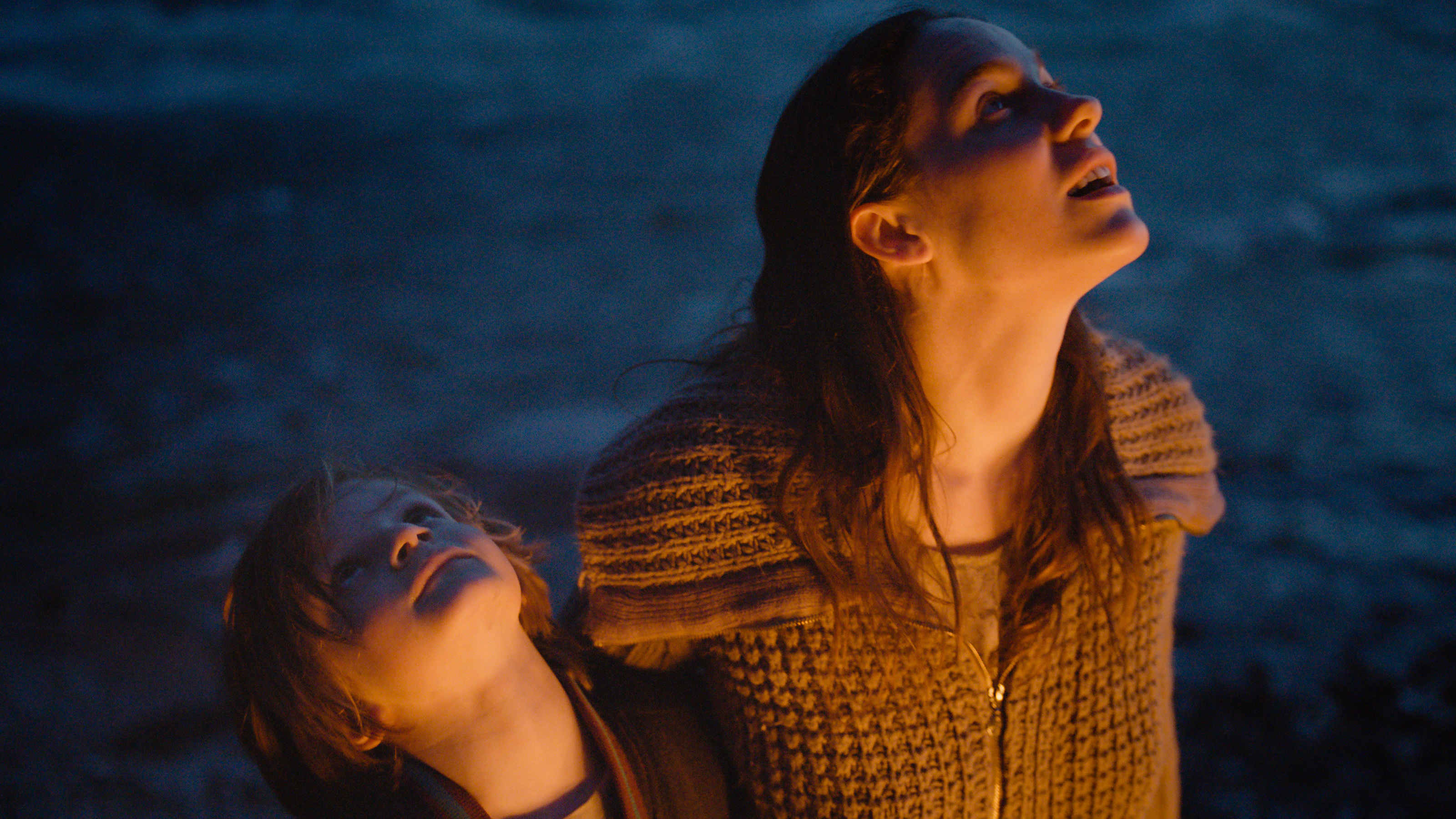
The title Die beste aller Welten is to be taken literally – and very much in this absolute sense. For Adrian (played quite brilliantly by Jeremy Miliker), the best of all worlds is the one in which he can be with his mother Helga (Verena Altenberger). The two form something like a tight-knit team in the heart of chaos.
“Adrian’s mantra is: ‘Mum saved me.’ The film tells of a miracle for which you do not have to believe in God, but in a child.”
The mother gives her son a narrative key with which he can interpret and overcome the difficulties: everything is an “adventure”; with the right attitude, you will get through it.
Adrian – out of necessity, but with the extraordinary survival instincts of an alert child – embraces this protective narrative; he takes on the demons that populate his life. What in another child his age would seem like perfectly ordinary foolishness (the first cigarette, with which boys prove to themselves that they can smoke like the grown-ups, and then ruthlessly force even an asthmatic to inhale) is, in his case, marked by a destructiveness that could also come to define his life.
It is almost impossible to watch the film without being swept along by the energy with which a shared life in a usually smoke-filled living cave is defended against the rational logic of the responsible institutions. Every time someone rings the doorbell, it could be the police, and when the social worker happens to encounter Adrian on his way home from school, it could also be a trap.
Adrian’s mantra is: “Mum saved me.” The film tells of a miracle for which you do not have to believe in God, but in a child.
*Lives as a journalist, author and translator in Berlin.
An excellent example that drama and crowd-pleaser need not be mutually exclusive.
WIENER ZEITUNG
With Unrestrained Empathy
On the Emotional Force of „Die beste aller Welten“
Dominik Kamalzadeh
One’s own life may offer enough material for artistic exploration, but such an autobiographical approach is never easy. To put it briefly: you can quickly get in your own way. Finding the right distance from past experiences is one of the hurdles that must be overcome; choosing an appropriate form that opens up your own experience to others and allows it to become universal is another.
Salzburg filmmaker Adrian Goiginger (26) took this risk with his feature-length debut Die beste aller Welten and mastered it admirably. Yet the story of his childhood contains a whole series of pitfalls, because it is by no means one that could be described as sheltered. Adrian grew up with a drug-addicted mother. This meant that much of what other children take for granted – a home and the sense of security that comes with it – was constantly under threat for him.
Under such circumstances, a coming-of-age story could all too easily result in a film content with superficial depictions of misery. But the opposite is the case. Goiginger wants to demonstrate that neither the idyll nor its opposite truly exists. A child initially accepts their surroundings as they are, as long as they at least feel their mother’s loving embrace. In Die beste aller Welten, drugs are the force that temporarily breaks or loosens that embrace. But the world does not immediately lose all its radiance as a result, because there are also opportunities for intimacy and exuberance. Moments in which the extraordinary nature of the relationship between mother and son becomes tangible.
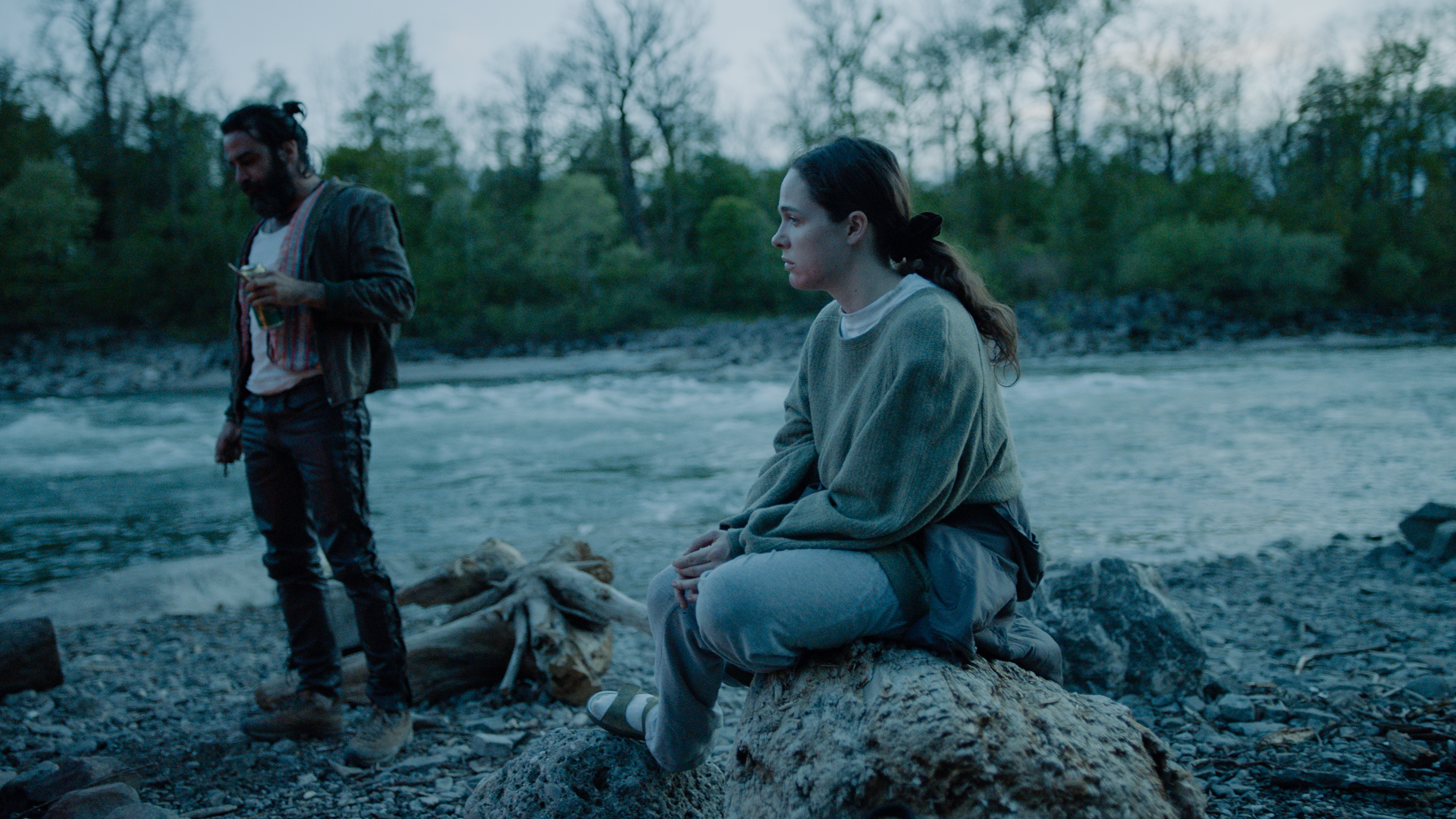
Goiginger demonstrates an astonishingly assured hand with both the anxious situations and the more joyful ones. The film’s perspective is often aligned with Adrian’s (Jeremy Miliker) gaze as, from the distance of a doorway, he once again watches his mother Helga (Verena Altenberger) argue with her partner Günter (Lukas Miko), the dealer known as “the Greek” (Michael Pink), or other junkie friends. It is not the cold, sober gaze familiar to the point of exhaustion from Austrian feature films, but one of unrestrained empathy. When people shout, it is usually also out of despair at their own shortcomings.
It is precisely in these heightened moments that a film must convince if it is to preserve its melodramatic force. This is also achieved through the direction of the actors, which is unafraid of intensity while at the same time striking authentic notes of the milieu. Verena Altenberger embodies the mother who eventually can no longer endure her own helplessness in the face of addiction. Until that point is reached, one cannot help but be moved by her mostly wordless struggle.


