


Die totale Familie
In 1981, Austrian author and critic Ernst Schmidt Jr. (WIENFILM) made his first feature film based on a grotesque-parodic novel by Heimito von Doderer (1896-1966). The result "is anything but boring, but original and fast-paced staged and refreshingly anti-perfectionist. It tells the story of Baron Childerich III, who becomes his own father, grandfather, father-in-law and son-in-law through a carefully considered system of marriages and adoptions, loosely based on the motto 'La famille c'est moi'." PAUL GUMHALTER
"Only right and proper - that's what this assault on good Austrian manners is like." FILMARCHIV AUSTRIA
Armin Akermann, John Weiler, Johann Kirchberg, Franz West, VALIE EXPORT, Wendy Nagler, Herwig Kempinger, Elfriede Gerstl, Franz Novotny and many more
DVD Edition # 333

ABOUT THE FILM



The Rage-Afflicted
„Die totale Familie“: Ernst Schmidt Jr.’s Doderer Film
Bert Rebhandl*
Anyone looking for a who’s who of Vienna’s intellectual and artistic scene at the beginning of the 1980s will be well served by Ernst Schmidt Jr.’s Die totale Familie: Franz West, Valie Export, Friedrich Geyrhofer, Bodo Hell, Reinhard Priessnitz, Elfriede Gerstl, Franz Novotny and Günter Damisch all made appearances in Schmidt Jr.’s cinematic adaptation of Heimito von Doderer’s novel Die Merowinger.
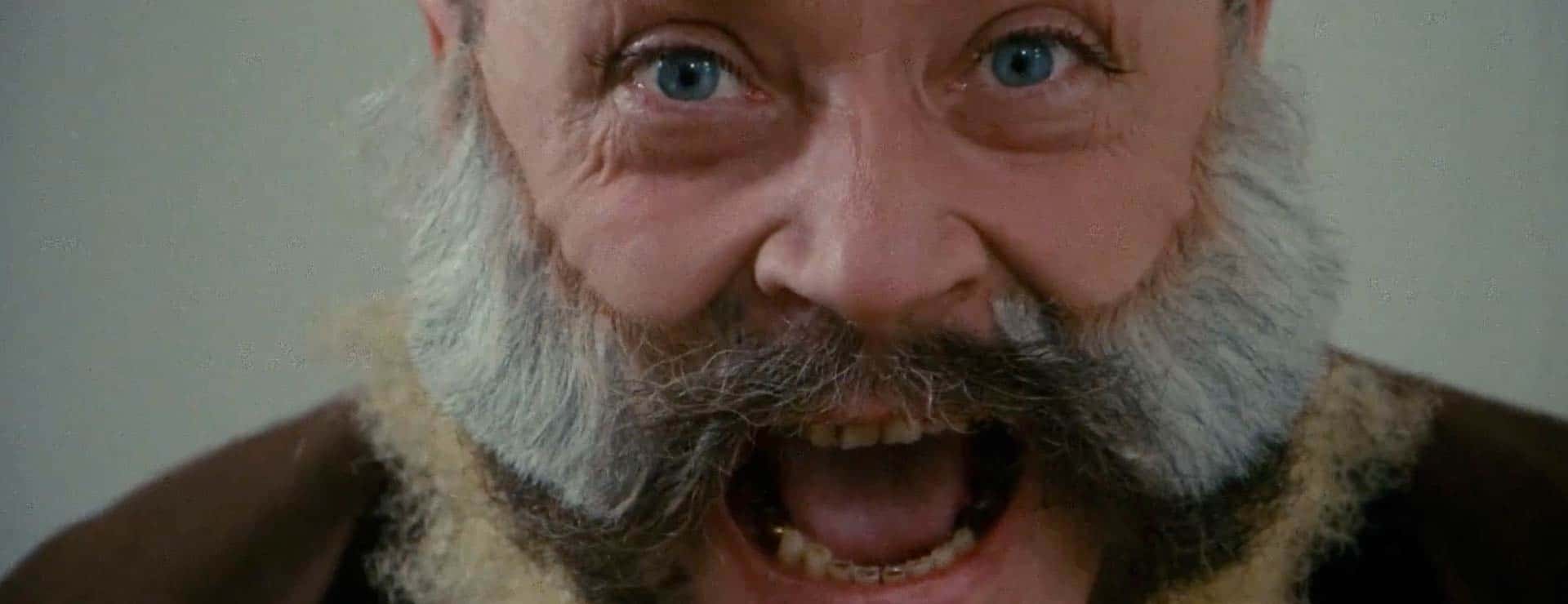
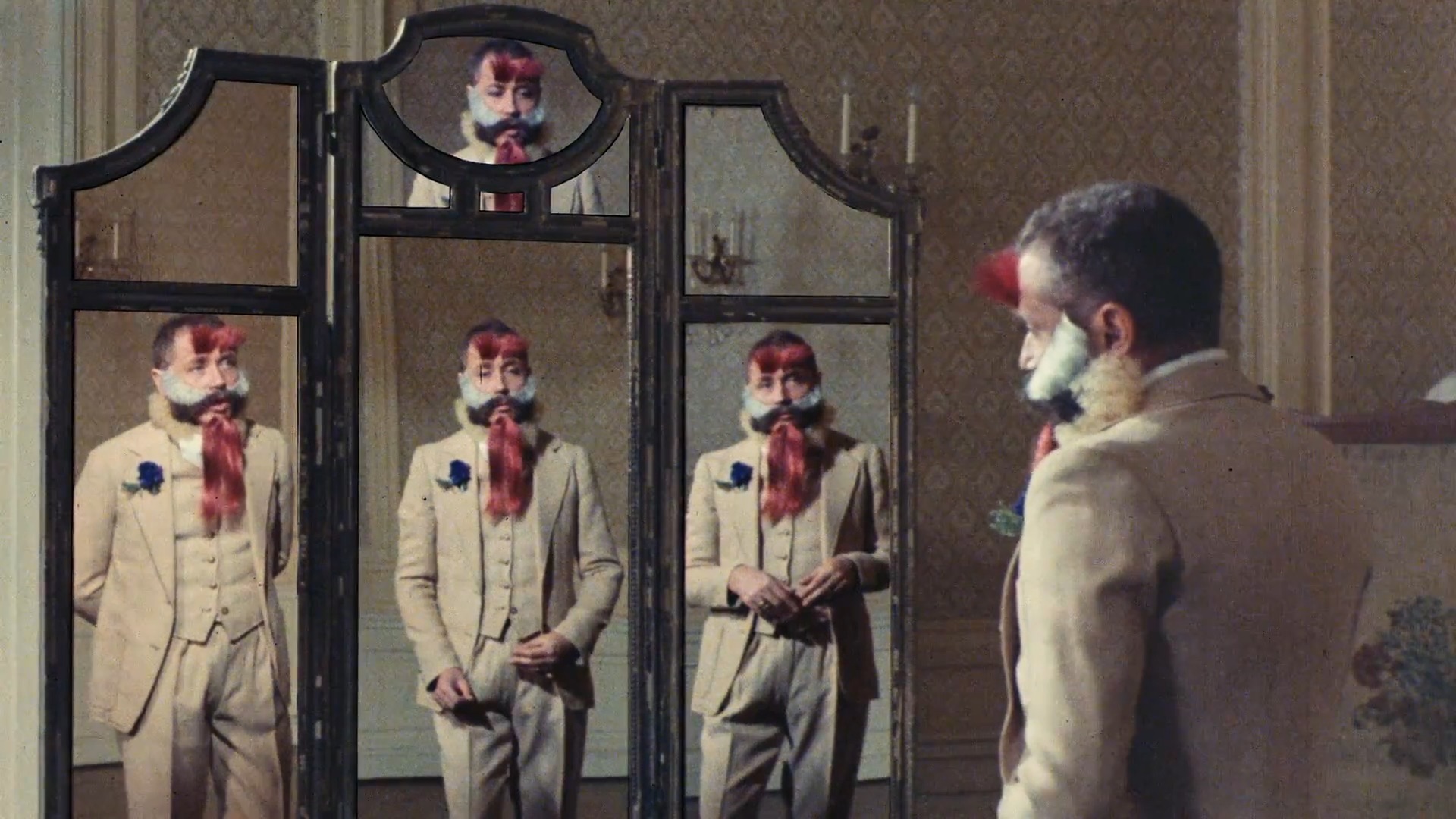
Only the lead actor Armin Akermann is not so well remembered today. He plays Childerich von Bartenbruch, a man who takes the film’s title radically seriously: this great dynast does not content himself with distant relations by marriage; instead, he marries and impregnates his way systematically across the family tree, up and down the generations, until through every conceivable connection he is related to everyone and to himself. To reinforce his undertaking, he also wears on his face all the beards of his predecessors, plus a pair of exceptionally bushy eyebrows, turning him into a grotesque figure. That was precisely Doderer’s intention, as he was hardly an advocate of austere prose in general, and with the „Merowinger“ he truly allowed his eccentric imagination to run wild.
“An anarchic low-budget work of art that looks like a bit of fun among friends: a congenial cinematic counterpart to Doderer.”
It makes sense that Ernst Schmidt Jr., himself primarily an experimental filmmaker and also an outstanding figure as a film historian and thinker, chose Doderer for his first and, as it unfortunately turned out, only feature film. Schmidt Jr. had previously made his mark with Wienfilm 1896–1976, a montage film about the metropolis on the Danube, which is at once terribly old-fashioned and radically modern.
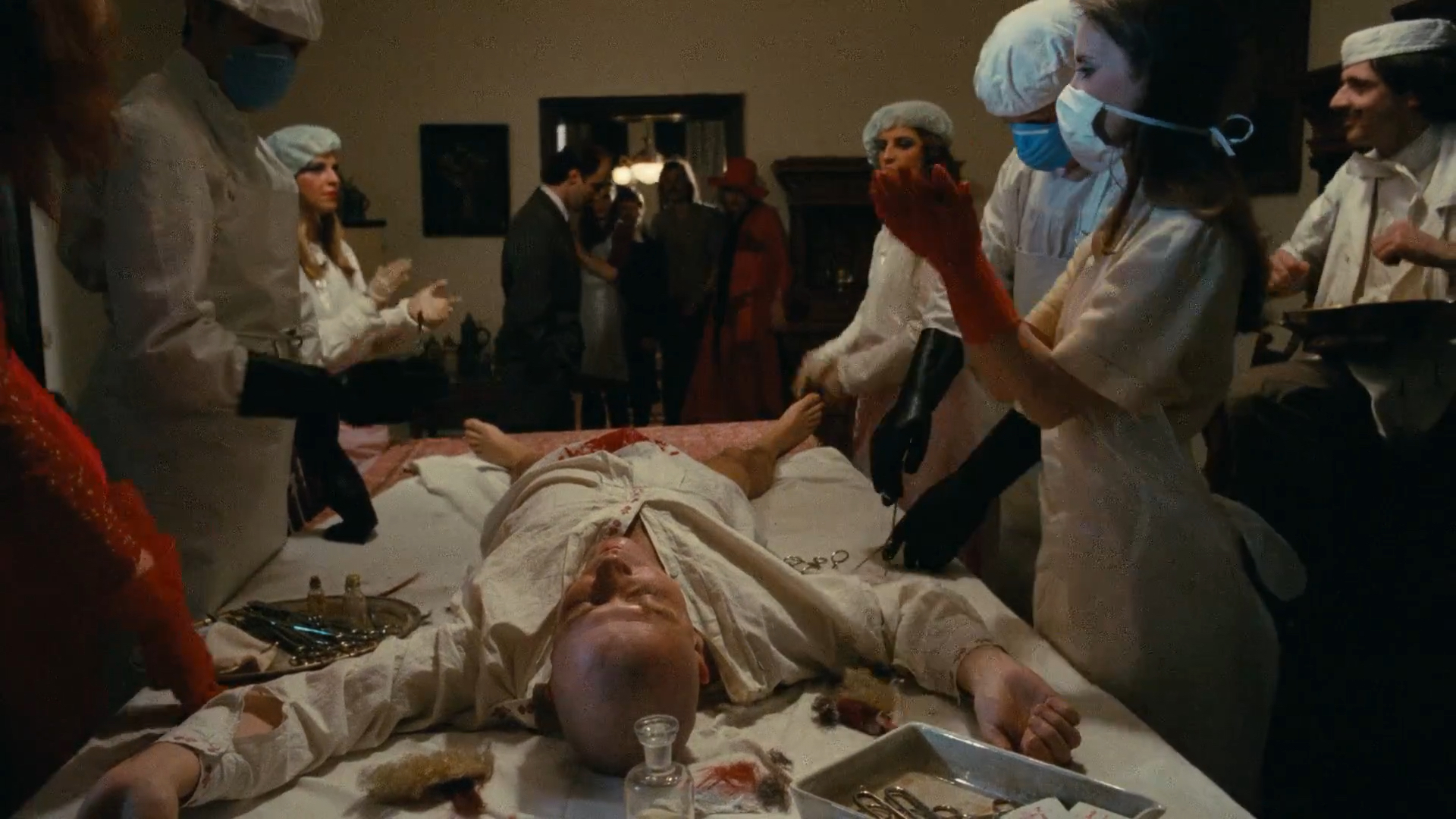
Die totale Familie, with its motley collection of rage-afflicted characters and dangerous-looking psycho-physical devices for treating the corresponding condition, is a logical continuation and expansion of this. One cinematic expression of this rage is a staggering camera pan at Ballhausplatz and in front of what was then the genuinely new Neues AKH.
Around 1980, Austrian television audiences were quite accustomed to period productions in which lavish production values mattered less than clever suggestion. Even against this background, Die totale Familie remains an anarchic low-budget work of art that strongly resembles a bit of fun among friends. Yet it is precisely in this form that the wildly sprawling Doderer found a congenial cinematic counterpart. The company Hulesch & Quenzel, which functions as something like the supreme authority in the novel, brings its range of products – from the fright chair to the sewing needle without an eye – to market in the form of drawings. Die totale Familie finds its best description of itself in a very Viennese expression: „ein Mordsblödsinn“ (“a hell of a load of nonsense”).
*Lives as an author and journalist (including for the „FAZ“) in Berlin.
Only right and proper – such is this assault on good Austrian morals.
FILMARCHIV AUSTRIA
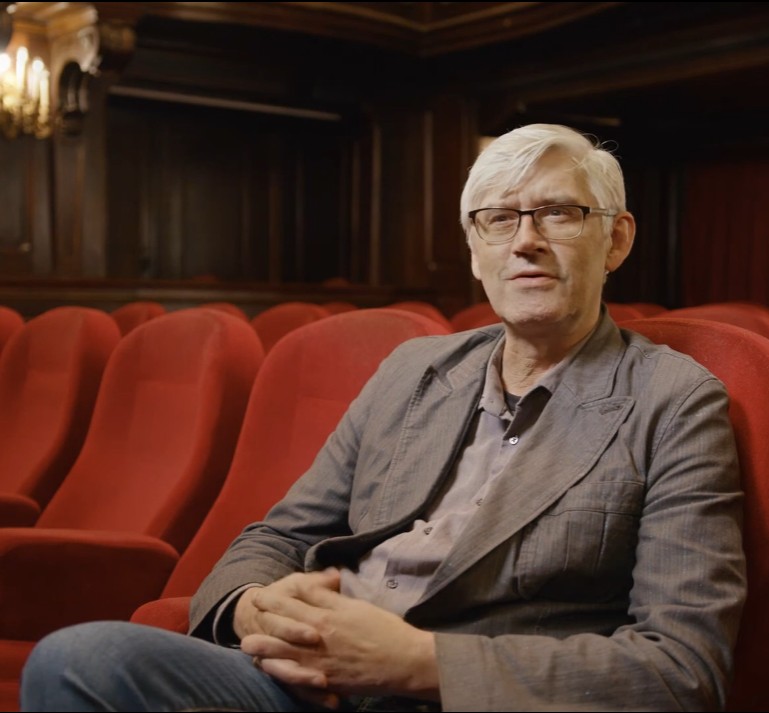
Doderer’s Only Bit of Fun
Ernst Schmidt Jr. on Doderer and the production history of his film.
ABOUT THE PERSON: Ernst Schmidt Jr. was born on 28 November 1938 in Hadersdorf am Kamp in Lower Austria. After attending the Vienna Film Academy for two and a half years, he worked as an independent filmmaker from 1963 onwards. At first, he made experimental documentaries, then increasingly works that addressed film as a material and cinema itself. His cinematic oeuvre comprises four feature-length films and around 50 short films. Schmidt also served as editor of two issues of the film magazine „Caligari“ and wrote for film journals. Together with Hans Scheugl, he compiled a comprehensive encyclopaedia of avant-garde and underground film. As a founding member of the Austria Filmmakers Cooperative, he received the promotional award of the Vienna Art Fund in 1968.
What interested you about the material?
Schmidt Jr.: I liked the whole thing very much because it isn’t the usual kind of Doderer book, but a parody – it is the story of a tyrant who wants to create the total family through marriage and adoptions. It also contains allusions to the art world. For example, there is a Dr Döblinger who forms a gang that attacks people. This Dr Döblinger is Doderer himself, who lived in Döbling. There are stories within the story, and the whole thing is very fantastical and also contains allusions to Doderer himself, who was an aristocrat as well. The novel is socially critical in its engagement with dictatorship, while on the other hand it is also very psychoanalytical.
To what extent do the „Merowinger“ differ from a typical Doderer novel?
Schmidt Jr.: It differs considerably. The other novels are epic and expansive; the grotesque elements are more hidden. There are always particular preferences for certain characters. And here he allowed himself a bit of fun by concentrating elements that appear elsewhere into a parodic novel. It is also proof that he could write a comedy. The other novels are very serious.
Did you know Doderer personally?
Schmidt Jr.: I knew him, but only in passing. At the time, he supposedly wanted to stage a kind of happening at the Volkstheater lasting an entire day, by performing the Merowinger in full for a whole day – 24 hours.
How long was the shoot?
Schmidt Jr.: We had four weeks to shoot, which is very short. Normally, we would have needed twice as long. But that wouldn’t have been possible, because otherwise the costs – the film cost around three million – would have exploded. That is also why I couldn’t use professional actors. But a great many people from the scene appear in it, writers, for example, visual artists, many people I know from the Grazer Autorenversammlung.
The lead actor Armin Akermann is actually a television director, and he had previously wanted to adapt the material for ORF, but they didn’t approve it because they couldn’t imagine that it could be done at all. It was very difficult to find an actor for this short family tyrant with his many beards, and finding him was a real stroke of luck, because he is almost the ideal embodiment of the character.
Interview from the magazine „Wiener“, October 1981


