



Earth
Several billion tons of earth are moved by people every year - with shovels, excavators or dynamite. Nikolaus Geyrhalter's (OUR DAILY BREAD, OVER THE YEARS) internationally award-winning documentaryfilm observes people in mines, quarries, large construction sites in their constant struggle to appropriate the planet.
"Once again Nikolaus Geyrhalter proves that he is unique in international cinema." THE GUARDIAN
Trent Wells, Paul Mellor, Steven Kuzar, Svyatoslav Babyuk, Marina Zanetti and more
DVD Edition # 340

ABOUT THE FILM



Moving Mountains
Nikolaus Geyrhalter’s Documentary „Erde“
Sven von Reden*
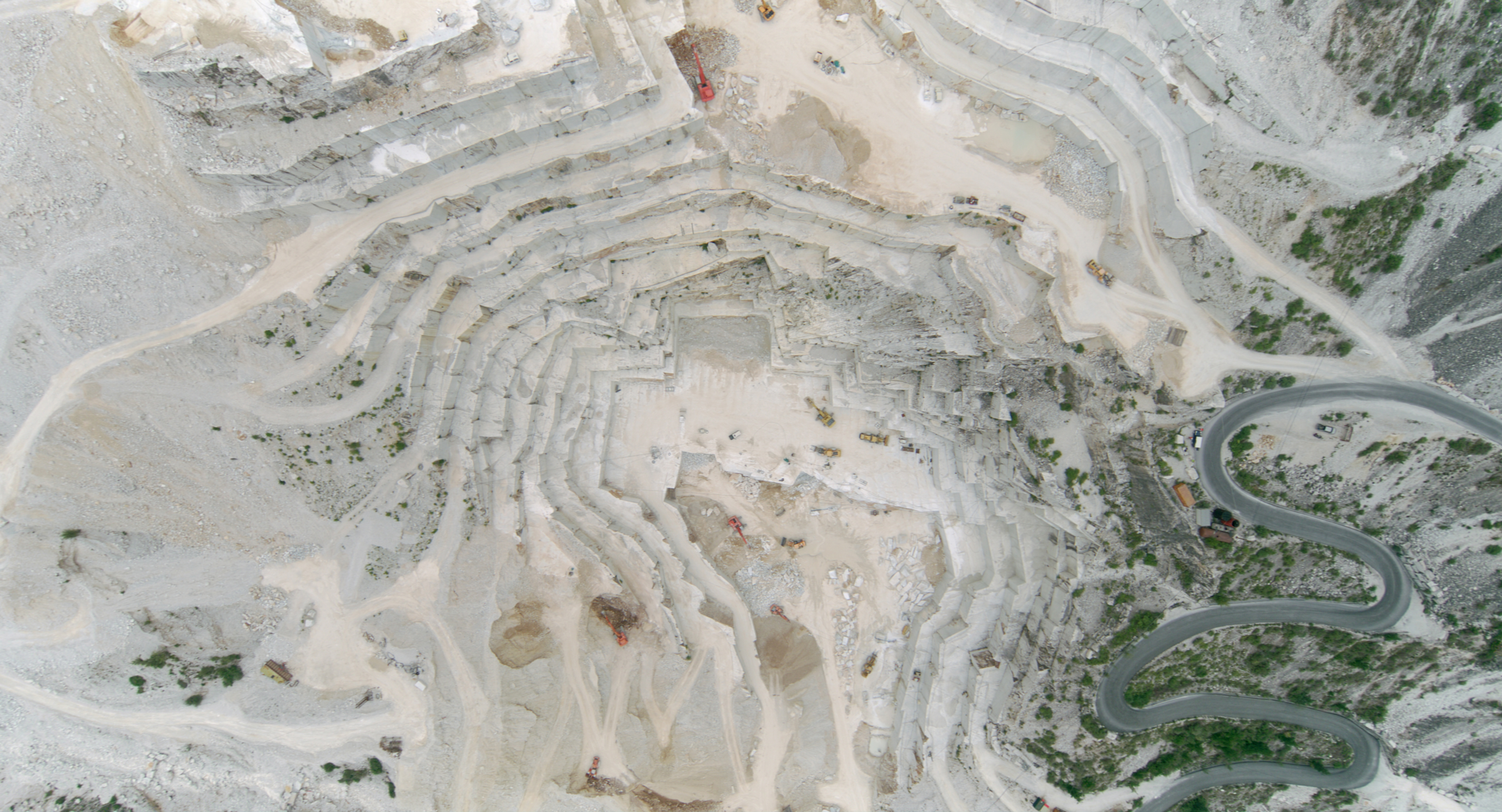
In Pripyat (1999), Elsewhere (2001) and Homo Sapiens (2016), Nikolaus Geyrhalter has already taken us to spectacular places that few people ever get to see. In Erde, the journey leads, among other places, hundreds of metres underground into the salt mines of the Asse mine complex in Lower Saxony, to the mines on the Rio Tinto in south-western Spain and to the oil sands fields in the north of the Canadian province of Alberta. In the latter case, the camera can only capture the full extent of the facilities required to extract the black gold from the air. The crew was denied access to the site. No wonder: what is being done here is a dirty business in two senses. The descendants of the Indigenous people who once lived here, now living nearby and suffering from the contamination of their environment, bear witness to this.
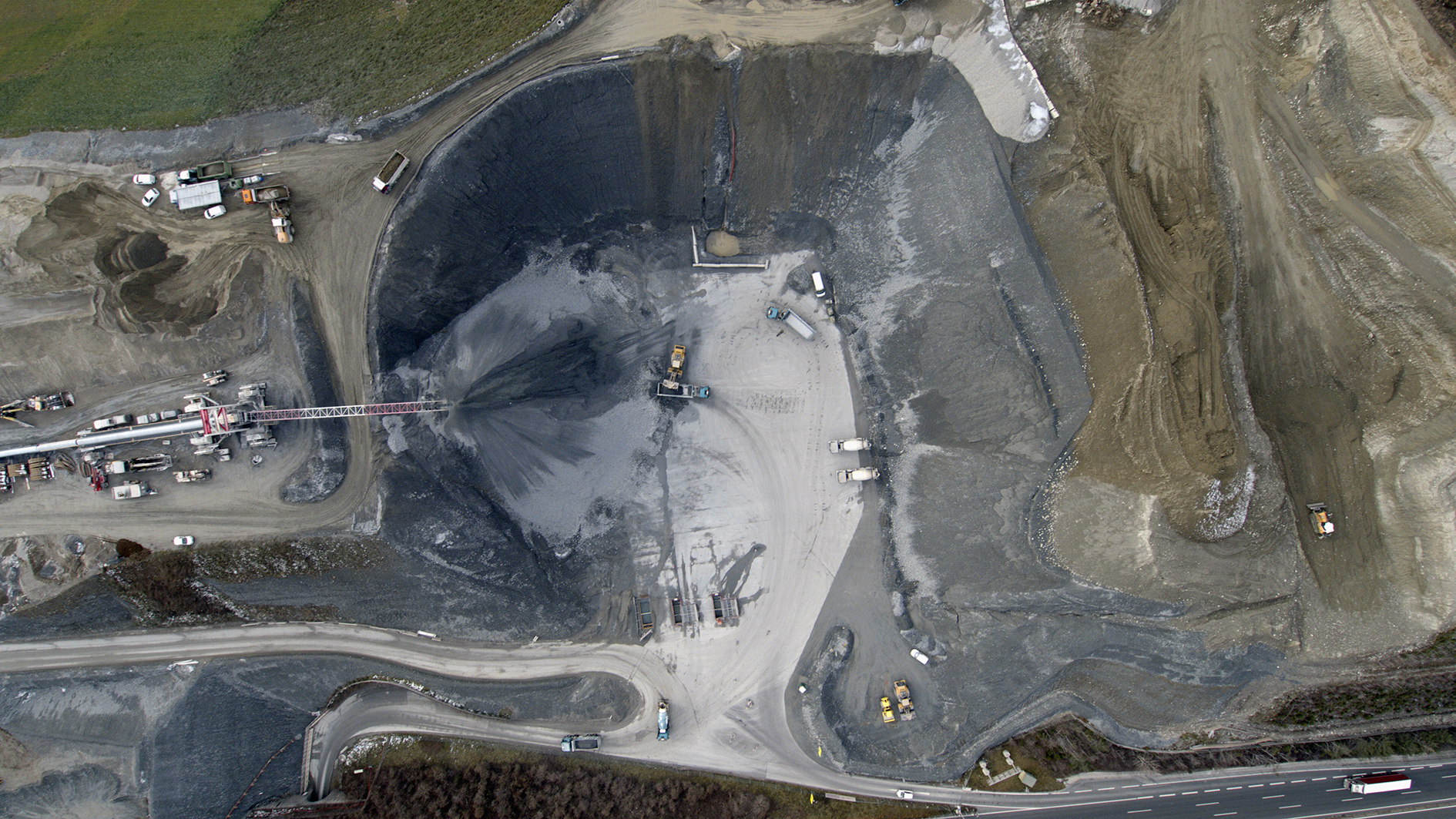
But this outside perspective is the exception in Erde: at his seven filming locations, Geyrhalter primarily gives a voice to the employees of the various mining, open-cast and underground construction companies, showing their work and the traces it leaves on the landscape; worldwide, humans remove 156 million tonnes of the Earth’s surface every day, more than twice as much as is moved by natural processes.
Their perspective is certainly self-critical, but what is particularly striking is their literary to philosophical-spiritual approach to their own work. Their language is rich in metaphors:
“But however much the interviews invoke images of a battle with nature on equal terms, in the end humanity will emerge victorious.”
The Earth is “wounded”, the “flesh of the mountains” is cut into, and the Earth’s crust is even “deflowered”. There is also talk of the “cruel mistress Earth”, who “gives us nothing” and who “has shown no consideration for us for millions of years”.
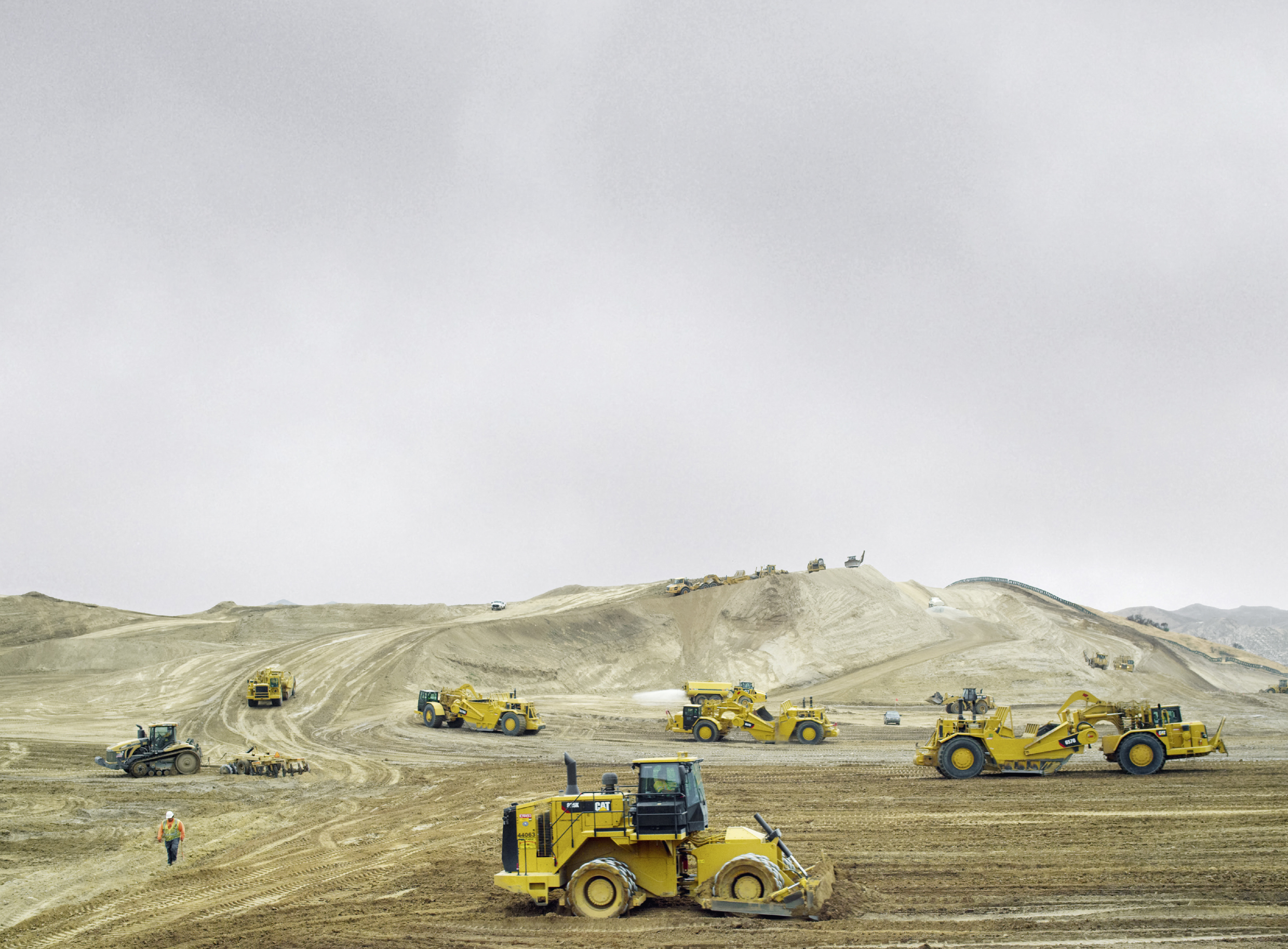
These archaic linguistic images of humanity’s struggle against nature find their visual counterpart in the mechanical ballet of excavators and bulldozers, giant drills and rock-cutting machines. Bizarre and multifaceted like oversized insects, they attack the treasures hidden in the ground. But however much the interviews invoke images of a battle with nature on equal terms, in the end humanity will certainly emerge victorious, so that all of us – as is made unmistakably clear – can lead our highly technological, comfortable lives.
Even though the word itself is never mentioned: Erde is the film for the debate about the “Anthropocene”, the controversial term for our geological epoch intended to express that humanity has become the decisive influence on the Earth. In the film, a construction manager explains: “If a girl in a bar asks you what you do for a living and you can honestly tell her, ‘I move mountains’ – she’ll question it. But it’s true. We move mountains.” Humanity elevates itself to the status of God. Erde is a sign of its hubris, but also an expression of ingenuity and perseverance.
*Lives as a film critic in Cologne.
Once again, Nikolaus Geyrhalter proves that he is unique in international cinema.
THE GUARDIAN
„Archaic and Banal“
Karin Schiefer in conversation with Nikolaus Geyrhalter about his view of „Erde“.
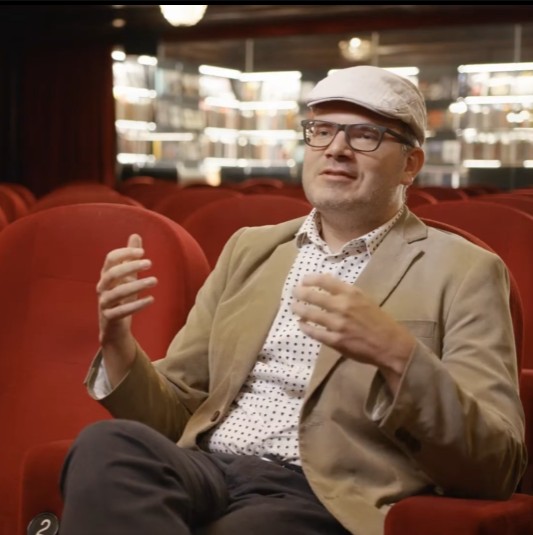
ABOUT THE PERSON: Nikolaus Geyrhalter, born in Vienna in 1972, is one of Austria’s most internationally acclaimed documentary filmmakers and has received numerous awards.

©NGF
Despite the enormous technological advances of the machines, did you have the impression that you were approaching a very archaic dimension of human activity?
Geyrhalter: It was a strange mixture of something very archaic and, at the same time, totally banal. The scale only becomes apparent when you look at it from a distance. I also don’t think that people who sit on an excavator day in, day out, removing landscape, have a sense of the scale of what they are contributing to. You see your own construction site, your own machine, your own job. But despite the routine, people reflect very deeply on what they are doing. In a way, that surprised and also reassured me. At all the filming locations, we encountered people who at least question very critically what they are doing and, by extension, the actions of our society.
To structure the chapters, you always begin with an overhead shot taken from some height, as if the perspective of a higher authority or position were also at play. Why this stylistic device?
Geyrhalter: We are all familiar with Google Earth and have become very accustomed to looking at the world from above. But those are still images. When people or machines suddenly move from this perspective, it makes a big difference. Since we had to establish the changes of location, this approach suggested itself very quickly. It is also an image that conveys a sense of scale while at the same time offering a distanced view of human activity. From there, you can move on to closer observation and reflection.
You structured „Erde“ into seven chapters. What were your criteria for choosing the filming locations?
Geyrhalter: The first decisive criterion was scale. Then we divided possible locations into different categories in order to create a certain range. Essentially, we were looking for places where, for various reasons, the Earth’s surface is being altered on a truly massive scale. Another criterion was the actual feasibility of filming. You mustn’t forget that industry has become increasingly restrictive in recent years and it is now extremely difficult to obtain filming permits. Whether the copper mine was in Spain or South Africa was not crucial for our film. Of course, the visual aspect also played a role. After all, this is cinema. And it has to be said that, despite all the destruction, there is an impressive aesthetic quality to these images. One mustn’t be afraid of that.
The workers speak quite openly of “the machine’s battle against the Earth”. A clear awareness of human superiority only occasionally gives rise to a sense of humility.
Geyrhalter: It is a combination of both. I can understand both very well. Humility and respect, but also the knowledge that it is simply going to be done. There is a justification for everything we humans do to the planet. One of the first people I speak to in the film says it: “There are no limits.” That is probably human too, as long as you are sitting on the machine. But when you look at things from a certain distance, you also realise that somehow something is going wrong.


