
Aufbruch
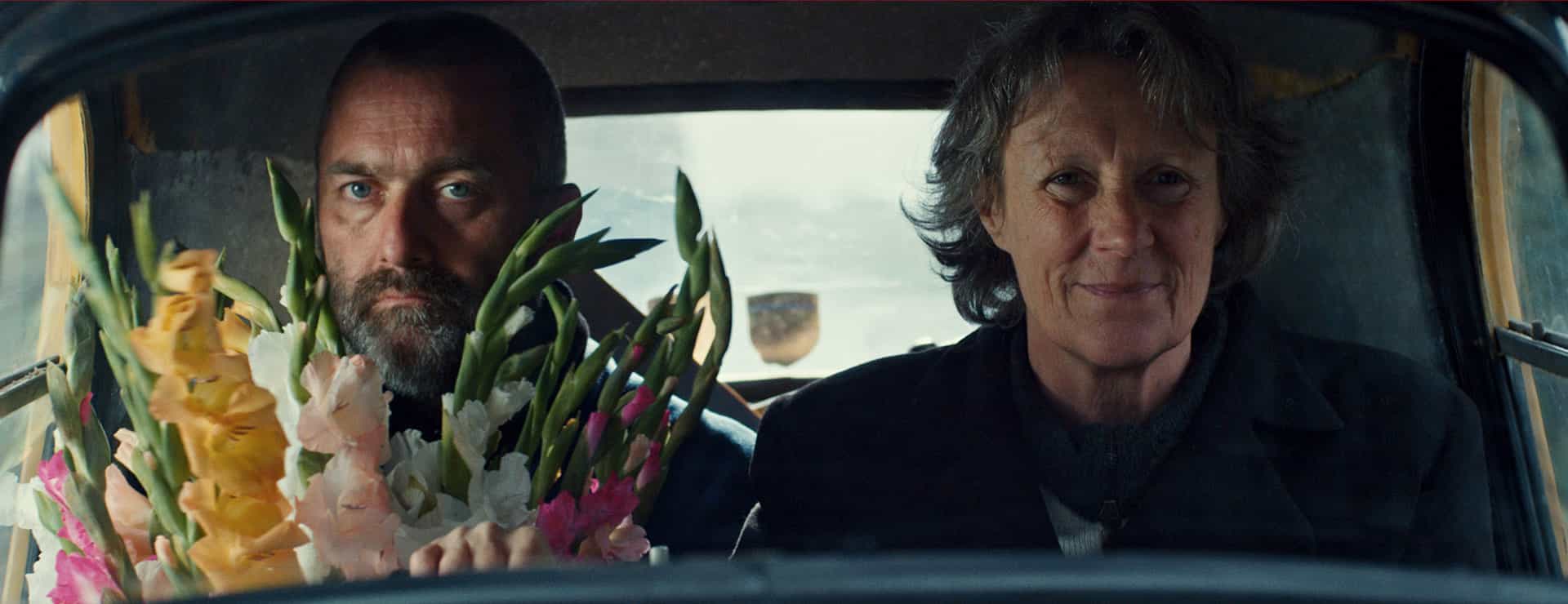
Zwei geschundene Seelen begegnen sich zufällig, irgendwo auf dem platten Land. Ein Mann und eine Frau, beide nicht mehr jung und beide mit einer großen Enttäuschung konfrontiert. Sie verstehen einander, auch ohne viele Worte, und geben sich auf einer gemeinsamen Teilstrecke ihres Lebens gegenseitig Halt. Das Kino hat schon verschiedenste Richtungen eingeschlagen, um von Verzweiflung, Schmerz, Trauer und Einsamkeit zu erzählen. Dieser Film geht einen ganz eigenen Weg. Er führt von einer verlassenen Tischlerwerkstatt über ein heruntergekommenes altes Haus zu einem Hafengelände. Die Gangart ist gemächlich, die Gegend menschenleer. Eine Flasche Schnaps, einen Strauß Gladiolen, ein paar Äpfel und Kartoffeln, eine Fotografie, einen Koffer und ein Buch mit russischen Gedichten - viel mehr braucht es nicht als Beiwerk für den minimalistischen Plot. Als der Mann ein Holzkreuz zimmert, ist das eine von mehreren Szenen, in denen Hände am Werk zu sehen sind. Zwischen Reduktion und Pathos, mit eindrucksvoll fotografierten Bildern von großer Intensität und gelegentlichem kraftvollem Percussion-Einsatz entfaltet sich ein intimes Drama, das um die Fragen kreist, woher man kommt und wohin man geht.
„Wir arbeiten an unserer Menschwerdung. Das ist für mich der einzig erkennbare Sinn des Lebens.“ LUDWIG WÜST
Claudia Martini und Ludwig Wüst