


Notes from the Underworld
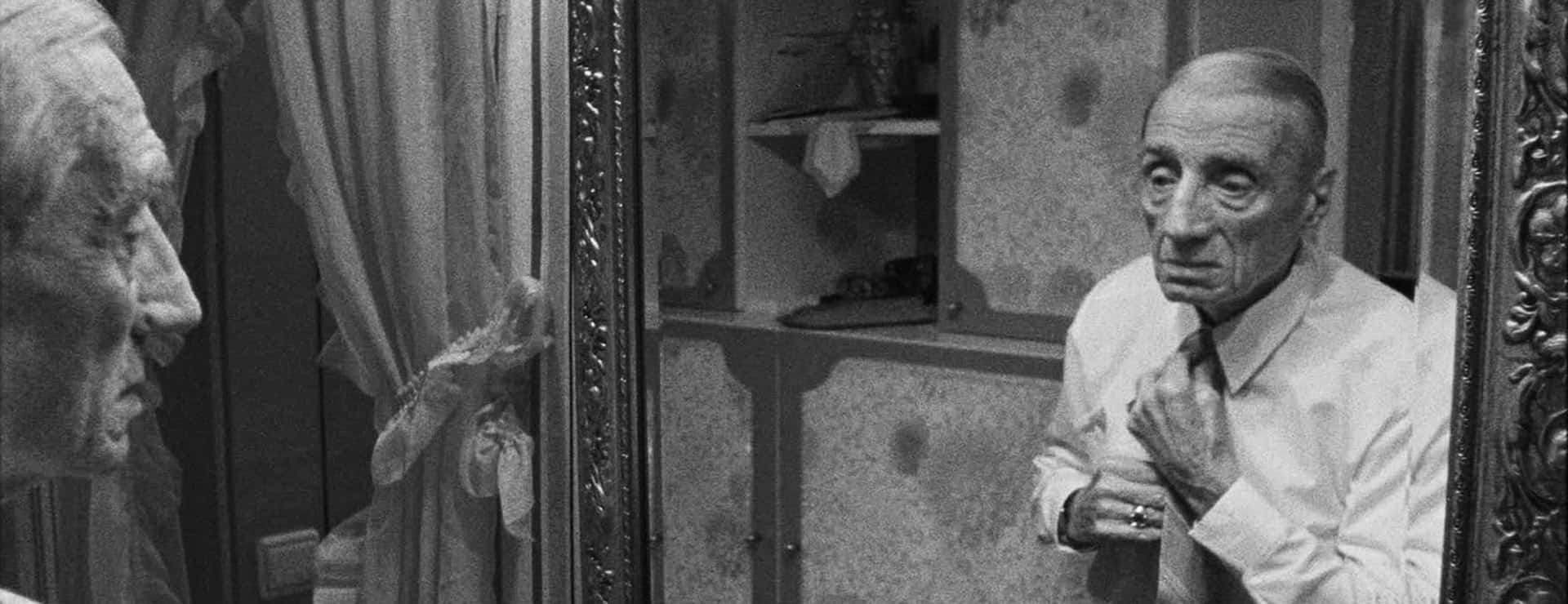
There is unrest in the Viennese underworld of the 1960s. In the middle of the happenings are the Viennese singer Kurt Girk and his legendary friend Alois Schmutzer. Both have to atone for their closeness to the illegal card game "Stoß" with long prison sentences after a controversial trial. The charismatic protagonists recount this period from a position that has never been shown before. "Notes from the Underworld" is not just a declaration of love for a long-gone Vienna, but also a portrait of Austrian post-war history.
Alois Schmutzer, Kurt Girk and more
DVD Edition #356

ABOUT THE FILM




A Comfortable Shadow
Viennese Strizzis: “Aufzeichnungen aus der Unterwelt”
Bert Rebhandl*
Back then, the world was much more cozier. That sentence immediately sounds far more convincing when heard in Viennese dialect: “Friarer woa ’s gmiatlicher.” What remains to be determined is exactly when “back then” was. Or perhaps not all that exactly. In Aufzeichnungen aus der Unterwelt by Tizza Covi and Rainer Frimmel, Kurt “Kurtl” Girk, one of the film’s central protagonists, recalls a time after the war when people in Vienna died of hunger.
It is not entirely clear whether he is speaking about the First World War — a time before his birth that he only heard about — or the Second World War, when Vienna once again suffered severe shortages in the years after 1945.
The conversation with Rainer Frimmel, whose voice can occasionally be heard off-screen, was one of Kurtl Girk’s final appearances, as were some of the songs he still sang for the film in a Viennese tavern. Even in these moments in the present-day 21st century, the atmosphere feels cozy. So perhaps the “past” also has something to do with a place. The underworld referred to in the film’s title, we are told at the beginning, never actually existed. “De hat’s ja nia gebn.”
Yet the interviews Rainer Frimmel conducted for the film speak against that claim after all: stories of turf wars, brutality, and a man who spent far too long in prison unjustly.
“In those days, gangsters in Austria were called ‘Strolch’ or ‘Strawanzer,’ and the police, if necessary, would simply beat confessions out of people.”
A former police chief also offers his perspective. Afterward, one better understands how a series like Kottan could emerge.
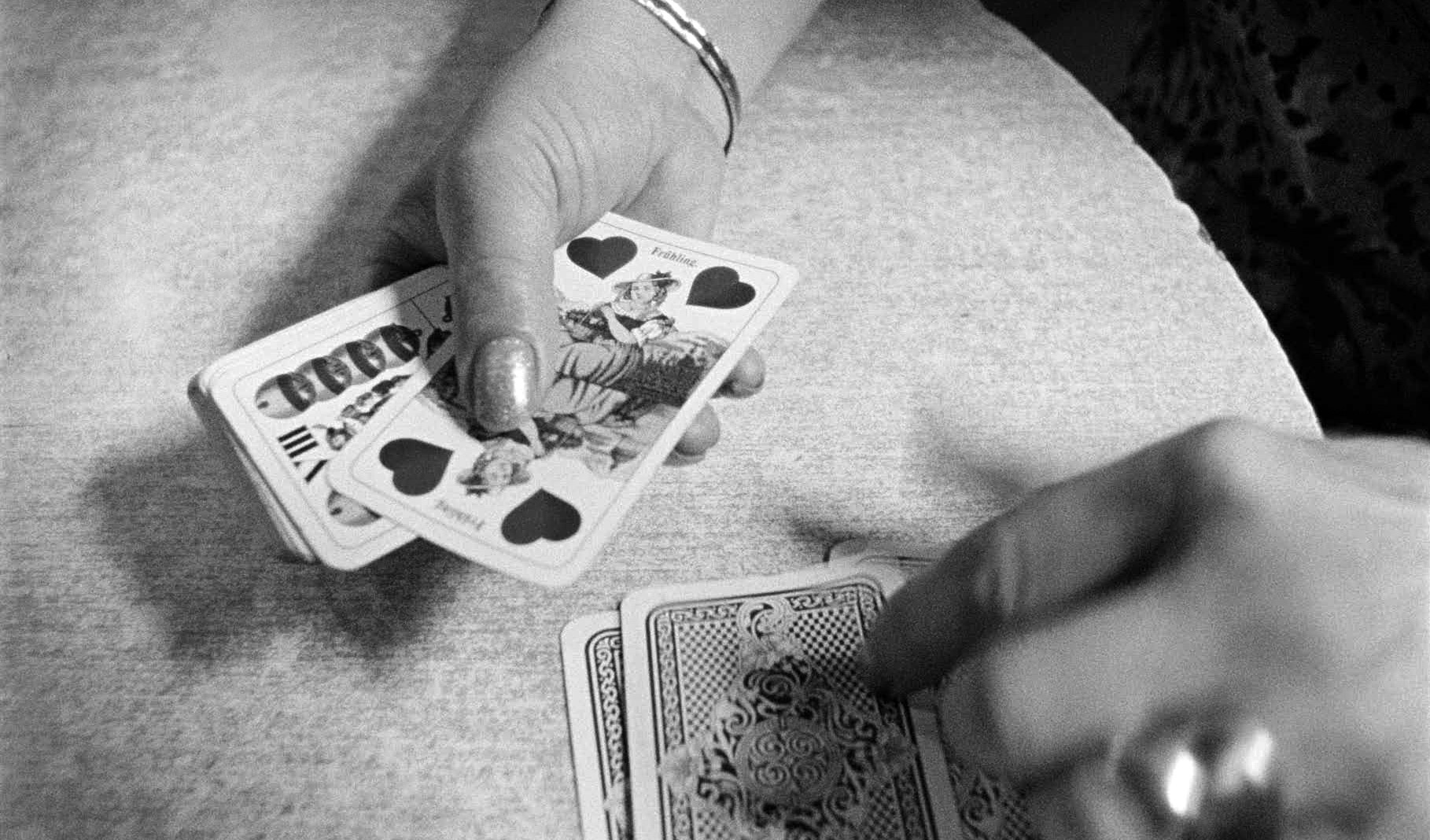
In the Austrian underworld of that era, people played Stoß, a card game in which matches could stand in for the sums being wagered. That way, if the police conducted a raid, one was on the safe side. Illegal gambling at the time took place in specific taverns, before slot machines moved in — machines today associated above all with a corporation that, according to the Ibiza video, “pays everyone”: Novomatic makes Stoß genuinely appear like a cozy affair.
In those days, gangsters in Austria were called “Strolch” or “Strawanzer,” and the police, if necessary, would simply beat confessions out of people. “Broda put an end to that.” The name of the justice minister in the Kreisky government (and before that already serving in ÖVP-led governments since 1960) marks a leap into modernity, from which Aufzeichnungen aus der Unterwelt leads back through an old photo album.
One of its photographs shows the traces of a bullet hole — fortunately, the Strolch had not carried his beloved close to his heart. Silent newsreel footage, in which Covi and Frimmel discovered the police of that era during operations, bathes the underworld that supposedly never existed in an almost poetic light.
*Lives in Berlin as an author and film critic (FAZ, Der Standard).
The dim, timeworn interior of Café Weidinger provides the perfect setting for a conversation about an expedition into an almost forgotten Vienna: an outstanding documentary!
DER STANDARD
Perspective “Underworld”
Tizza Covi and Rainer Frimmel in conversation with Dominik Kamalzadeh
ABOUT THE PERSONS: Tizza Covi and Rainer Frimmel are an Austrian filmmaking duo who have been making films together for 20 years.

©Vento Film
Standard: The film revolves around criminal subcultures in Vienna in the 1960s, but also around the Wienerlied. Where is the connection?
Covi: Kurt Girk once summed it up perfectly. The Stoß gamblers made the Wienerlied big. Whoever won would request a song and then give a generous tip.
Frimmel: Money flowed extremely freely, and there were really large sums involved. The Stoß games often took place in taverns where musicians were also performing.
Standard: You researched the two levels separately from one another. What did you start with?
Frimmel: We accompanied social evenings in coffeehouses. Entertainers with singing saws or the mandolin orchestra.
Covi: Or the artistic whistler Lips von Lipstrill. We often went to Café Donauwelle, where Frau Maria held rhetoric courses.
Frimmel: At one of those evenings, we heard Kurt Girk sing. He immediately struck us as a special personality.
Covi: At the beginning there is always an interest in people, in a tradition. We met people there whom one would otherwise never encounter: fiaker drivers, former prisoners — a whole panopticon. As artists, one is not particularly respected in that social layer.
Standard: In the process, an almost vanished image of Vienna emerges. What exactly did you want to preserve?
Frimmel: Stories. Of course, people talk a lot about what Vienna used to be like. Such subcultures and their languages inevitably disappear. This generation that still grew up during the Second World War will soon no longer be around. With them disappear a language, behaviors, forms of interaction.
Standard: “The underworld never really existed,” Alois Schmutzer once said. They were merely roughnecks sensationalized by the tabloids. Do you see it that way too?
Frimmel: The term underworld depends on perspective. For one person, the underworld may be something completely normal for another. Naturally, the media overused the term. It is also different when one speaks of the underworld in Chicago. If one sees Stoß gambling as organized, then it is also an underworld. But people are also ripped off in casinos. Or through sports betting — all of that is tolerated.
Standard: But Kurt and Alois still share a certain ethos; they did not carry firearms.
Frimmel: Kurt was above all a musician who also enjoyed playing Stoß. With Alois it was different. From a young age, he had conflicts with the police and had to spend a lot of time in prison.
Covi: He had a huge problem with the press. The Schmutzer boys were handsome guys who got into a lot of fights. That sold well in the newspapers. Whenever they were on the front page, copies sold. Standard: And one was respected as a “local hero,” wasn’t one?
Covi: It had two sides. You are respected, but at the same time the negative headlines stick to you. They wrote that he was a pimp. That was not true in the slightest.


