


Ciao Chérie
Making phone calls, sending money, surfing - that's what people come to a Vienna callshop for: Homesickness and love, worry and hope, doubt and uncertainty - all this is discussed in the phone booths, where origin and belonging are full of contradictions. Keeping in touch or saying goodbye? - In her film, Nina Kusturica ("Little Alien") tells of life in a foreign land and of the longing to overcome distances.
"The combination of language and image opens up spaces where only thoughts would be. Spaces larger than the speech cells, the confessionals, the detention boxes, the release rooms, the intimacy booths of solitude and bliss. Where only hearing is possible, every word becomes significant. Every breath, every pause, every intonation." DIAGONALE
Nahoko Fort-Nishigami, Sikavi Agbogbe, Simonida Selimovic, Ayo Aloba, Dioma Mar Dramè, Esmat Azimi, Isabella Campestrini and more
DVD Edition # 322

ABOUT THE FILM



Fleeting Conversations
Nina Kusturica’s episodic film “Ciao Chérie”
Friederike Horstmann*
Nina Kusturica’s Ciao Chérie is a film about longings and hopes. About voices and languages from all over the world. About the uncertainty that life brings, especially in a foreign country.
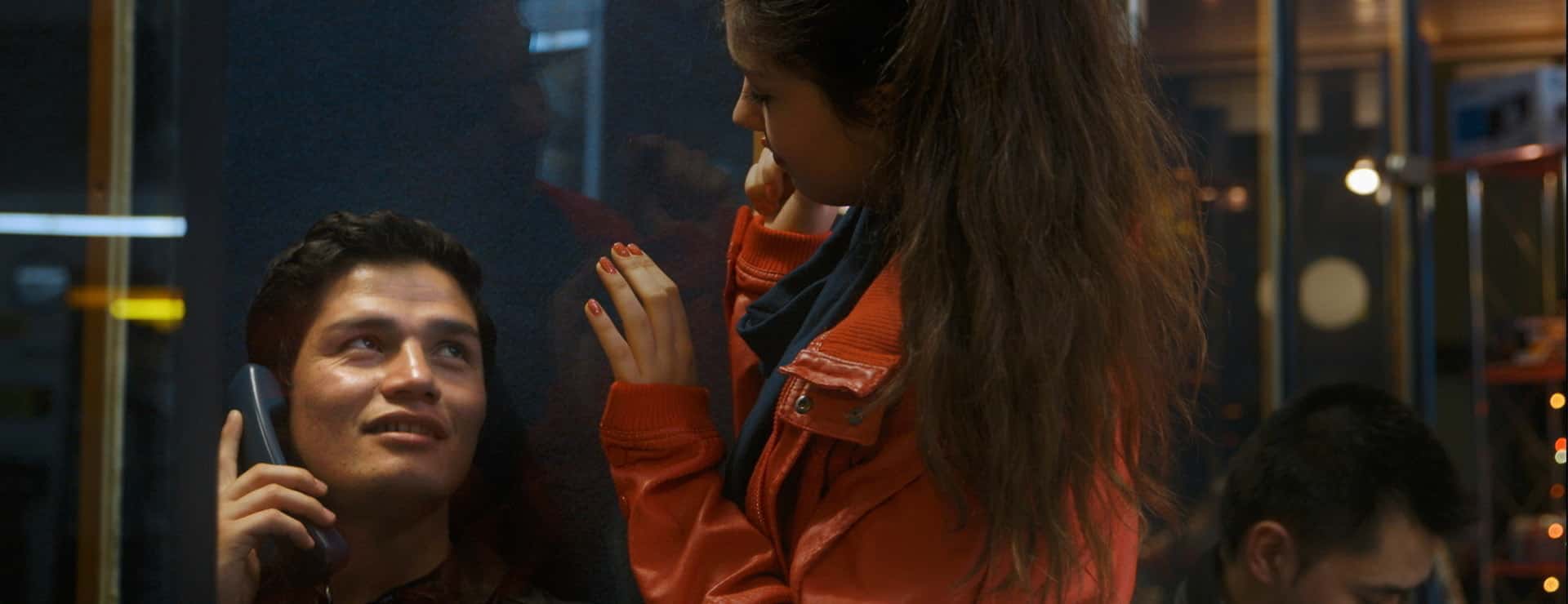
The intimate, chamber-like setting is a small call shop in Vienna’s 16th district: in a glass booth, Mimi talks on the phone to her secret romantic interest in Italy. Samo calls his relatives who have remained behind in war-torn Syria, where they only have electricity for a short time every twenty days. Reza speaks to his family in Afghanistan, who inform him of his engagement to a woman from his home country, while his unsuspecting Viennese girlfriend fools around outside the booth.
In Ciao Chérie, all the characters are united by a particular state of exception. Some of their personal stories are merely hinted at. A few words sketch out an entire life. Kusturica’s intelligent screenplay gives the characters plenty of time for what remains unspoken and unspeakable: calls fail, communication falters, connections that people hoped to maintain are broken. The episodic narrative structure opens up an entire range of telephone rituals – waiting hopefully or anxiously while dialling a number, the generic recorded messages of an answering machine or the promising sound of a ringing tone, then finally someone whose distant voice can be heard at the other end of the line, while their gestures and movements remain hidden in the invisible off-screen space.
“Acting as a linguistic centrifuge, the telephone creates a wonderful Esperanto-like euphony in Kusturica’s ‘Ciao Chérie’.”
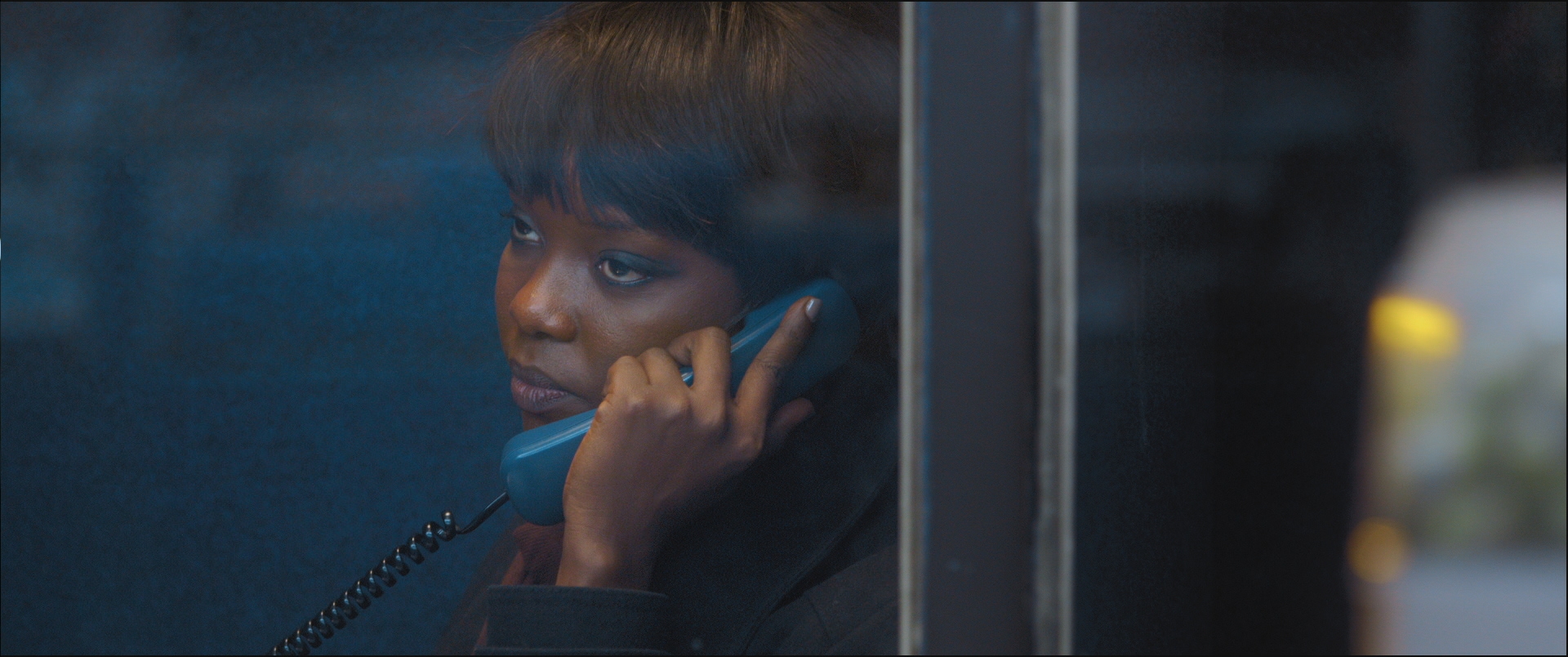
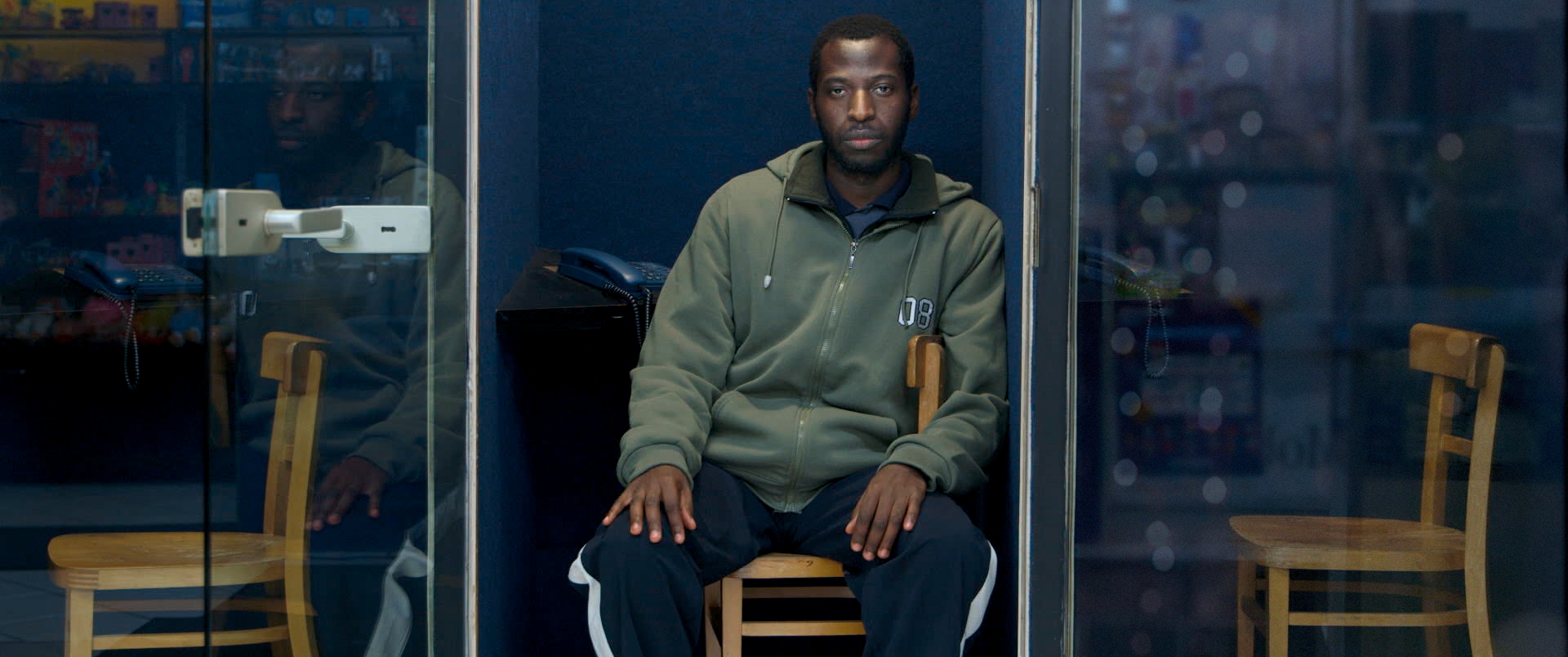
Dramaturgically, visual and acoustic information about the person on the other end of the line are deliberately separated. The disembodied voice from the telephone signifies an absence. Filmed through reflective glass panels, the callers are visually isolated and enclosed within their booths. In long takes, the camera lingers on their faces – even after they have hung up. Their expressions are often marked by distant pensiveness, a tear runs down a cheek, their eyes stare into emptiness. The telephone serves as an attempt to deny separation, yet the distance is never truly overcome but instead becomes all the more apparent.
For her research-based film, the director brought together fictional stories, wrote carefully considered dialogue and cast mainly non-professional actors who make telephone calls in their respective languages. Acting as a linguistic centrifuge, the telephone creates a wonderful Esperanto-like euphony. Time and again, her film is punctuated not only by documentary exterior shots of the shopfront but also by lullabies and children’s songs from the callers’ respective homelands. Sung without instrumental accompaniment, these pieces acquire a touching intimacy. A quiet bitterness repeatedly surfaces in the telephone conversations: people’s longings are fleeting, their relationships of uncertain durability.
*Lives in Berlin and works as a writer and film scholar.
The combination of language and image opens up spaces where otherwise there would only be thoughts. Spaces larger than the telephone booths, the confessionals, the holding cells, the rooms for letting go, the intimate booths of loneliness and bliss. Where only sound can be heard, every word becomes meaningful. Every breath, every pause, every intonation.
DIAGONALE
Longing on the Line
Limitation as an Advantage: The Staging of “Ciao Chérie”
Some of the people who retreat into the telephone booths in Ciao Chérie have something to hide – like Mimi and her Italian affair. Reza, the Afghan teenager who has to call his family, also deceives his Austrian girlfriend.
Others, like the shy Ange from the African country of Togo, try to combat homesickness: “It’s not easy living abroad,” she says, speaking for most of the call shop’s customers – for Amari from Nigeria, who hopes that talking to his sister will help him recover his memories, and also for Larisa, who has been running the telephone shop since her husband disappeared.
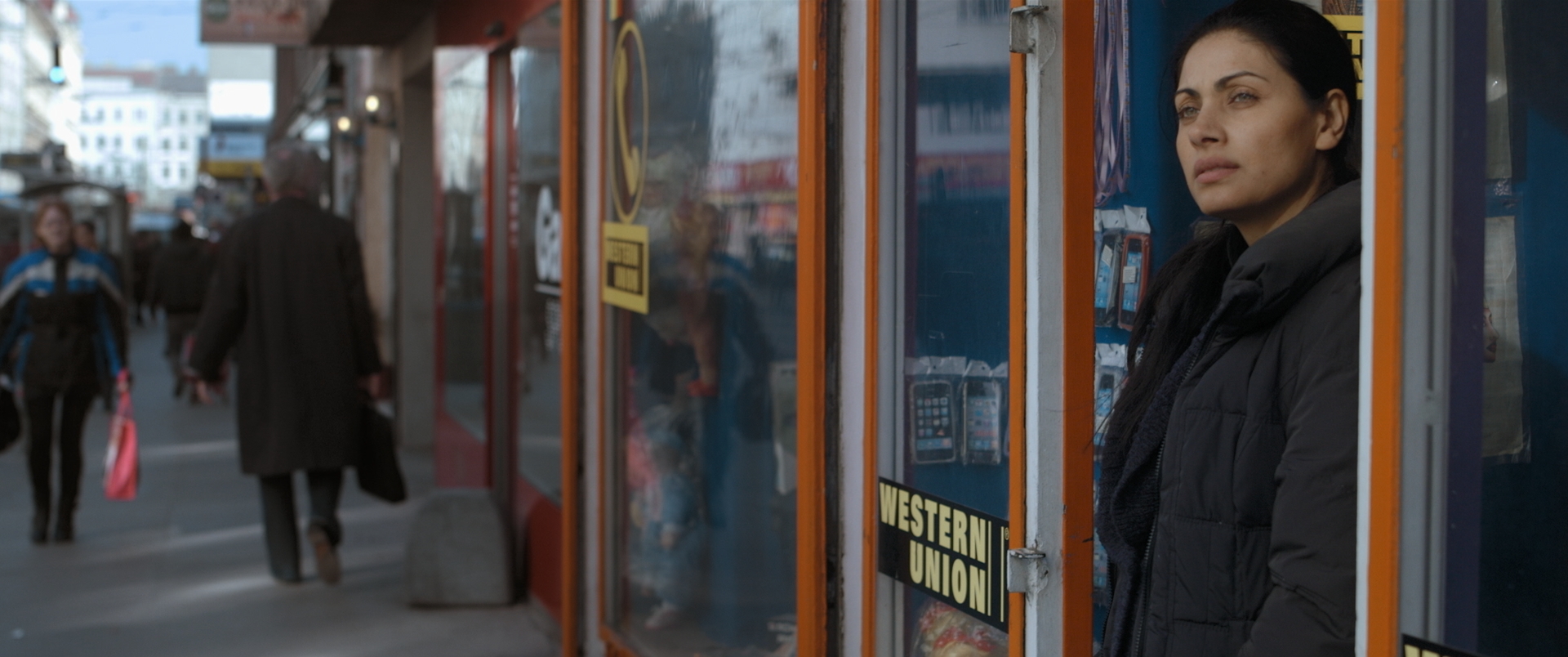
Kusturica shot her third feature-length directorial work almost entirely inside a call shop, the kind that can still be found in many cities despite the prevalence of mobile phones. A restriction that proves beneficial in both narrative and visual terms. With sophisticated shots of the reflective glass surfaces inside the shop, Michael Schindegger’s cinematography conveys a sense of space. Close-ups allow us to focus on the nuances in the faces of the uniformly outstanding non-professional and professional actors, while exterior shots anchor the shop in a distinctly Viennese setting and give the film a day-and-night rhythm.
The people receiving the calls never appear on screen. All the more importance is therefore placed on their voices, whose timbre we listen to for clues that no gestures can reveal. In particularly beautiful sequences, Kusturica shows individual call shop visitors in silence while we hear them singing songs from their countries of origin in voice-over. In this way, a polyphonic kaleidoscope becomes a fully realised cinematic poem.
Karl Gedlicka in DER STANDARD, 20 October 2018
Ciao Chérie is a chamber piece. The few exterior locations that structure the narrative show the shopfront and its immediate surroundings, the street with its tram, a contemporary, everyday, culturally diverse Vienna. From these “found” documentary scenes, the film repeatedly takes us into the “invented” narrative episodes inside the shop. These, in turn, are based on research and are convincingly brought to life by an ensemble of professional and non-professional actors. The restriction to the interior does not feel confining; rather, it serves to intensify the experience, as does the cinematography: carefully composed, multilayered images are constructed from the interior of the shop and its subtly reflective, partly movable glass surfaces, pointing towards what lies off-screen. This is a beautiful counterpart to the ambivalent experience of speaking on the telephone. It acoustically connects speakers who are physically far apart.
Isabella Reicher


