



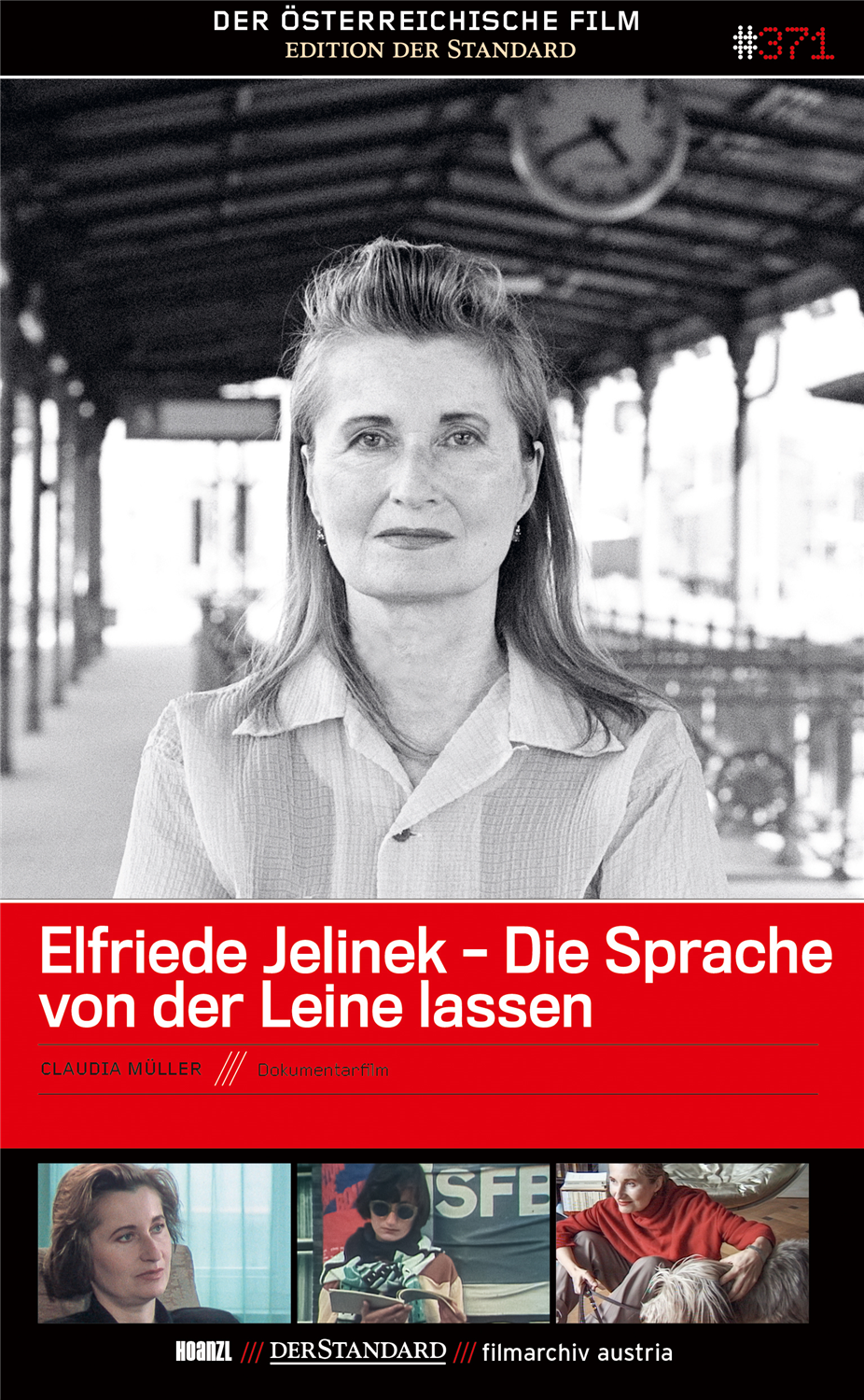
Elfriede Jelinek - Language Unleashed
"Claudia Müller's screen portrait is a stroke of luck." (KLEINE ZEITUNG)
"Let off the leash in this documentary is not only the language of Elfriede Jelinek. The images, too, unfold a free, associative stream that carries the film and gives it an experimental feel." (SWR2, Julia Haungs)
"One is enchanted from the first minute while watching Claudia Müller's successful film portrait." (WELT AM SONNTAG)
Claudia Müller's film about Elfriede Jelinek, who in 2004 became the first Austrian writer to be awarded the Nobel Prize for Literature, focuses on her artistic approach to language. Multilayered and associative, the film approaches the art of its protagonist with her own linguistic compositional procedures. With the participation and voices of Ilse Ritter, Sandra Hüller, Stefanie Reinsperger, Sophie Rois, Maren Kroymann and Martin Wuttke, a multi-layered and fascinating film portrait has been created.
Austrian Film Awards: Best Documentary
Elfriede Jelinek, Sophie Rois, Stefanie Reinsperger, Maren Kroymann, Sandra Hüller, Martin Wuttke, Ilse Ritter and more
DVD Edition #371
ABOUT THE FILM
.jpg)


Resistance Through Writing
A Portrait of Elfriede Jelinek in Conflict with Austria
Bianca Jasmina Rauch*
Again and again, Elfriede Jelinek holds up a mirror to her homeland and its politicians in her formally diverse texts. Because she names uncomfortable truths, she was publicly denounced in the media as a “traitor to the nest,” leading her to withdraw largely from public life after receiving the Nobel Prize in 2004.
In Elfriede Jelinek – Letting Language Off the Leash, director Claudia Müller intertwines the life and work of the feminist writer with Austria’s political shifts, while simultaneously immersing herself in Jelinek’s linguistic artistry through essayistic image-and-sound montages. Associatively combined and read in multiple voices, Jelinek’s texts attain a timelessness that goes beyond mere contextualization and aligns with the author’s aspiration to place “everyday things on a literary pedestal.”
As a critic of systems and structures, Jelinek consistently positioned herself against convention. She was not driven by a desire for self-fulfillment, but rather confronted the question of for whom she was writing in the first place. At the end of the 1960s, Jelinek became involved with Vienna’s political left and the avant-garde art scene, from then on fighting against the culture of repression in the aftermath of the Second World War, against discrimination, and later against populists such as Jörg Haider and H.-C. Strache. In addition to the literary expression of Jelinek’s resistance, Müller also dedicates her portrait to the author’s personal life.
“Conversations from different periods come together to form a kaleidoscope of images and language depicting Jelinek’s life and work.”
Conversations from different periods come together to form a kaleidoscope of images and language depicting Jelinek’s life and work.
The young Jelinek was profoundly shaped by her Catholic upbringing on her mother’s side, while on her father’s side the memory of the bloodshed suffered by her Jewish relatives struggled against the forgetfulness behind which Austria hypocritically concealed itself. Forced by her mother into musical training, the Vienna-raised Jelinek reoriented herself after graduating from school in order to discover language — the only art form her mother had no intention of encouraging — for herself.
Her feminist social critique in Liebhaberinnen, her semi-autobiographical novel Die Klavierspielerin, and her play Burgtheater about the involvement of Burgtheater actress Paula Wessely in the Nazi propaganda film Heimkehr (1941) all caused a stir. Appearances by the author on television, as well as media coverage and discussion programs, form not only part of a public discourse surrounding Jelinek as a person, but also recount a piece of Austrian television history. In many respects, the portrait thus reveals itself as a fascinating seismograph of Austrian society.
*Is a film scholar and critic, co-host of the feminist film podcast “Ned Wuascht.” Dissertation on coming-of-age films.
What once was is now. It is back again—not in the vampiric sense of a revenant, but as something in which past and present converge without crushing me in between. For that, I can only thank everyone involved in this film.
ELFRIEDE JELINEK
Jelinek Does Not Insult
Claudia Müller in conversation with Dominik Kamalzadeh and Margarete Affenzeller.
ABOUT THE PERSON: Claudia Müller is a director known for her portrait films about Jenny Holzer, Valie Export, Jim Rakete, and Elke Heidenreich.

©Milena Schloesser
Standard: How did your personal approach to Elfriede Jelinek begin?
Müller: It was a process. I had already been in contact with her through another film, but then I approached her through the publisher. We met in Munich, and in between I would always ask her questions. So she was involved in terms of content, but she did not impose any specifications.
Standard: Did you discuss the concept of the film with her?
Müller: I knew she did not give interviews, but that there was a lot of material in the archives. That is how the concept of making Jelinek the narrator developed. At the beginning, I did not yet know that I would actually get an interview with her in the end. I assembled the narrative flow from radio and television interviews, always linked to Austrian history.
Standard: Austria is often a mystery to outsiders. Were you able to solve that mystery through working on the film?
Müller: I still look with astonishment at the extreme reactions Austrians are capable of, such as the booing orgies once directed at Claus Peymann. At the same time, I wanted to show what a great artist Austria has in her and how disgustingly she has sometimes been — and still is — treated.
Standard: Jelinek has assumed the role of a public intellectual, while at the same time struggling with the reactions to her work.
Müller: She is often misunderstood. Jelinek does not insult Austria; some of her texts are built from existing material. It is not always she who is speaking there. She works her way through a mine of language. Referring to the pornographic novel Lust, she says: “I stuff people’s own language back into their mouths.”
Standard: How did you choose the text passages? That must have been difficult given the sheer volume of material.
Müller: It was absolute madness. I already knew some of it, while other things I searched for based on the archive material — text and image are very closely intertwined. There were certain fragments for which an interview scene, and sometimes a text passage, fit better.
Standard: Your film places a lot of emphasis on the early years, the convent school, the strict mother. Why?
Müller: I used the formative years of Jelinek’s youth as a ramp into her work. To do that, I had to tell the story emotionally, to convey what, for example, the oppression of the convent school meant. Jelinek often speaks about the agonizing upbringing aimed at turning her into a child prodigy. The Jewish father, the harsh mother — this generation was damaged by the war and passed on that pressure as well.
Standard: Jelinek herself only appears in the final scene, in 2021. Did you not want to show her more often?
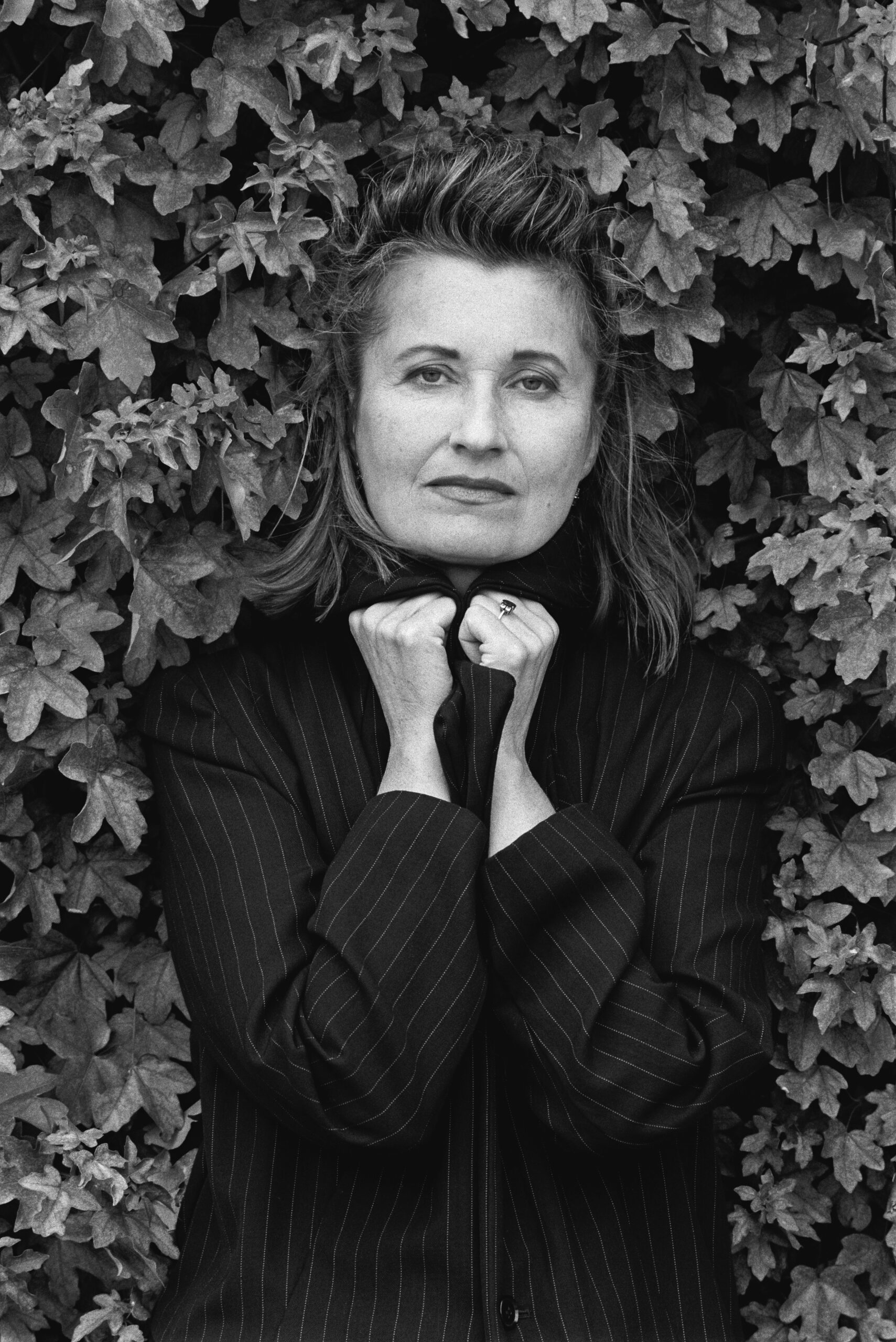
Müller: It was not meant to be a sensation. The rough cut was already finished when I still had five or six questions for her. Her husband then set up microphones in the Munich kitchen, and we sat down there and recorded it. I thought a restrained image would be beautiful. That scene was created in the English Garden near her favorite bridge. You immediately recognize her by the hairstyle! She was standing there on the bridge, and suddenly one of those rare dippers joined her and sat there for several minutes. That scene was almost uncanny.


