
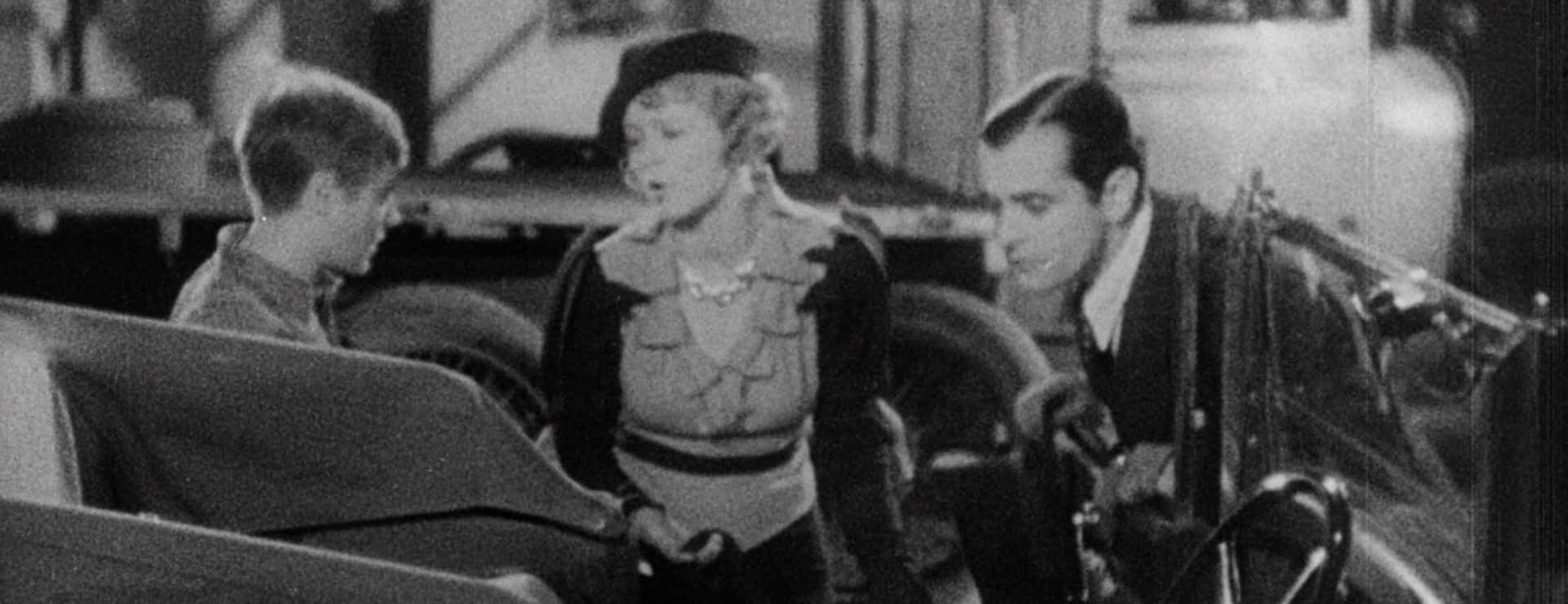


Peter, das Mädchen von der Tankstelle
It all begins with Eva and her grandfather being evicted. Then a thief on the run forces the young woman to swap clothes with him. And finally, Eva ends up in court as an overzealous paperboy. It’s only when she becomes the newspaper boy “Peter” that her fortunes finally take a turn for the better—and the comedy of mistaken identity, starring Franziska Gaál, Hans Jaray, and the wonderful character actors Felix Bressart and Otto Wallburg, turns into an enchanting screwball comedy.
Franziska Gaál, Hans Jaray and many more
ABOUT THE FILM
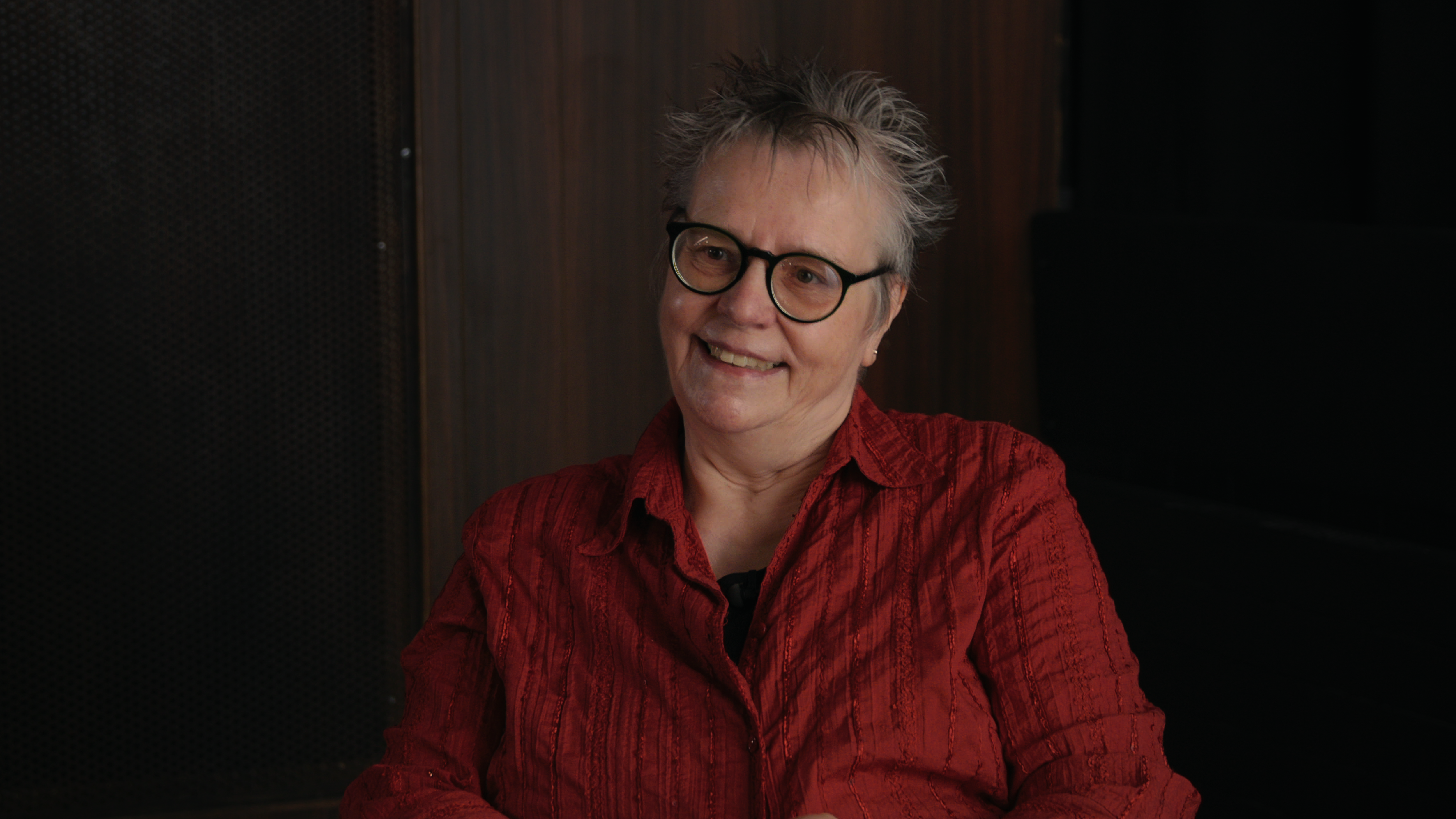

Brigitte Mayr (Synema-Gesellschaft für Film & Medien) über "Peter, das Mädchen von der Tankstelle"
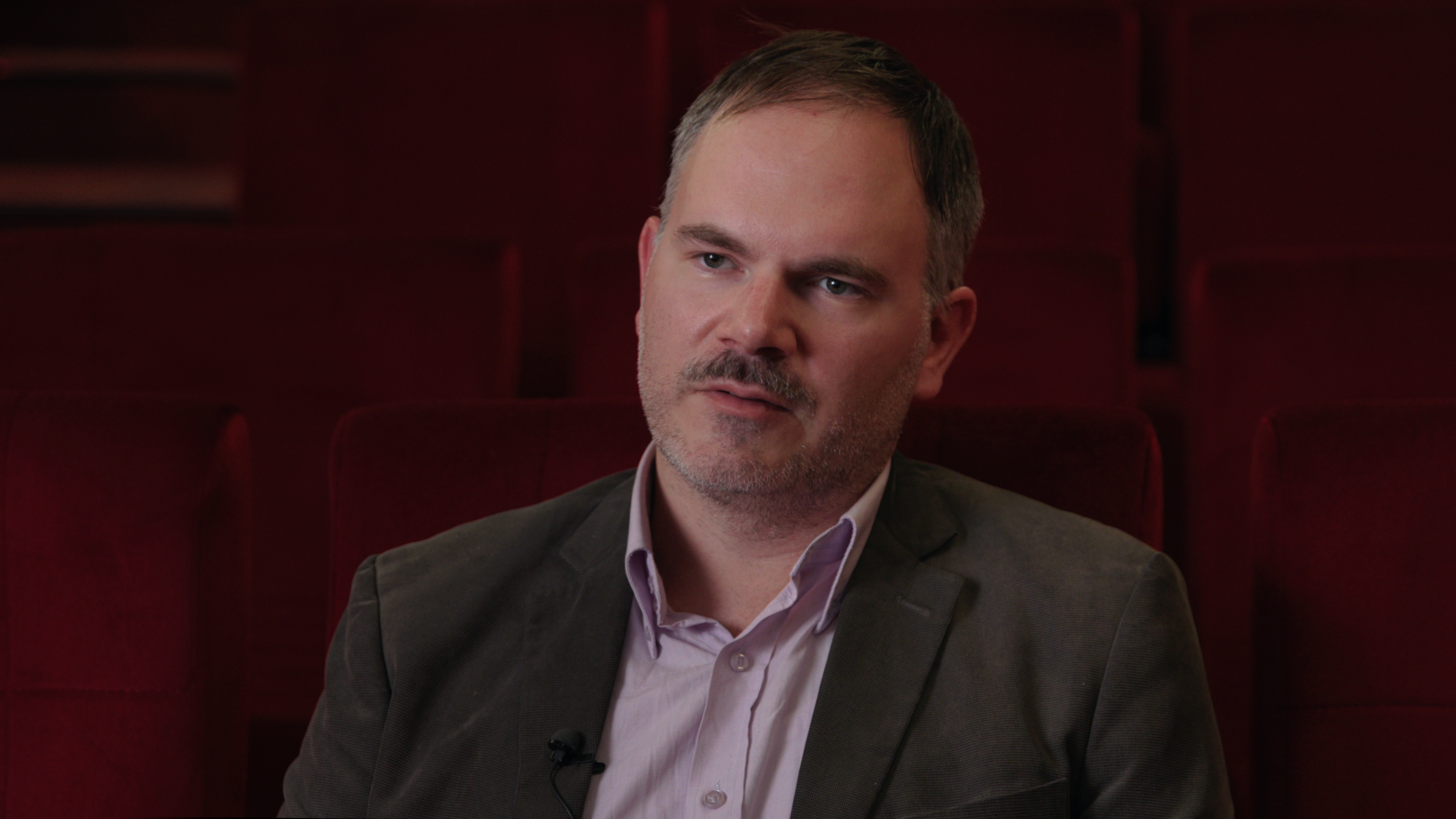
Kurator Florian Widegger über "Peter, das Mädchen von der Tankstelle"


Girls will be Boys
Peter, das Mädchen von der Tankstelle and Gender Fluidity in Interwar Cinema
Brigitte Mayr*
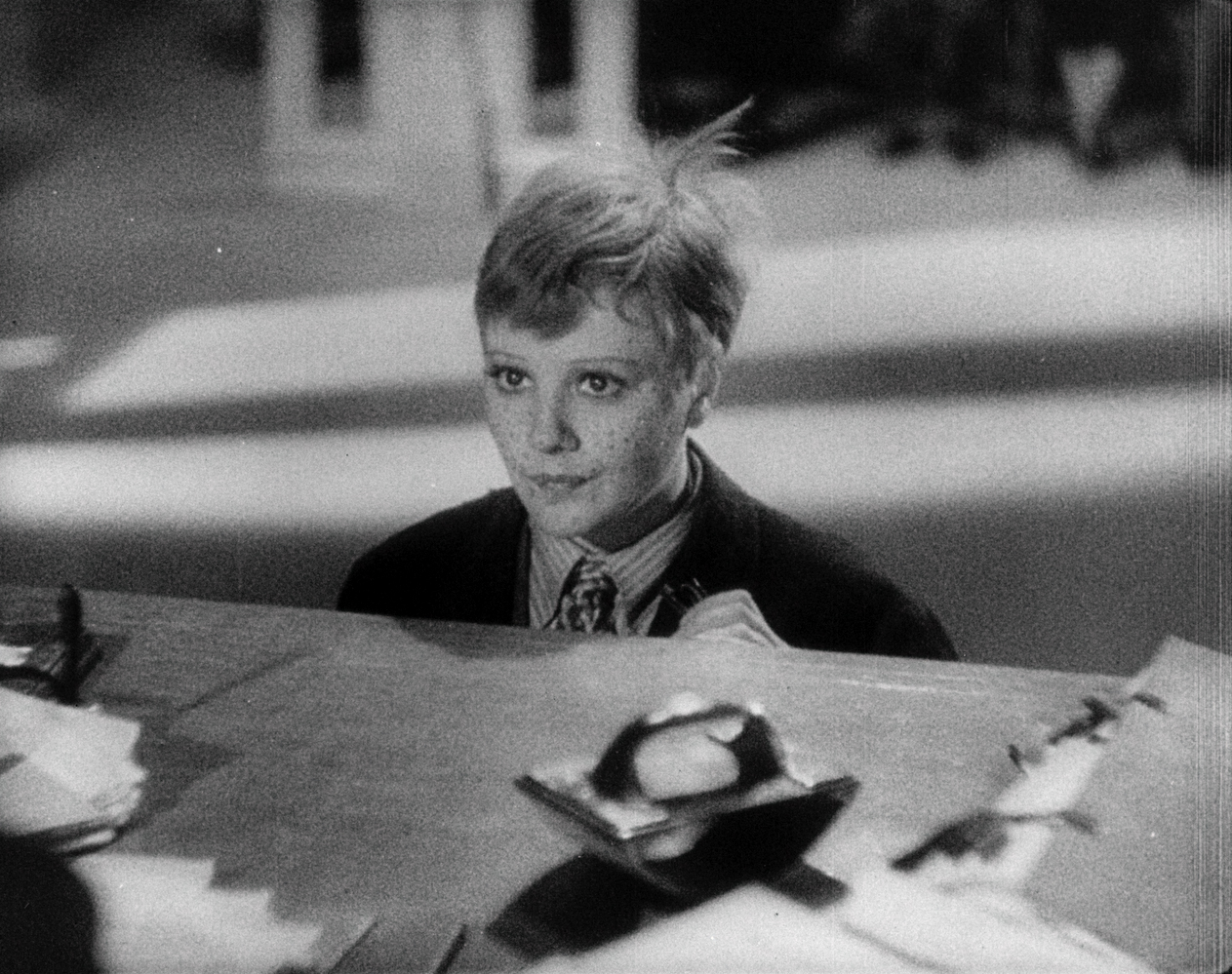
Although this lively comedy of mistaken identities with a touch of social criticism bears a man's name in its title, its heroine is actually a young woman. When Eva and her grandfather (Felix Bressart) are evicted, the two find themselves forced to earn money quickly and try their hand as street musicians. But Eva is dragged into a courtyard by a fleeing thief, who forces her to exchange clothes with him so that he can escape the police disguised as a "girl". From then on, Eva has to make her way as a newspaper boy, disguised as "Peter" in his oversized trousers, shirt, cap and wig. Overzealous in calling out the headlines, she exaggerates so wildly – "Event of the Year: Two-Year-Old Attacks His Entire Family!" – that a dissatisfied customer complains that the story cannot be found anywhere in the newspaper and causes a car accident because of her. Brought before the court, she tests her newly discovered masculinity by imitating a delinquent young rascal (Hans Richter) sitting opposite her, copying his grimaces, spitting and grinning, and even finding a hilariously inventive way to give herself matching freckles.
The success of the comedy Peter, das Mädchen von der Tankstelle, which premiered in 1934, is thanks to the "enchanting grace combined with Hungarian temperament of the popular actress" Franziska Gaal, as the Österreichische Film-Zeitung concludes, praising her for being "excellent in the role of the adolescent boy, whom she portrays with convincing authenticity". She transfers the ingénue role she had already perfected in numerous stage comedies to the screen, portraying Peter, alias Eva, as an endearing little scamp in the finest comedic tradition.
Eva, who – on the threshold of adulthood – has been forced to become a boy and convincingly transforms herself into one in an act of self-empowerment, soon realises that life is considerably easier for her as Peter. The handsome doctor (Hans Jaray), who had originally intended to press charges against her in court, generously finds her a job at a garage after all. Its owner (Otto Wallburg) is quite satisfied, even though the young rascal in petrol station overalls causes all manner of comical incidents with his mischievous pranks. Until the happy ending, when the adored male love interest finally recognises the wonderful character of his female (disguised) counterpart, a good hour and a half is filled with delightful slapstick revolving around changing clothes, adopting differences in behaviour such as posture, gait and speech, and experimenting with rituals of masculinity such as shaving, smoking cigars and drinking to excess.
The playful handling of exchanged gender attributes remains impressive to this day, but perhaps the boldest act of audacity is the final kiss between Franziska Gaal and Hans Jaray, both wearing tailcoats. Such effortlessly sparkling cross-dressing fun, executed with exquisite timing, could only have been staged in exile, of course, since by the time the film was made, openly playing with sexual identities was no longer conceivable in German cinema.
Not a single trade publication honoured Franziska Gaal with an obituary, causing the once so popular actress to fade into complete obscurity. But on screen, she lives on!
BRIGITTE MAYR, SYNEMA
Peter still breathes the spirit of the Weimar Republic, carried over into Austria for a far too brief period, namely that of "Unwanted Cinema" from 1934 to 1937. After Hitler's rise to power, many Jewish filmmakers were forced to leave Germany. Ostracised and seeking to continue working freely in their profession, they had to embark on their first exile within Europe, initially to Vienna and later to Budapest, in order to establish independent film production. These committed émigrés, seeking to escape dependence on the German market, channelled their expertise into the "Films of the Forbidden" – above all the excellent Peter, "a distinct hit, outdoing all previous Francy Gaal films" (Variety 1935).
When producer Joe Pasternak brought Franziska Gaal from Budapest to Berlin in 1932, she scored a veritable triumph with her first German-language film, Paprika, followed by Gruß und Kuß, Veronika!, launching her meteoric rise to fame. After the Nazis banned her films from exhibition in 1933, she moved to Austria and Hungary, where she captivated audiences particularly with Universal's productions of "Unwanted Cinema" (Katharina – die Letzte, Peter, das Mädchen von der Tankstelle and Kleine Mutti), always supported by an accomplished team: director Hermann Kosterlitz (later Henry " Mein Freund Harvey " Koster in the United States), screenwriter Felix Joachimson (later Felix " Spring Parade " Jackson) and producer Joe Pasternak, who pulled the strings between Budapest and Vienna for the American Universal studio.
Franziska Gaal (1903–1972) also managed to escape the fate the Nazis had intended for her as a Jewish woman; she was even recruited to Hollywood by Cecil B. DeMille – but her talent was squandered in B-movies, and she died impoverished and completely forgotten in New York. On screen, however, she lives on.
* is academic director of SYNEMA – Society for Film and Media (Vienna).


