


Recycling Film History
A fine selection of avant-garde masterpieces by Sabine Hiebler/Gerhard Ertl, Gustav Deutsch, Lisl Ponger, Siegfried Fruhauf, Mara Mattuschka, Thomas Draschan/Stella Friedrichs, Dietmar Brehm, Peter Tscherkassky, Martin Arnold united. Focus: Found Footage - the play with "found" material. No genre is immune from access: great dramas, home movies, horror movies, the cinema of the film pioneers, amateur movies, disaster movies, porn movies, educational movies ... What may now read like the extended semester program of an advanced film course contains some of the most successful films Austrian cinema has ever produced.
"Film strips, indeed the entire cinematic apparatus, broken down into their component parts..." PETER CHERKASSKY
- Sabine Hiebler/Gerhard Ertl: DEFINITELEY SANCTUS - 1992, (4 min.)
- Gustav Deutsch: WELT SPIEGEL KINO – Episode 1 - A/NL 2005, (30 min.)
- Lisl Ponger: PASSAGEN - 1996, (12 min.)
- Siegfried A. Fruhauf: MIRROR MECHANICS - 2005, (7 min.)
- Mara Mattuschka: S.O.S. EXTRATERRESTRIA - 1993, (10 min.)
- Thomas Draschan/Stella Friedrichs: TO THE HAPPY VIEW - 2003, (4 min.)
- Dietmar Brehm: VERDREHTE AUGEN - 2002, (12 min.)
- Dietmar Brehm: BLAH BLAH BLAH - 2006, (12 min.)
- Peter Tscherkassky: HAPPY END - 1996, (11 min.)
- Peter Tscherkassky: OUTER SPACE - 1999, (10 min.)
- Martin Arnold: PASSAGE À L’ACTE - 1993, (12 min.)
The films are party black and white and silent.
DVD Edition # 11

ABOUT THE FILM
.jpg)
.JPG)


Second-Hand Cinema
Recycling Film History – Film Avant-Garde Made in Austria
Peter Tscherkassky*
If Austrian art has entered the international premier league in any field, it is in the realm of film vant-garde.
It begins in the late 1950s. First comes the handcrafted cinema of Peter Kubelka: tailor-made films in which fractions of a second combine on the screen into sparkling protuberances. Soon afterwards follow Kurt Kren’s mathematically serial cascades of rapid-fire editing. Then comes the expanded cinema of the rebellious 1960s: with refreshing thoroughness, Ernst Schmidt Jr., Hans Scheugl, Peter Weibel, and VALIE EXPORT shatter the illusionary apparatus of cinema.
When a younger generation of filmmakers took up their cameras at the beginning of the 1980s, such a legacy weighed heavily. Yet no one seemed particularly intimidated, and before long many of these younger artists, even without any collective master plan, found their way to found footage . . .
“Footage” is the English technical term for film material. It derives from the unit of length used to measure film: the foot. “Found footage,” in turn, refers to films made partly or entirely from other films that have been discovered somewhere, somehow. Found footage has long been used by the avant-garde; never before, however, had it played such a defining role as it did in recent decades. Classical avant-garde cinema had been interested in the specific material properties of the medium itself.
“Unlike quotation, the found-footage film seeks to disrupt the meaning already embedded in the material. It creates a meta-level.”
The new generation instead turned its attention to cinematic content that had previously been shaped by others, with or without artistic intent. Unlike quotation, the found-footage film seeks to disrupt the meaning already embedded in the material. It creates a meta-level from which latent meanings become visible while new ones are simultaneously generated.
Several of the key protagonists of this genre are brought together on this DVD in a small but distinguished selection. At the same time, it demonstrates that no category and no genre is immune to appropriation: great dramas (passage à l’acte), Heimat films (Definitely Sanctus), horror movies (Outer Space), the cinema of the film pioneers (WELT SPIEGEL KINO), amateur films (Passagen, Happy-End), pornography (Verdrehte Augen, Blah Blah Blah), disaster movies (S.O.S. Extraterrestria), educational films (Mirror Mechanics), or a wild mixture of all of the above (Draschan).
What reads like the expanded semester programme of an advanced film studies course contains some of the most successful films Austrian cinema has ever produced. Nearly every one of them has won multiple awards at international film festivals. Such achievements are the result of artistic relevance combined with a heightened sense of entertainment. A demanding benchmark. And now you can judge for yourself whether it has been met.
*Filmmaker, most recently: Instructions for a Light and Sound Machine (2005).
Film stock—indeed, the entire cinematic apparatus—disassembled into its constituent parts...
PETER TSCHERKASSKY
Image Processing
Eleven Milestones of Experimental Cinema from Austria
Sabine Hiebler / Gerhard Ertl Definitely Sanctus (1992, 4 min)
Definitely Sanctus is a reworking of Alpine customs and traditions, assembled from scenes taken from Heimat films of the 1950s. (S.H. & G.E.)
Gustav Deutsch WELT SPIEGEL KINO – Episode 1 (A/NL 2005, 30 min)
An episode about the polysemy of early cinema, beginning with a pan across a historic Viennese movie theatre. Deutsch understands the filmed image as a search engine that also generates sensual effects. (Dominik Kamalzadeh)
Lisl Ponger Passagen (1996, 12 min)
Passages from travel films arranged in a rhythmically flawless sequence of movement and stillness. When interviews with emigrants emerge on the soundtrack, they estrange a space in which the barriers between the foreign and the familiar become obsolete. (Claus Philipp)
Siegfried A. Fruhauf Mirror Mechanics (2005, 7 min)
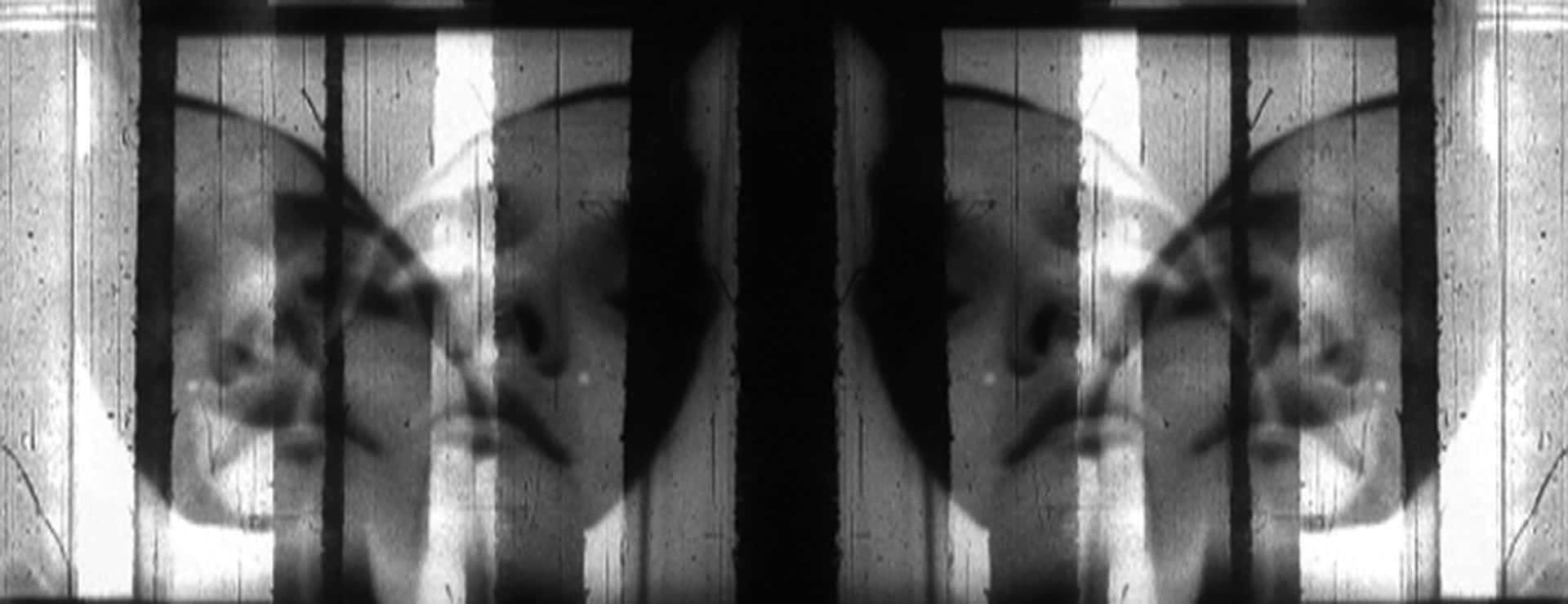
A woman looks into a mirror: creaking sounds suggest menace; again and again she turns around, yet sees only herself—exposed to the gaze of the camera, which becomes ever more merciless as the film progresses. (Aki Beckmann)
Mara Mattuschka SOS Extraterrestria (1993, 10 min)
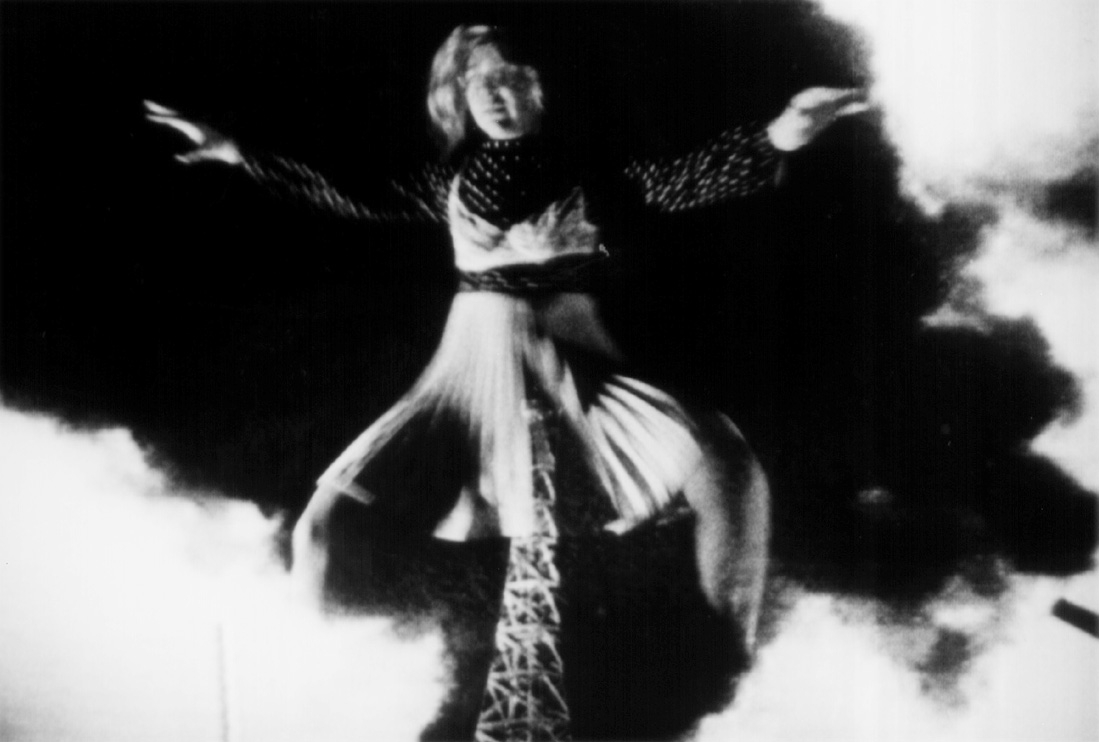
A Godzilla imitator on a journey toward self-discovery: the giant extraterrestrial woman roaming the streets of a metropolis, causing mischief, producing destruction, and copulating with the Eiffel Tower. (Stefan Grissemann)
Thomas Draschan / Stella Friedrichs To the Happy Few (2003, 4 min)
To the Happy Few is structured around the idea of the mandala. The mandala appears in the form of graphically stylised solar systems, atomic models, and much more besides. (T.D.)
Dietmar Brehm Verdrehte Augen (2002, 12 min, silent)
A drama of gazes in which the woman’s rolling eyes express both sexual dominance and submission. (Bert Rebhandl)
Dietmar Brehm Blah Blah Blah (2006, 12 min)
An essay on restlessness: Blah Blah Blah contains a vast number of heterogeneous images assembled in a montage that oscillates between contemplative imagery and rapid visual collapses. (Bert Rebhandl)
Peter Tscherkassky Happy End (1996, 11 min)
A married couple who, year after year at Christmas, cheerfully toast one another—and the camera—returns again and again. The stock of alcoholic beverages and various accessories changes; the repertoire of gestures remains the same. (Isabella Reicher)
Peter Tscherkassky Outer Space (1999, 10 min)
A US horror film provides the source material for interventions that reshape both the image carrier and the narrative, drawing the invisible force threatening a woman in the horror film into a furious battle of materials in Cinemascope. (Isabella Reicher)
Martin Arnold passage à l’acte (1993, 12 min)
A family in a state of aphasia. The babbling, hissing, knocking, spitting, and barking can scarcely be perceived as anything other than a series of highly aggressive acts. (Ekkehard Knörer)


