


Once Were Rebels
A chic apartment in an old building, a good job, good life: the friendly couples Helene and Jakob as well as Volker and Tina used to be wild and meanwhile they are (almost) grown up. But then a drunken idea brings a Russian dissident and his family to Vienna, and the regular circumstances collapse like a house of cards ... The revolution is in retirement: Johanna Moders tragicomedy is a precise commentary on the affluent society - and its outer and inner limits.
"A film worth seeing with well-drawn characters and a strong cast." FILMPLUSCRITIC.COM
Julia Jentsch, Manuel Rubey, Marcel Mohab, Aenne Schwarz, Lena Tronina, Tambet Tuisk and more
DVD Edition #360

ABOUT THE FILM



Egos in Crisis
Johanna Moder’s Comedy “Waren einmal Revoluzzer”
Valerie Dirk*
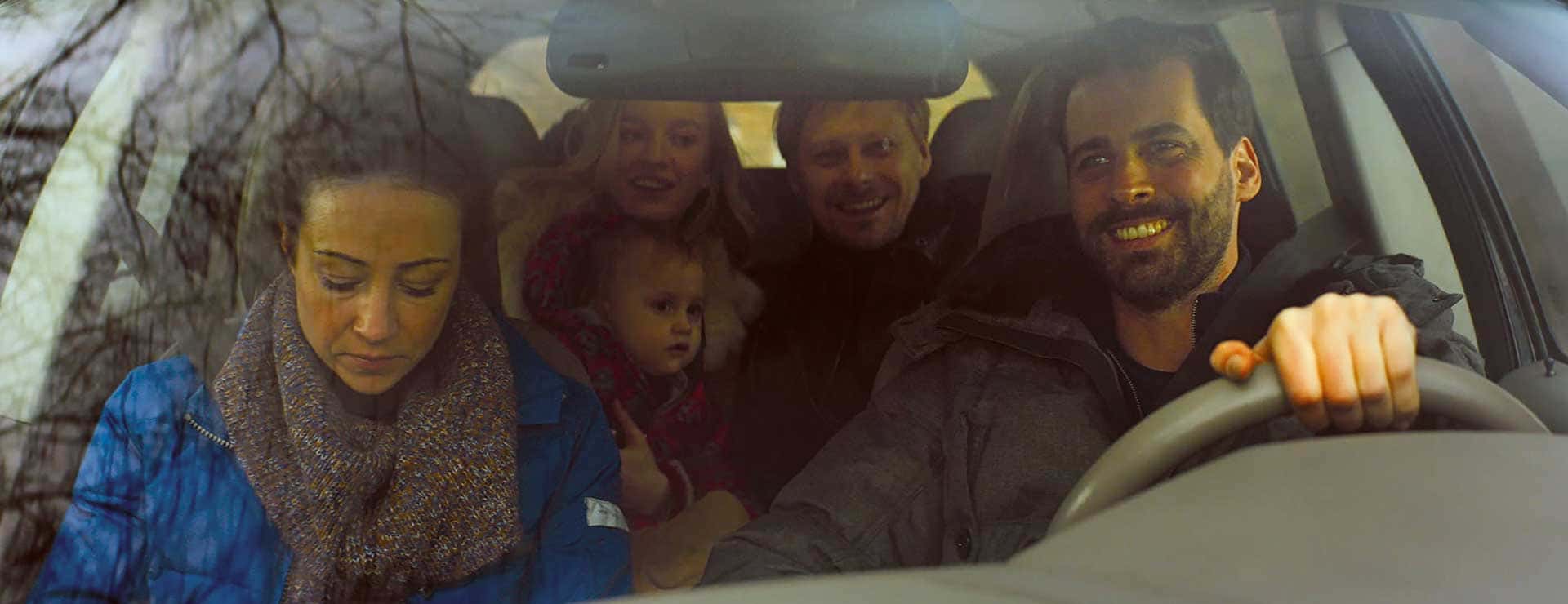
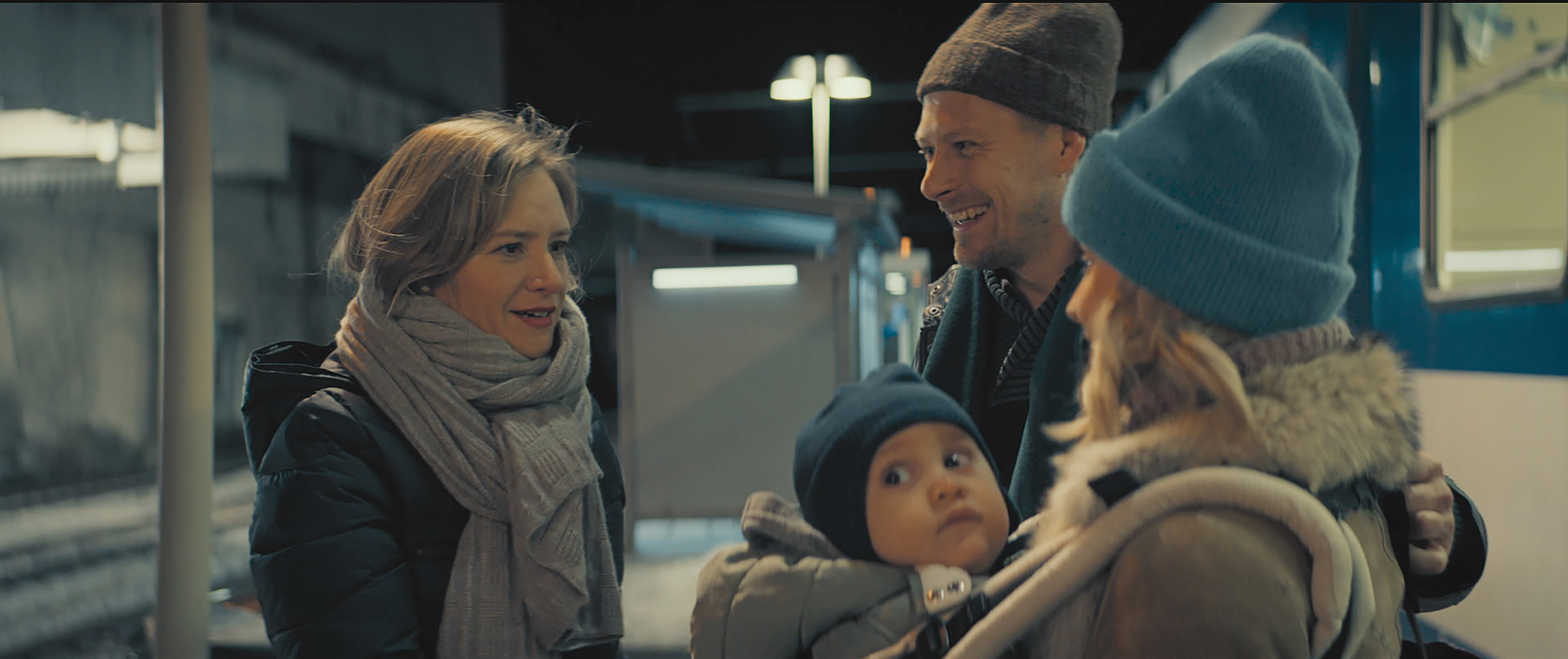
The fact that Pavel, the Russian friend from their university days, is picked up by Helene at a train platform near Vienna in the middle of the night was more of a “drunken idea” than an act of helpfulness. Volker had only been supposed to hand over a larger sum of cash from Helene to the dissident Pavel in Moscow; instead, he offered to help him enter Austria illegally.
Nevertheless, Helene is excited to see her ex-lover Pavel again. She has discreetly moved her husband and children elsewhere and prepared an elaborate meal — it is obvious that she hopes to rekindle more than just the food. To her disappointment, however, Pavel arrives with a wife and baby. And it is not Pavel who is the sought-after dissident, but his wife Eugenia, who is young, self-confident, and commanding of space. Soon the small family becomes too much for Helene; after all, she is already overwhelmed by her own family.
Just as she passes off her own children to others, she also passes the Russian family on to Volker, since he got her into this mess in the first place. But too many lamps break in his “safe space” — the Ernst Busch reference and the jab at an all-too-comfortable social democracy are very much intentional; eventually Pavel’s family ends up in a house in the countryside, where Helene’s husband Jakob is currently retreating to make music and is equally displeased by the unexpected visit from his wife’s ex-boyfriend.
“Director Johanna Moder sketches the satirical portrait of an urban, educated, and egocentric milieu.”
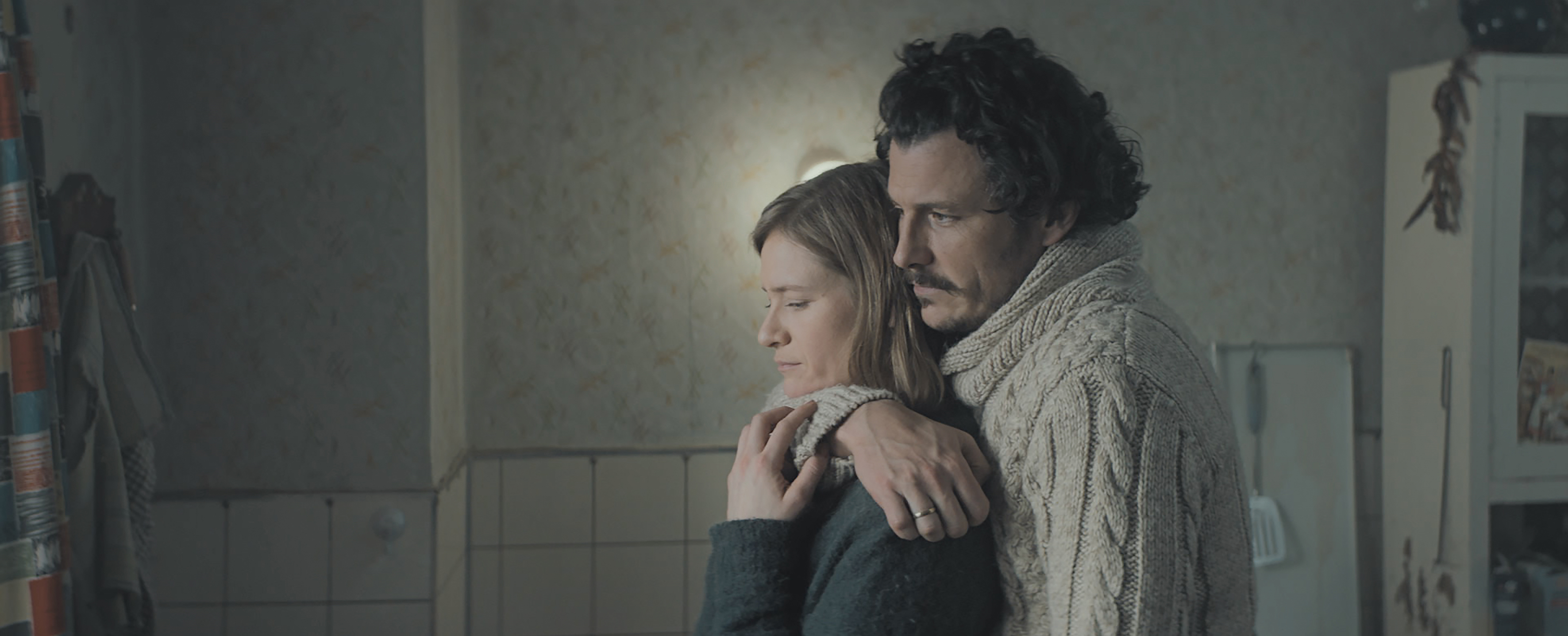
In Waren einmal Revoluzzer, director Johanna Moder, together with co-screenwriters and lead actors Manuel Rubey (Jakob) and Marcel Mohab (Volker), sketches a satirical portrait of an urban, educated, and egocentric milieu: Helene, Jakob, and Volker are financially comfortable and deep in their respective midlife crises.
While Helene (Julia Jentsch), the overworked judge, longs for small adventures on the side, husband and houseman Jakob insists on time alone with his music. Volker is the caricature of a psychotherapist still struggling with his father — played by Josef Hader — while attempting to cure his attachment issues through an affair with art-history student Tina (and several others).
The younger generation serves not only as a lifeline for crisis-ridden male egos, but also as a glimmer of hope for relationship models built on avoiding conflict whenever possible: something resembling warmth and hospitality can only be found in Tina. She befriends social-media activist Eugenia, who is visibly irritated by the dithering behavior of the Austrian helpers.
Helene and Jakob’s daughters also quickly take the new “little sibling” and the storyteller Pavel into their hearts. Helene, Volker, and Jakob, on the other hand, seem to want only one thing: to preserve their “once-were-revolutionaries” image in peace, without any designer lamps getting broken in the process.
*Is a film critic for Der Standard, among others, and lives in Vienna.
“We have to do something.” “Sure—but what does that do to us?”
Burden Pressure
Johanna Moder’s Comedy of Hypocrisies
Dominik Kamalzadeh
Within Austrian cinema, Johanna Moder’s films are an exception; they are “comedies of morals,” satirical works aimed at the habits of society. Less malicious and sarcastic than one of her great masters, Claude Chabrol, and closer instead to the elegant, gently satirical tradition of Mike Nichols, the director of The Graduate, Moder prefers subtly comic character sketches and occasionally boulevard-style calamities to blunt overstatement. The characters’ handicaps — and thus the hypocrisies embedded in their relationships — are gradually exposed. The figures are more overwhelmed than openly hostile or destructive toward one another.
It is worth paying attention to the gender-political orientation of the constellations, because in Waren einmal Revoluzzer the women clearly take on the more active roles. Volker, who brings Pavel and his family to Austria, quickly reveals his selfishness; and while Jakob, played by Manuel Rubey, turns out to be more of a recalcitrant intellectual who wants to retreat to the countryside with his music and the forest air, it is Helene and Tina who embody two opposing modes of action: one practical and goal-oriented, the other more intuitive and guided by instinct. These differing attitudes naturally have different consequences; their ability to see through the deficiencies of their own social bubble varies greatly.
The women’s roles may therefore seem progressive in the sense of a kind of popular feminism. Yet Moder does not deliver empowerment clichés. On the contrary, she shows great skill in slowly, almost imperceptibly reversing role models and revealing liberal attitudes as ultimately system-affirming: the moment one’s comfort zone is threatened, people tend to fall back into behavioral patterns aimed entirely at protecting their possessions and privileges.
The pressure of emotional burden rises quickly for Judge Helene once the Russian guest family arrives, while at the same time her motivation to respond constructively diminishes. Everyone looks out for themselves first — this applies, within the tightly fenced bourgeois-bohemian enclosure of Waren einmal Revoluzzer, to virtually every character except Tina, played by Aenne Schwarz, who acts according to a different moral principle. She asks one question more than the others and therefore sees through their hypocrisy almost immediately.
Incidentally, viewers should not be deceived by Moder’s fluid direction or by the autumnal color palette with which she creates cozy atmospheres: behind the friendly façades of this world — one in which viewers may even recognize themselves in one of the characters — lurk the abysses of the “wrong” life that other Austrian filmmakers dissect with negative energy and confrontational zeal.


