
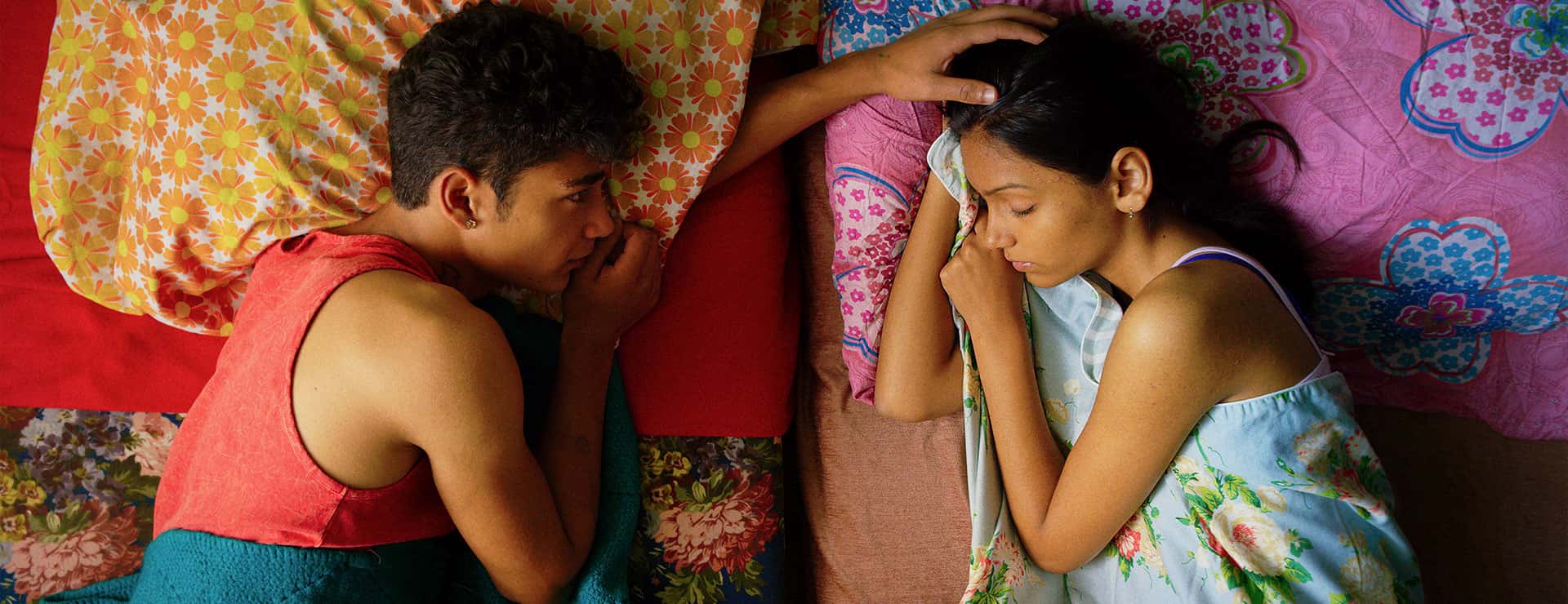


Crush My Heart
Together with other Slovak Roma, the fun-loving teenager Pepe lives in Vienna under the supervision of his despotic uncle Rocky. To earn money for his mother and sisters in eastern Slovakia, Pepe goes begging day after day. Despite the harshness of his daily life, Pepe seems resigned to his living situation. However, that changes when Marcela, who is the same age, joins him to work off her father's debt to Rocky. The two teenagers fall in love and dream of a free, self-determined life in which they can live out their love freely. But they haven't reckoned with Rocky, who has his own plans for Marcela.
"Poetic realism, the likes of which are rarely seen in Austrian cinema."
DER STANDARD
Simona Kovácová, Roman Pokuta, František Balog, Simonida Selimovic, Martin Gábor, Maximillian Six and many more
DVD Edition #324

ABOUT THE FILM


The Splendour of Love
Alexandra Makarová’s feature film “Zerschlag mein Herz”
Carolin Weidner*
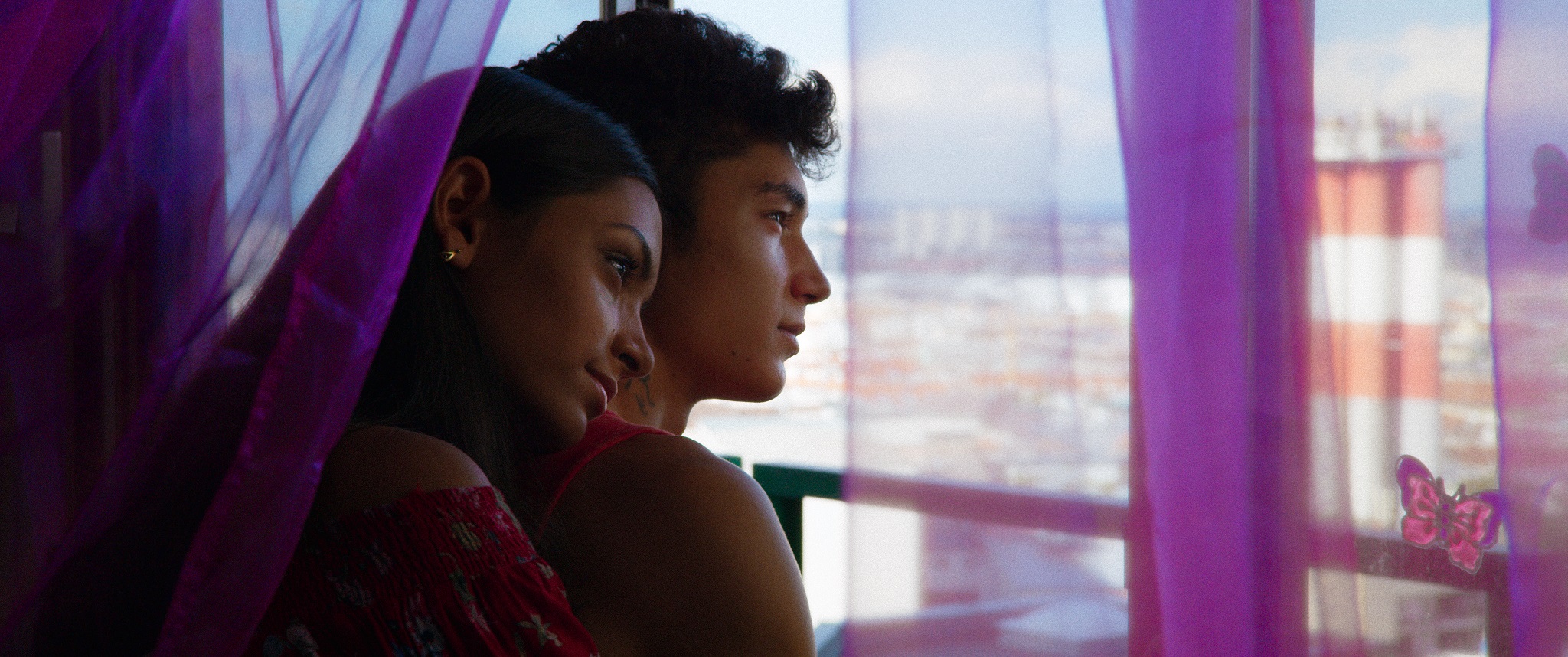
Summer in Vienna: Pepe removes the crusts from slices of bread to turn ordinary jam toast into heart-shaped treats. They are for Marcela, who is probably sitting in the courtyard with its brightly painted walls. And they are, of course, a declaration of love. A little later, hearts once again enter the picture: this time, however, they are in a Slovakian village, on an A4 sheet of paper stuck to a door. They announce a wedding celebration, but not between Pepe and Marcela, rather between Marcela and Rocky. The printed hearts are not real. But in a certain sense, they are the more powerful ones.
There are many symbols through which love – both true and less genuine – seeks expression in Alexandra Makarová’s first feature film Zerschlag mein Herz. There is the bottle of champagne conventionally required for a marriage proposal. Or the explicit declaration “I love you”. There is the willingness to sleep with someone. Or to protect the person to whom one has given one’s love from harm. Even the desire to die when it has become impossible to live out a powerful love.
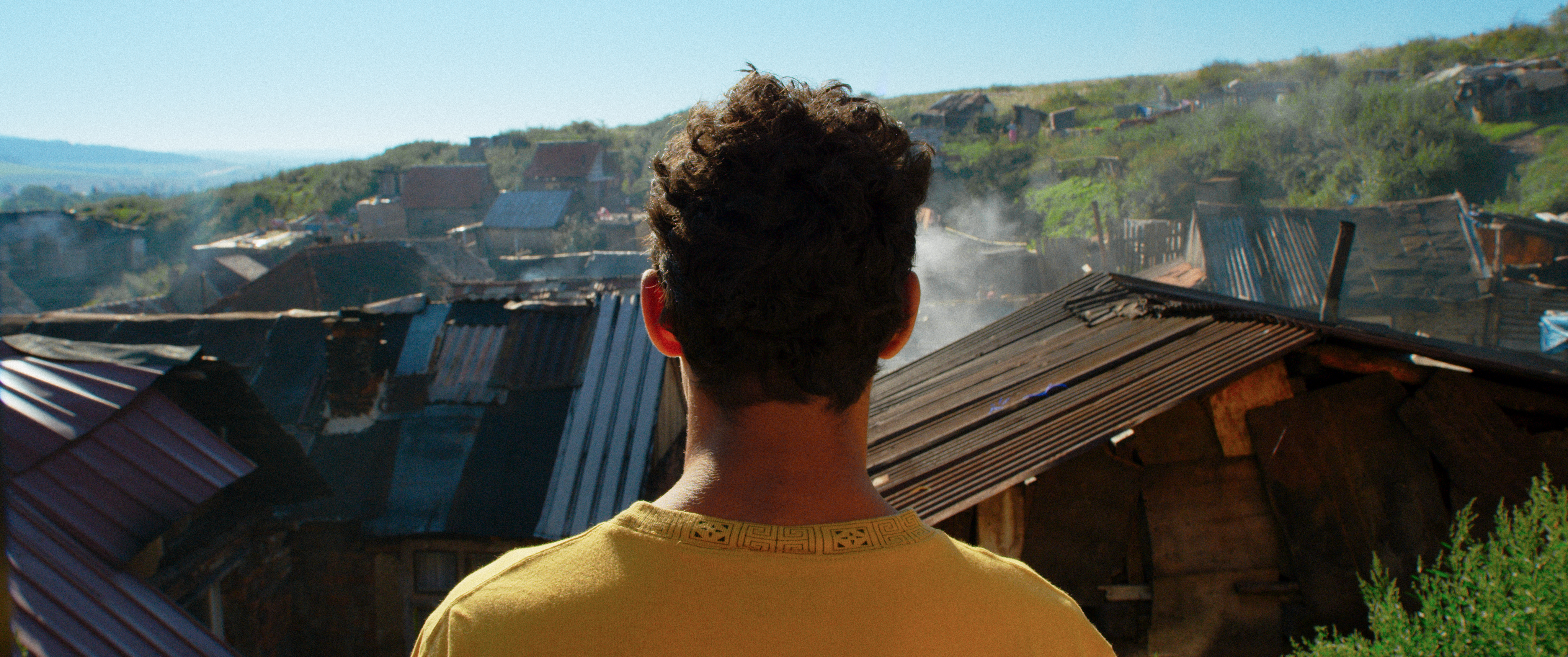
Makarová draws on classic, frequently explored, universal motifs. What is by no means frequently depicted, however – at least not in the realm of fictional cinema that allows itself splendour, colour and emotion – is the social environment in which the director unleashes these great narratives of love: young Roma from an “osada”, a settlement in eastern Slovakia, who have ended up in Vienna, where clan-like, patriarchal structures are reproduced.
“As frightening as the often invisible barriers surrounding this world are, so too are the moments of freedom striking when those barriers are forgotten for a while.”
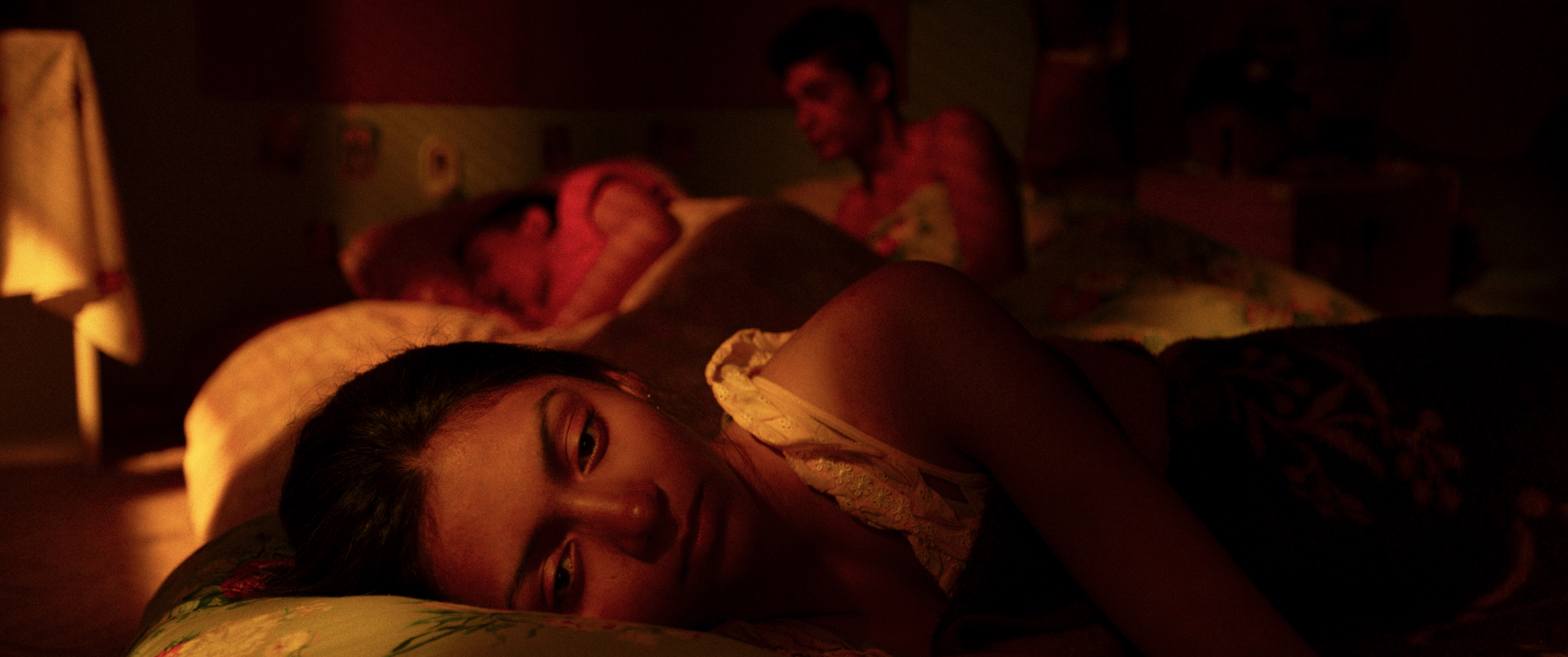
Following a five-act structure, the drama begins with Marcela, played by Simona Kováčová. She is the new girl, sent to the city to work off her father’s debts. Working them off means: prostituting herself. Marcela successfully resists this fate, accepting another instead, that of a beggar. Her arrival in Austria has also brought her to the attention of two men: the aforementioned Pepe (Roman Pokuta), who is roughly the same age as Marcela, and therefore a teenager, and Rocky (František Balog). The despotic man in his mid-thirties is Pepe’s uncle, who rules over the group forced to live together in Vienna.
As frightening as the often invisible barriers surrounding this world are, barriers that seem to renew themselves almost automatically, so too are the moments of freedom striking when those boundaries are forgotten for a while. Then heart-shaped jam toast is prepared, people dance in clubs, a future flickers into view, and the possibility of running away to study is considered. The fact that these positive forces will very likely soon be crushed brings the film close to tragedy. At the same time, it draws its energy from this interplay, an energy that gathers anew in almost every shot.
*Lives in Berlin and works as a film critic and curator.
Poetic realism of a kind rarely seen in Austrian cinema.
DER STANDARD
The Colours of Emotion
On the Research and Visual Style of “Zerschlag mein Herz”
Rarely has Vienna been seen in such vibrant colours: floral patterns everywhere, colourful walls, green lights, red, blue and pink laundry hanging on the line, and a glittering Danube. Pepe and Marcela’s Vienna shines when the couple are able to express their intimacy for a brief time: the Prater and its hall of mirrors provide the setting, while their fluorescent friendship bracelets, illuminated by flashes of strobe light, become promises of blossoming love.
Zerschlag mein Herz remains visually colourful, even though its story is dark. The romance between two teenagers blossoms when Marcela, “the new girl”, arrives in the big city from her village in eastern Slovakia to work off her father’s debts.
In Vienna, she is taken in by Rocky, Pepe’s uncle: a mafia-like patriarch who forces his extended family clan, as well as Marcela and Pepe, to earn money, either through street prostitution or begging in the city centre. Marcela escapes prostitution. Pepe introduces her to begging door to door and protects her from violence.
In her feature film debut, Alexandra Makarová transplants the world’s most famous pair of lovers into the milieu of Slovak Roma in Vienna and develops a cinematic language entirely her own. Through poetic images that often resemble dream sequences, Zerschlag mein Herz tells a story of nothing less than overwhelming emotions, playfully illustrated by heart-shaped slices of toast with strawberry jam. Yet the exuberant kitsch of some scenes cannot diminish the seriousness of young love: great emotions simply require every means available to make them tangible.
Lili Hering in DER STANDARD, 5 October 2018
Together with Jozefina Tomášová, a Romani woman from eastern Slovakia, I spent almost two years visiting countless “osady” – slums where Slovak Roma are forced to live, usually on the outskirts of towns or away from small villages – and getting to know the people, their fears and their hopes. The screenplay gradually emerged from the many life stories and strokes of fate they shared with me. I was able to involve them in the writing process by repeatedly asking questions: How would they react? What would be conceivable in their circumstances?
It was very important to me to learn as much as possible about their customs, family structures and rules of behaviour. It was particularly important that my research was thorough and that I did justice to these people as far as possible. In other words, that I did not whitewash the story of our protagonists or adapt their behaviour to the perspective of a white, middle-class European simply to suit the screenplay. This is reflected both in the behaviour of our protagonists and the decisions they make, as well as in the film’s colour palette, whether in the production and costume design or in the film music.
Alexandra Makarová


